

1913: Seeds Of Conflict
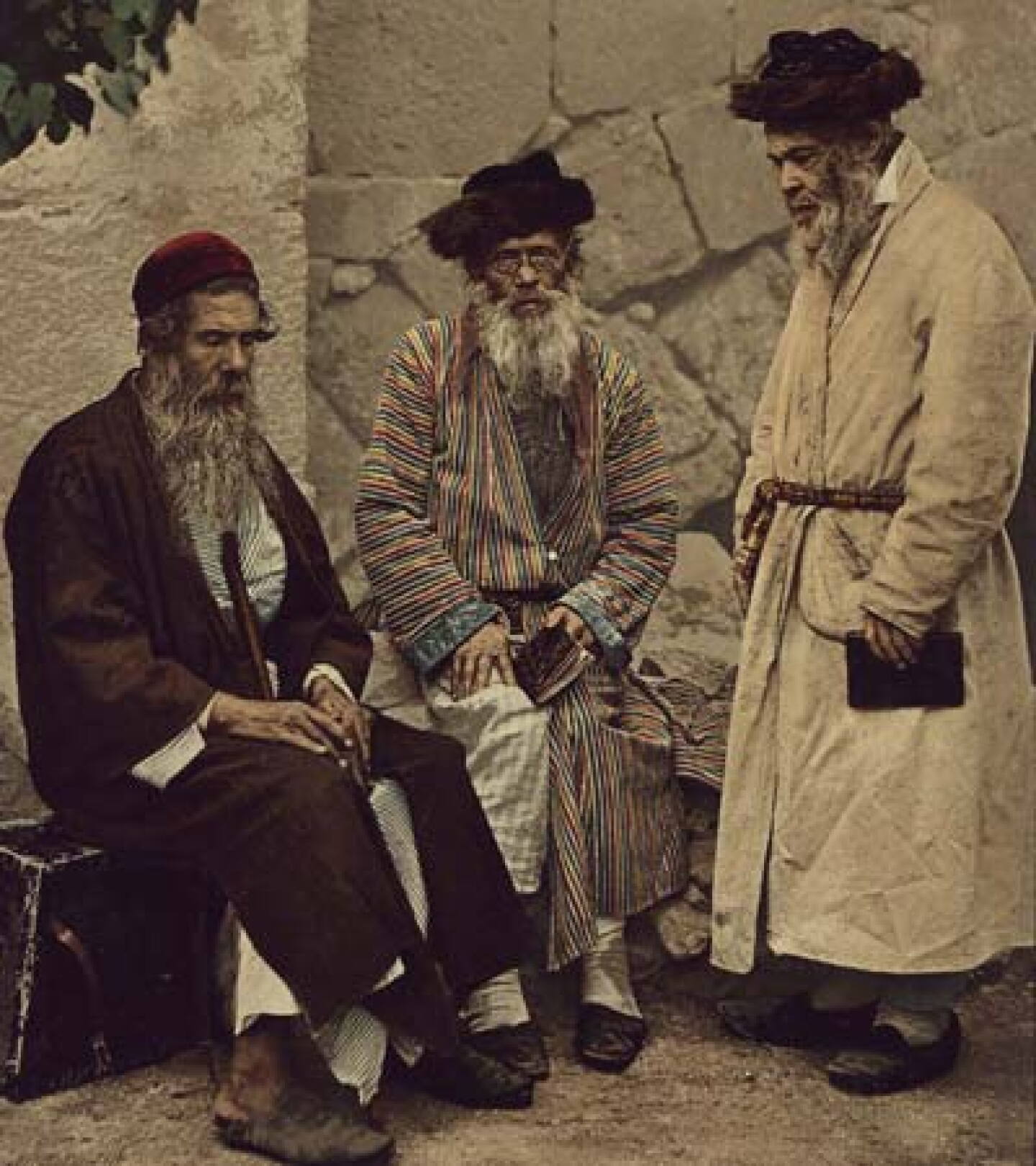
Spiritual Jews from the first Aliyah (migration wave) in Jerusalem gather for prayer. Jews fled Eastern Europe after the assassination of Czar Alexander II and the rise of pogroms in 1881. Most went to America, but 2-3 percent went to Palestine.
(Courtesy of Israel National Library)
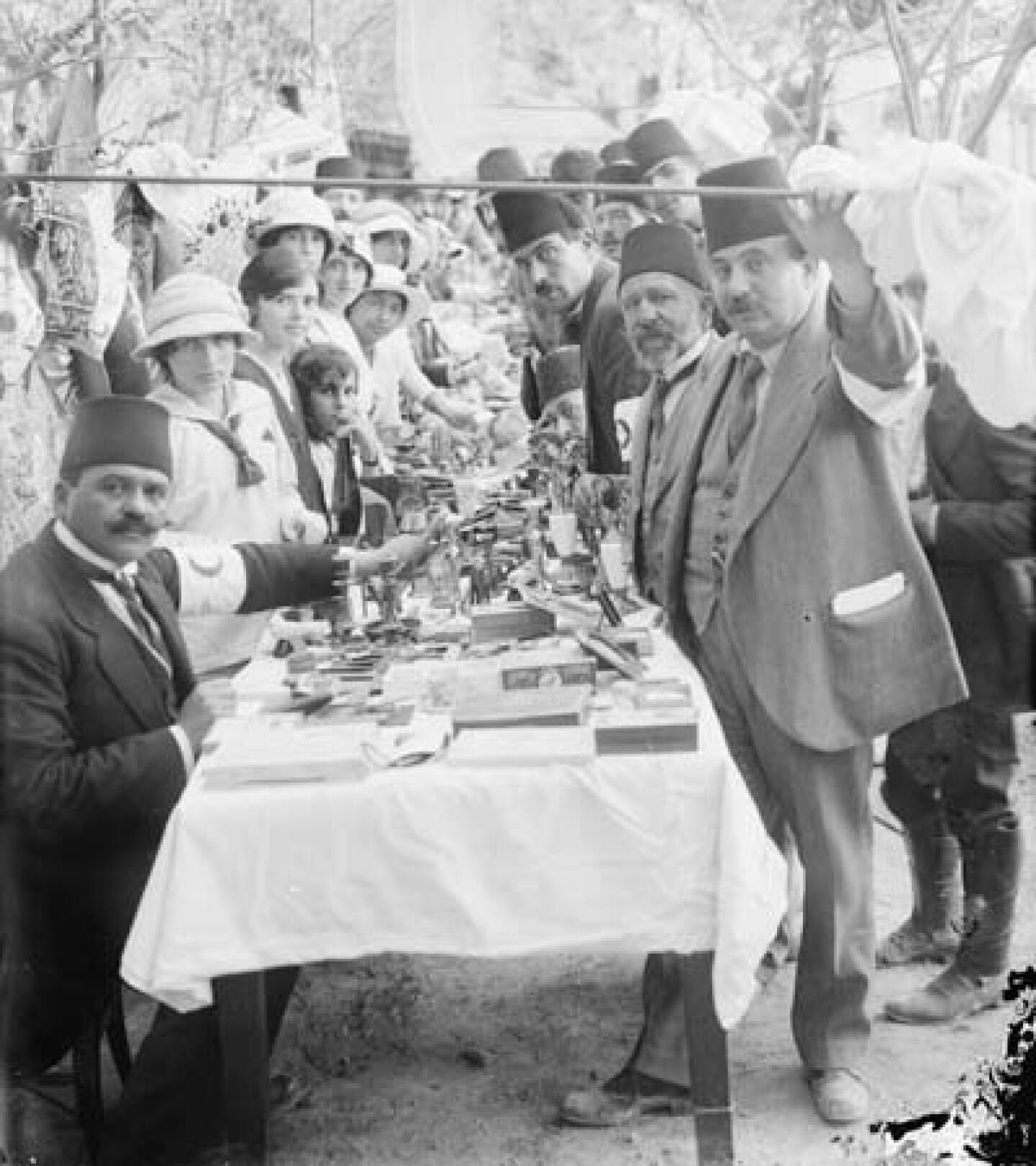
Albert Antebi at a Bazaar held in support of the Muslim Red Crescent Society. Antebi maintained good relations between his Jewish constituents and Jerusalem’s Muslim and Christian communities before and during World War I.
(Courtesy of Matson Collection, Library of Congress)
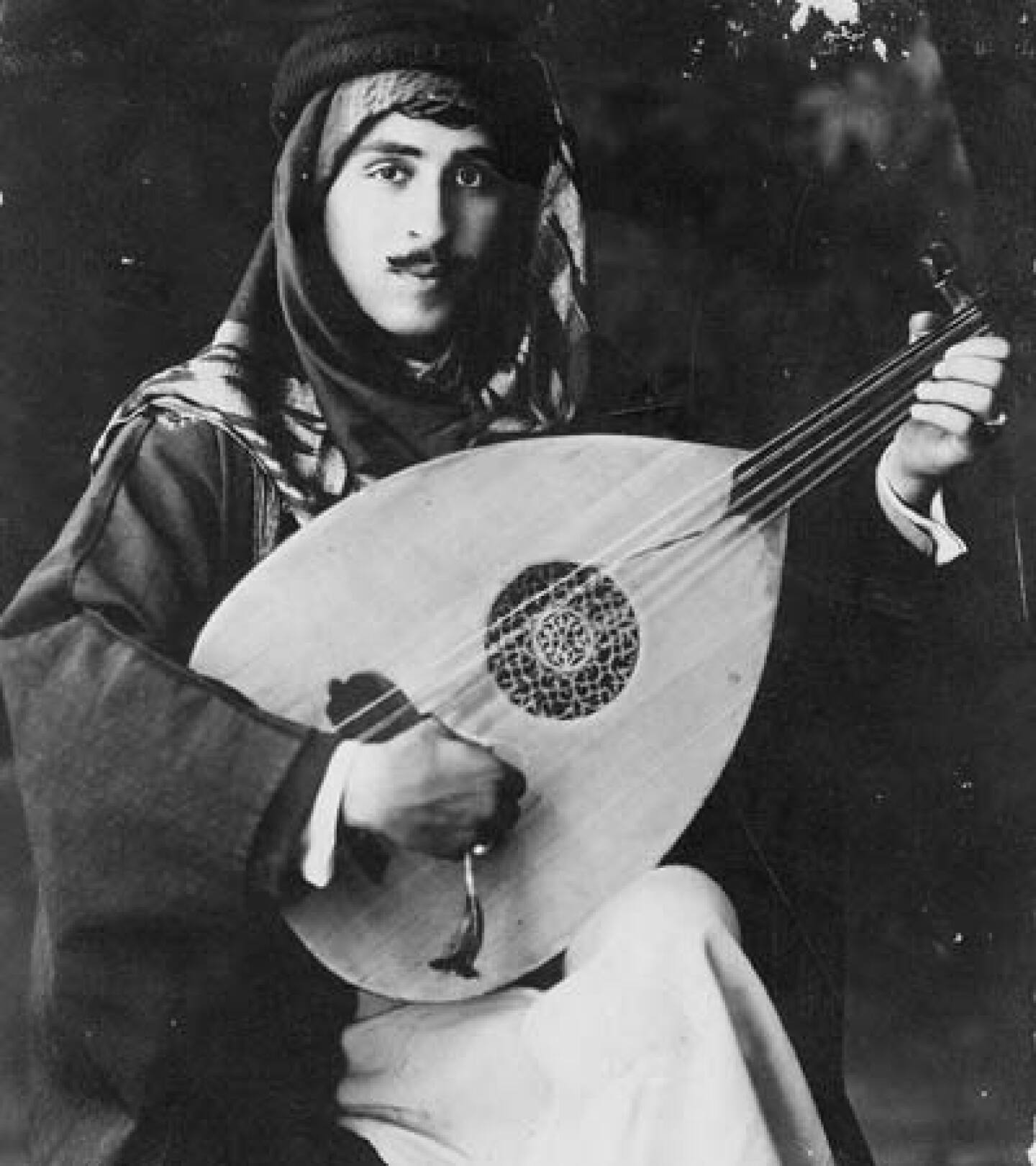
Wasif Jawhariyyeh, a musician and vagabond from a middle-class family, authored a unique record of daily urban life in his personal diaries.
(Courtesy of Institute of Palestine Studies)
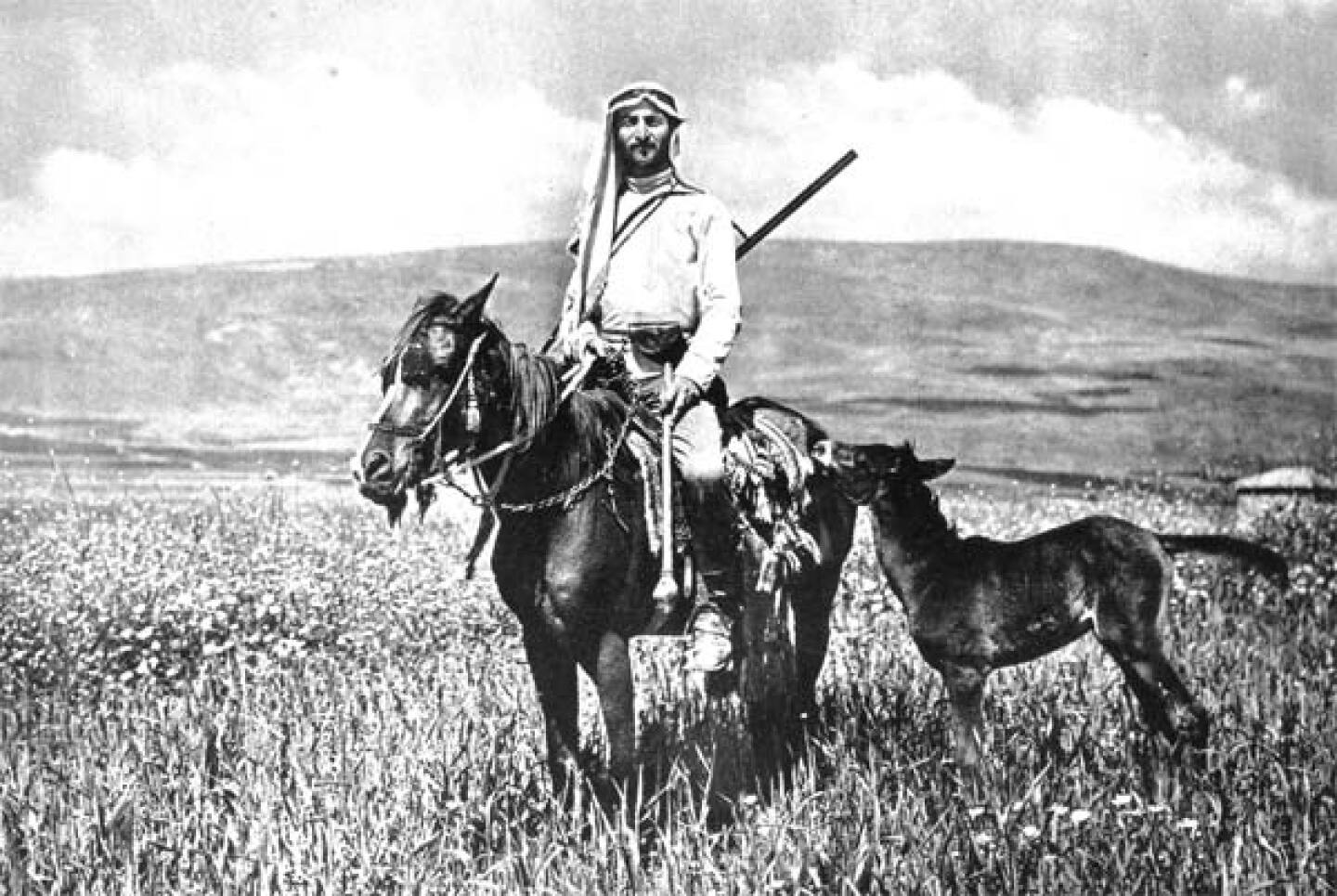
Hashomer was the first Zionist paramilitary organization, comprised solely of Jewish guards to protect collective farms and settlements.
(Courtesy of Central Zionist Archives)
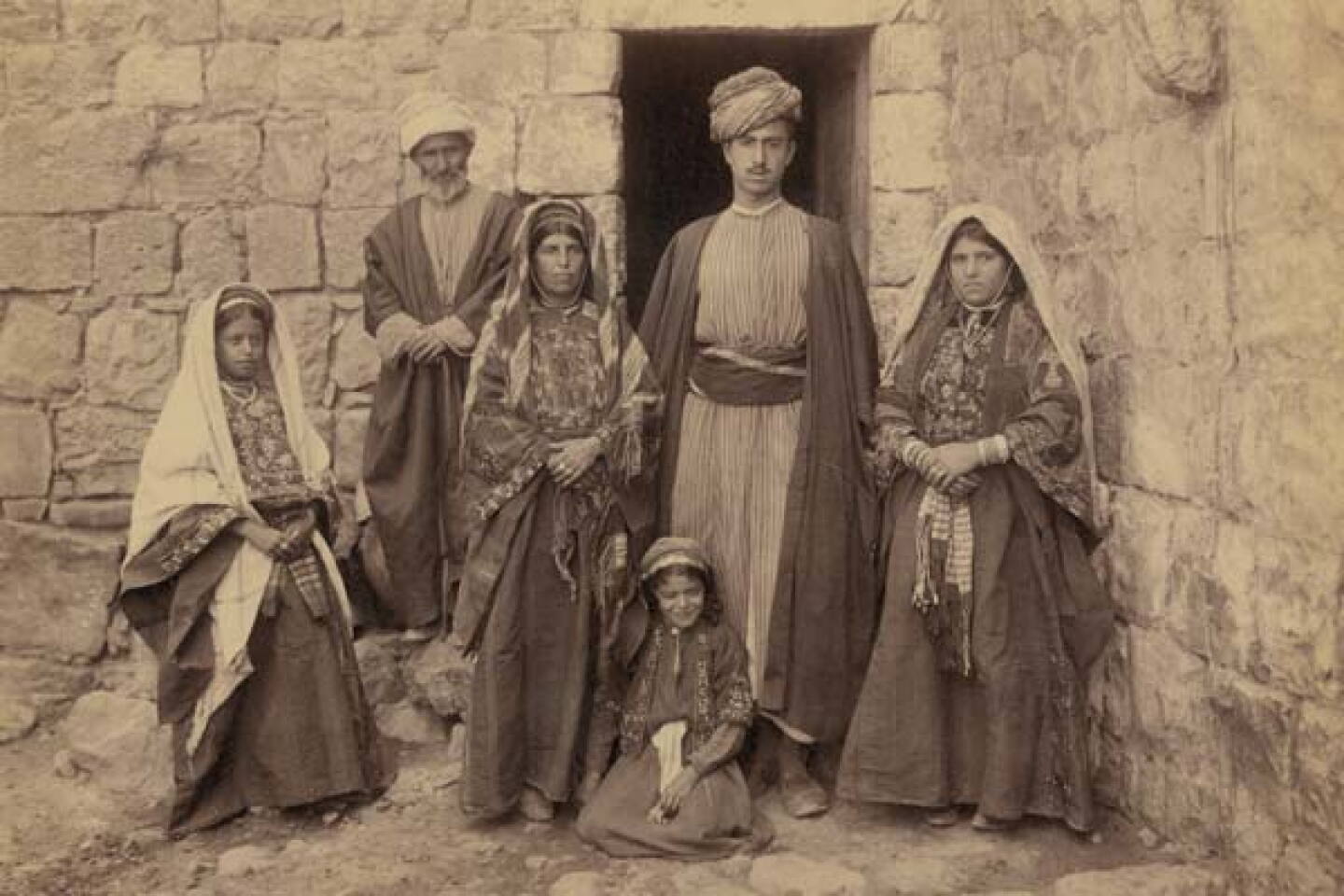
An Arab family of Ramallah, 1900-1910. Most Arabs lived in the hill towns of Palestine, away from the coastal lowlands where Zionist activity would first take root.
(Courtesy of Matson Collection, Library of Congress)

Before World War I, Israel and Palestine were made up of several Ottoman provinces. At their core was the city of Jerusalem, which was governed directly from Istanbul.
(Courtesy of Yad Yitzhak Ben Zvi)
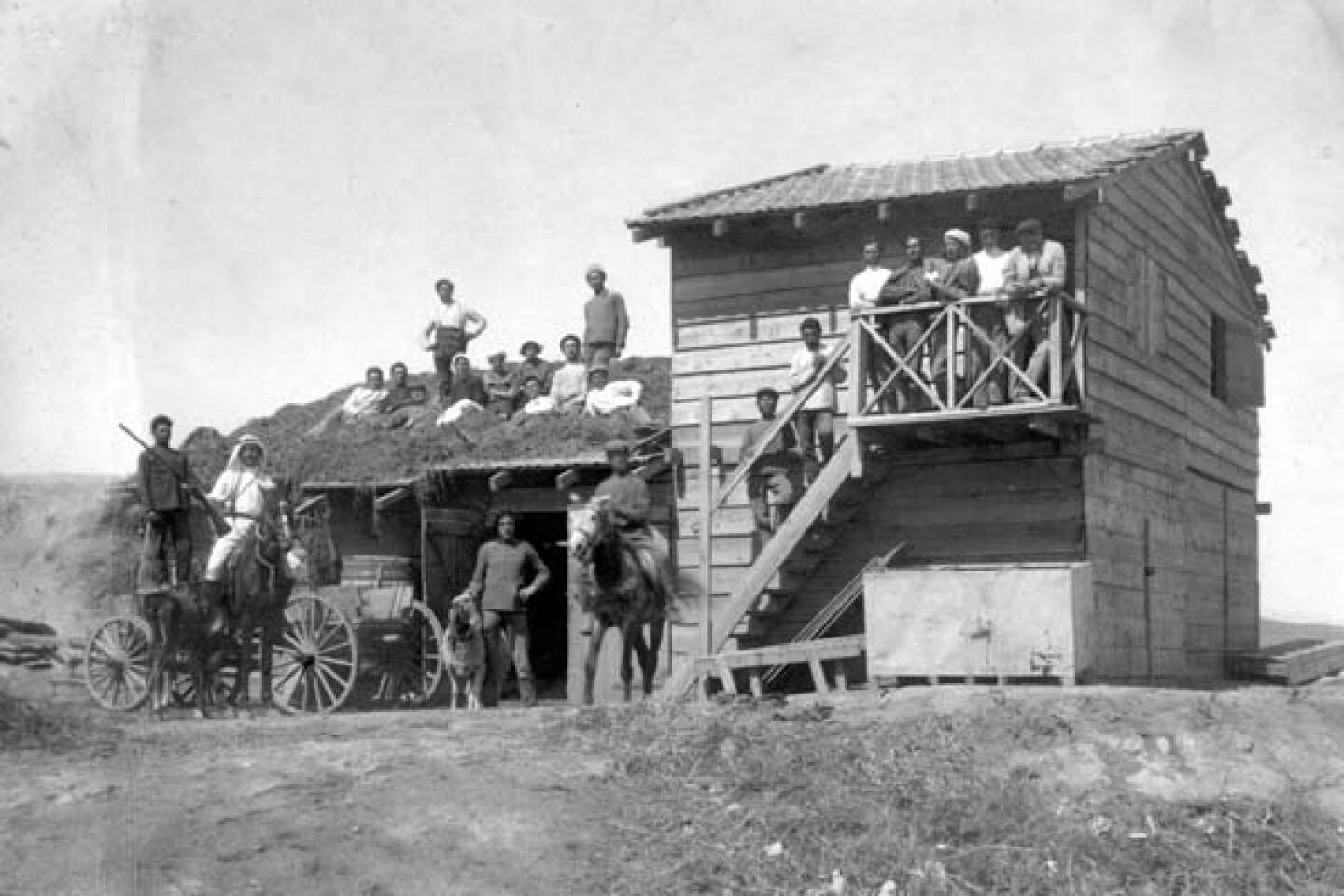
Collectives of European immigrants, soon known as the kibbutz, were an early building block of the Zionist movement.
(Courtesy of Yad Yitzhak Ben Zvi)
1/