
At a Glance
San Diego households spend more on transportation than almost every other metro area in the country. The culprit, experts say, is the automobile.
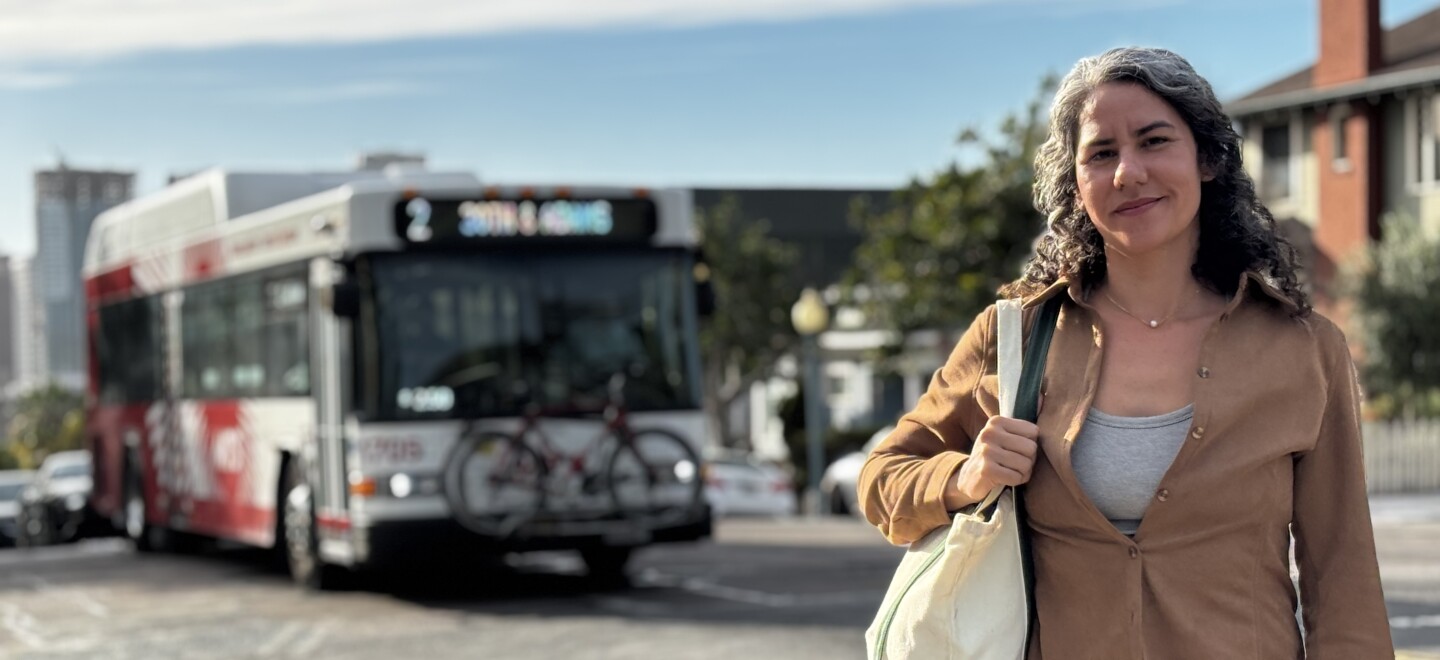
The first car Monica De La Cruz ever purchased was a black 2012 Honda Civic. It also ended up being her last car.
Roughly six months into owning the vehicle, De La Cruz got in a crash on the freeway. No one was injured, but her car was totaled. And suddenly, what had been an expense costing her hundreds of dollars a month turned into a sizable insurance payout.
"Money was tight at that time," De La Cruz said. "I had just accepted a job actually that week in Balboa Park, and our new apartment was maybe a mile from my new office. And so I just thought, 'Let's see how long we can make this work.'"
De La Cruz put the insurance check into savings, bought a bike off of Craigslist and decided to become car-free. Eight and a half years later, she has no regrets.
By the numbers
San Diegans have one of the highest transportation cost burdens in the country. The most recent consumer spending survey from the Bureau of Labor Statistics found the average household in the San Diego metro area spends 18.1% of its income on transportation. Only the Dallas-Fort Worth and Houston metro areas saw higher transportation costs relative to income.
The vast majority of San Diegans’ transportation spending — 91.2% — goes toward purchasing and maintaining private vehicles, the survey found.
De La Cruz still shares a car with her husband, Alex Gerlock. But since both of them started remote jobs in 2022, neither spends much time behind the wheel. Gerlock said they put more thought nowadays into whether driving somewhere is worth the hassle.
"The biggest change that I see is just spending more time either at home or near home, instead of feeling like, 'Oh, I can go anywhere at any time because I can drive there,'" Gerlock said. "Any place within five miles, I don't really want to drive there — and now we don't most of the time."

Most of the money the couple has saved from being a one-car household has gone into savings. And having that savings has made life a lot easier, De La Cruz said.
"Now I don't have to stress as much about when I'm grocery shopping or planning a trip," De La Cruz said. "That cushion, just mentally, is really significant."
The breakdown
Car ownership can provide convenience, time savings and access to higher-paying jobs, said Nicholas Klein, a professor of city and regional planning at Cornell University who studies transportation spending.
But despite the benefits, Klein said, cars also come with hidden costs that often fall disproportionately on low-income drivers. While car payments, gas and insurance are mostly predictable expenses, repair costs can be massive and unpredictable.
"We can cross our fingers and hope the transmission doesn't break and cost us $2,000 or whatever to repair, but it probably will at some point — but we don't know when," Klein said. "And for households who don't have a ton of money, that can be very difficult and challenging."

In addition, Klein said, automobile debt has been rising "dramatically" and is a growing cause for concern. As American car manufacturers shift toward higher-profit vehicles like luxury SUVs, many consumers are taking out long-term auto loans that allow for lower monthly payments but end up costing more in the long run.
Looking ahead
Klein said San Diego's relatively high transportation costs are likely due to households owning more cars and driving longer distances. Lowering the transportation cost burden, he said, requires long-term investments that make it easier to get by without a car.
"To rebuild our built environment, our cities and neighborhoods, is not a quick fix," Klein said. "But … that can have long-term benefits for people's budgets, for the city's budget, for public health (and) for transportation outcomes."
As much money as Monica De La Cruz has saved since giving up her car, she said one of the most rewarding outcomes has been feeling more connected to her community. She said she cherishes the simple, spontaneous interactions she sees while riding public transit that aren't possible on the freeways.
"I will get off sometimes in the afternoon and there's a bunch of teenagers coming out of San Diego High School, and the bus drivers know them and will talk about how football season is going," De La Cruz said. "These little interactions make it feel worth living here, and that I am a part of San Diego — so much more so than when I was alone stuck in a car."
_