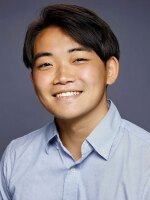
Kim Phillips-Pea traces a finger over layers of white and mint-green paint, which blend to form an image of former President Barack Obama.
Beneath the white, small traces of bright red stand out sharply. In December, the mural in the Southcrest neighborhood of San Diego was tagged with graffiti, leaving streaks of crimson across Obama's face.
But standing there recently on a warm Friday, the damage was hard to see.
“When I found out, I was heartbroken,” Phillips-Pea said. “But also just motivated to take action.”
Phillips-Pea is an artist and art director of the Southeast Art Team, which creates and restores public art in southeastern San Diego. She has been repairing murals here for more than five years.
In recent months though, Phillips-Pea has noticed a string of vandalism defacing murals of Black leaders, including Obama, Martin Luther King Jr. and Malcolm X. At a time when the federal government is trying to suppress the teaching of Black history, Phillips-Pea feels those images are more important than ever.
“Artists need to be more creative than ever right now, especially Black artists. We have contributed just as much, if not more, as far as building this country.”Kim Phillips-Pea, director of Southeast Art Team
Phillips-Pea has taken it into her own hands to defend these murals. She has already repaired the two images of Obama and is working on plans to restore the mural of Malcolm X, which sits on the wall of the Southcrest Recreation Center.
The act of restoration runs much deeper than just a new coat of paint, said Mario Torero, the artist behind the Malcolm X mural and one of the founders of the legendary Chicano Park in Barrio Logan. Repairing a damaged mural, he said, also means pouring new life into the artwork and continuing its message.
“It helps me so much to know that other people care,” Torero said. “We can collaborate together to re-energize and keep the spirit alive.”

Black history murals targeted
It was February 2025 that Phillips-Pea first noticed that a mural of Martin Luther King Jr. along the SR-94 had been tagged.
That October, Torero reached out to let her know that someone had painted a yellow moustache over his Malcolm X mural. A couple months later, she learned that two depictions of Obama in Southcrest had been tagged too — one with lettering, one with a bright red “X.”
To Phillips-Pea, it felt like those images of Black leaders were being targeted.
“In today's climate, with as much racism and hatred as we see going on, the leadership — and the representation of the leadership — is important more than ever,” she said.
Phillips-Pea began repainting the murals, one-by-one. Restoring the original mural is a delicate, sometimes painstaking process, she said. The artist has to work gingerly, using tiny dabs of paint to repair the damage.
But Phillips-Pea said the artworks are important to preserve.
“They need to be documented, they need to be protected,” she said. “They need to be treated like landmarks because that's what they are.”
Still, it has been a challenge for volunteer artists to take on the work of coordinating restoration efforts and the cost of supplies.
Right now, Phillips-Pea is doing most of the work by herself, purchasing her own supplies and using borrowed vehicles to move them around.

A broader fight to protect public art
The Southeast Art Team’s fight to protect public art started with some of San Diego’s most iconic civil rights murals.
Their initial focus was on another mural of Torero’s that wraps around the street corner at 32nd Street and Imperial Avenue in the Logan Heights neighborhood of San Diego.
That mural is a brilliant tapestry of flowing colors that includes images of Nelson Mandela, a Black Power salute and the words “no apartheid” and “justice.” Torero said he painted it in the 1980s to commemorate anti-oppression movements in South Africa, Israel and at home in the U.S.
But while Torero and other San Diego Chicano muralists were making powerful statements through their work, Torero said their art remained vulnerable to wear and graffiti. His apartheid mural was vandalized multiple times over the years.
“I guess we thought we’d paint them, and they're going to be there for the duration of the mural,” Torero said. “We never planned things.”
Sarah Bella Mondragon works with Torero. She's the executive director of the Barrio Artists Partnership, which works to help artists build sustainable careers. She said many important Chicano murals that tell the cultural history of Barrio Logan and the surrounding neighborhoods are being lost.
“We found there just wasn't a legal framework for protecting the history of the people on the walls,” Mondragon said.
In 2020, when Torero’s apartheid mural was vandalized again, activists and community leaders reached out to the Southeast Art Team to see if they could help.
Phillips-Pea connected with Torero. Together, they gathered a group of young volunteers and raised money for supplies. That summer, they repaired the damage.
For Phillips-Pea and Torero, that project marked the beginning of a new push to protect existing art and bring new murals to their neighborhoods.
Torero went on to fight the demolition of a historic mural the following year at a Logan Heights middle school. Phillips-Pea and the Southeast Art Team painted a new mural at an intersection known for clashes between rival gangs, which had been rechristened the “Four Corners of Life.”

What city officials could do to help
Still, finding labor and materials to maintain all of those projects has been a challenge, Phillips-Pea said.
Now, she is looking for ways to make their efforts more sustainable. In particular, she is asking local elected officials to consider putting public dollars into protecting art in their districts.
One way city officials could do that, she argues, is through a Maintenance Assessment District (MAD). That’s a way for San Diego to provide special services to a specific part of the city through funding from property taxes.
Rhea Aguinaldo with San Diego’s Economic Development Department said these districts are highly flexible and can be tailored to the needs of the neighborhood.
“The beauty of MADs is that the identification of the improvements and activities can be as broad or as narrow as the neighborhood and the community needs,” Aguinaldo said.
Phillips-Pea said a district could support their efforts with funding for paint and vehicles to move supplies around.
Establishing a district, Aguinaldo said, typically takes at least two or more years and requires support from local property owners and the local city councilmember’s office.
City Councilmember Henry Foster III, who represents many of the areas where the Southeast Art Team works, was not available for an interview. A spokesperson for his office did not answer questions.
Phillips-Pea is also continuing to look ahead to new murals. She is planning an image of Black musicians in collaboration with state highway officials and wants to create a new mural of Neal Petties, the former football player and San Diego city parks official.
The artist said she doesn’t blame the people tagging their murals. Often, she sees talent and creativity in their work as well. But she said protecting those depictions of history and leadership is important.
“It’s like a labor of love,” she said. “I feel like it’s my duty.”