S1: It's time for KPBS Midday Edition on today's show. Autism Awareness Month is now Autism Acceptance Month. We talk more about what that means and hear from those making it a reality here in San Diego. I'm Andrew Bracken in for Jade Hindman with conversations that keep you informed , inspired , and make you think. We'll hear more about ways local groups are helping to fight misconceptions around people living with autism. Then how one local art space is bringing together people of all abilities to create both art and community. Plus , we learn about the three ways autism , anxiety , and ADHD from a youth perspective. That's all ahead on Midday Edition. Around 1 in 31 kids in the US have autism , according to the latest estimate from the centers for Disease Control and Prevention. And in San Diego , that number is closer to 1 in 19. April is Autism Acceptance Month , a time to recognize and celebrate what it means to live with autism. And it's a different experience that it looks differently for everyone. So today we're bringing attention to local groups , creating space and sharing resources in San Diego. My first guest is Tim O'Brien. He's a board member with Autism Society of San Diego. Tim , welcome to Midday Edition.
S2: And thanks for having me , Andrew. Great to be on.
S1: I'm glad you could join us. So you yourself are not living with autism , but you do have a very personal connection to to it. So , you know , how does autism show up in your own life ? Yeah.
S2: So I am a father of two wonderful boys , 13 and nine. My older one is high functioning autistic. Uh , my younger one is high functioning ADHD , so autistic and ADHD. And I also have a younger sister who is profoundly autistic , also described as severely autistic. Um , and I grew up with her obviously so very , very closely knit to autism. I'm also on the , um , I'm a managing director at Accenture. It's a global consulting , technology and outsourcing company , and I'm on the leadership team of our neurodiversity employee resource group. And I also lead a team of 110 people doing analytics work in the space of change management , leadership and culture. And I have a number of neurodivergent people on my team as well.
S1: So you mentioned there having , you know , both a sibling and and your children , and I'm wondering what the process was for you as a parent. Um , you know , raising kids with autism.
S2: Um , we had the experience. Uh , we were living in a townhome at the time , and one of the walls was a wall length mirror , and the other was a , uh , the sliding doors to the patio glass. And he , at age four , was running back and forth for hours , slamming top speed into both the wall and the sliding doors. And we were petrified that he was going to , uh , you know , shatter the glass and hurt himself , you know ? Um , so we immediately started trying to figure out what's going on , and we didn't have the resources at the time , right , to , to really figure that out. Um , and so that's why groups like Autism Society of San Diego are so helpful , because they can really point us in the right direction quickly. Uh , so we jumped around a lot until eventually we were able to get to an autism diagnosis for him. And then the whole world changed for us because we knew what we were , you know , handling what our situation was and what his situation was. And so we were able to get him support services. You know , he had needs around , um , sensory processing. So he had , uh , challenges with , you know , what's called proprioception , his ability to sort of. Balance and take in information about his his space and surroundings. Um , he was very tactile. He needed to be able to touch and , you know , sort of run into things. Right ? To sort of manage his nervous system. Um , and then , you know , the on the positive side , right ? I mean , he he was reading at age two , you know , full fledged. Right ? Uh , so had had some , has some incredible abilities as well. Right. And I think that's kind of the balance. Right. Uh , when you're , you know , handling a child with , with autism or children with autism.
S1: You know , you mentioned how getting that diagnosis kind of open things up and helped your family. And one of the ways Autism Society San Diego is having an impact is through hosting a variety of support groups.
S2: I mean , and , you know , our mission really is to , you know , create connections , right. Empowering everyone in the autism community , right , with the resources that they need to live full lives. Right. And those support groups you mentioned are so critical to that. It's both for the autistic community. So those who are autistic themselves. Um , you know , so we have a number of communities and support groups that support. So for example , there's girl power that's for autistic women to connect to are over the age of 18. Uh , spectrum social , social space , you know , for autistic adults as well to connect. Uh , there are aware dance parties again for autistic adults. Um , and then also for , you know , caregivers and parents. Right. We have a moms group in the South Bay. We have an advocate group that meets up in , uh , Milton's , uh , restaurant over in Del Mar. You know , once a month , uh , for , you know , parent dads of autistic kids. And there's even a Spanish group , uh , that's available as well in the over in Chula Vista.
S1: So just a wide range there. Um , so April used to be called Autism Awareness Month , but it was changed to Autism Acceptance Month a few years ago in 2021.
S2: Right. So awareness means do people know about it. Right. Are they informed enough right. Acceptances to uh , certainly be understood for , for you know who you are. Right. And , you know , really it's about , you know , kind of cognitive differences , how you take in information differently , how you experience the world differently , how you engage socially with others. Uh , and it's sort of operating by , you know , a different set of rules. Right. And so then what is sort of quote unquote neurotypical , right ? Or what's the standard of society , if you will ? And so , you know , there's , um , challenges , right , for autistic people and for more broadly , neurodivergent people , which includes , uh , neurodivergent is kind of the umbrella term , right ? So autism is under that ADHD dyslexia dyspraxia for really cognitive differences. Right. And so the way people engage in the world who are neurodivergent is quite different than the way you say somebody who's neurotypical or kind of living by , you know , the standard norms of society , uh , kind of operate. Right. And so when people see those differences , they may not be as accepting of those differences. Right. Um , it might show up in , you know , a feeling of sort of weirdness or awkwardness and how you engage with someone. Um , and so my whole thing is to encourage people to think about the differences of people as positives , to think about the uniqueness , right , that people bring to the table , and how thinking differently can lead to better outcomes. Whether you're in , you know , social settings , community settings , work settings or otherwise. So I think that's really why acceptance is so key to , to , uh , to pivot to.
S1: There's also a lot of different ways to talk about autism. Um , some prefer to describe themselves as autistic people , while others may , you know , identify as people living with autism. I'm wondering how you approach those conversations. Yeah.
S2: Yeah. You know , I think it's important to have grace for everybody , wherever their language is and whatever their , you know , what is appropriate for them. Uh , we're all coming at it from different experiences , you know , different ages as well. Right. And , you know , different terms were applied , I think , in the autistic community itself , which is really people who are autistic. It's an identity first kind of language. Right. So describing oneself as autistic versus being sort of describing yourself as with autism. Right. Or living with autism. Right. Um , and so it's this , this thing that you have with you , right ? Versus a part of your core identity. Right. And so I think , you know , in the autistic community , really , people try to embrace that , by and large , but it's important to recognize that everyone has their own perspective on it , their own take on it , and we should be respectful of that.
S1: The latest data show a rise in autism across the US in recent years , and some experts attribute that to better awareness. Better , you know , more diagnosis.
S2: Number one , the DSM , right. The Diagnostic and Statistical Manual of the American Society and Psychiatric Association expanded the definition of the autism spectrum. Right. So it's actually inclusive of more sort of groups. Right. So you have everything from kind of low support need or mild to moderate needs to very severe profound autism and sort of all things in between. It's a spectrum right. And so that spectrum has expanded over time. And there's , you know , sort of additional things have been added in. So when you widen , you know , the aperture , if you will , then certainly more people are going to qualify or classify right as being on the spectrum. So I think that's one thing that's led to it. Definitely the increase in awareness , right. I have a number of colleagues who had no idea that they were autistic there. You know , some of them in their 40s and their 50s. Um , and it's just because they weren't in the know. And one of them , in fact , a colleague told them they were watching Saturday Night Night Live one night and Elon Musk was the host. And , you know , their friend told them , hey , you know , you're just like Elon Musk , right ? And then that triggered him to go and , you know , get assessed and finally found out that he's autistic. Right. Um , so you know that , again , the aperture is kind of widening. And I think that's where most of the prevalence is coming from.
S1: I want to zoom out a little bit here and talk about actions at the federal level , what they mean for the community. Um , Health and Human Services Secretary Robert F Kennedy Jr has a lot to say about autism , has called it an epidemic. It's also claimed there's a link between vaccines and autism that's long disproven.
S2: Right ? I think it's important that we take proper , uh , scientific evidence and proper basis. Right. And being able to make , you know , statements like this , um , you know , I will say , when it comes to severe autism , it it is hard. It's hard on families , right ? Um , you know , having grown up with my sister being severely autistic , right. I took a backseat to her , and I gladly did so. And I tried to do everything in my power to help her , uh , and help my family out. Right. And that meant growing up a little bit faster , right ? And taking responsibility for her. And , you know , so my parents could , could accommodate , you know , different needs , uh , that she had. You know , um , and I saw the toll that it took on my parents as well. Right. So , of course , you know , they were looking for her to live the best , most full life she could. But that wasn't going to be on an independent basis. Right. So I think on one end of that spectrum , you know , I understand where those concerns are coming from and those statements are coming from. On the flip side , there are a lot of folks who are autistic who are independently living , right , who are incredible contributors to society and , you know , and are bringing incredible innovations to the table because they are thinking and acting differently. Right ? And , you know , they're in all walks of life , right ? Everything from the arts to the sciences and otherwise. So I think it's it's important not to sort of pigeonhole people into stereotypes like this. Right. And I think , you know , this is is not serving the needs of this wider autistic community to really be seen for all the value and the goodness that they bring to society.
S1: You've been sharing , you know , your personal experience both as a brother and a father. And I'm wondering what , you know , going back to your childhood experiences you had , you know , with your sister is what you wished.
S2: Right ? And offering an understanding that , um , these are just differences , right ? It's differences of how people think , the differences of how people absorb information , how they communicate , how they have relationships with people. Right. Um , and just being acknowledging of that and accepting of that. Right. Versus , you know , kind of being more on the judgmental side. I'll give you one example. Um , um , a friend of mine posted on Facebook is a colleague of mine. Um , and he was coming back and he was on a flight and a couple of rows ahead of him. You know , diagonally in front of him was an adult woman , and she was carrying an enormous teddy bear. Um , and she was squeezing that teddy bear for dear life. Right. And he just wrote , you know , how weird. Right. And of course , you can imagine the comments that came through right now , the kind of trolling and stuff that was going on. And I just , you know , threw a comment and I said , you know , I wonder , you know , maybe she's autistic or maybe she has sensory processing difficulties. Right ? And that bear is her security blanket. Maybe she's dealing with some high anxiety and she just needs to , you know , squeeze that. Right. And to , to release , you know , some , some , you know , pressure. Right. And uh , I was saying it to just , you know , spur some dialogue , get people thinking otherwise , I happen to really shut down all the trolling and all the commentary that followed. Right. So it's not my intent , but , you know , I think it got across the point , like , hey , we need to , you know , think differently about what's going on here , right ? Uh , and just open our lens , right , as to what's happening because we don't know what's going on inside people. Right ? And regardless of whether it's , you know , autism or somebody with sensory sensory processing difficulties or even just people of different backgrounds , right ? Whether it's race , ethnicity , You know gender otherwise , right ? You know , nationality , etc.. I mean , like all these things matter to the uniqueness of our experience and how we see things , right ? So I think it's important we are inclusive to those perspectives.
S1: I want to we have about a minute left and I just want to get your thoughts. There's a saying that goes , if you've met one person with autism , you've met one person with autism.
S2: Right. So , I mean , and you said it before I could. Right. But , um. Um , look , I mean , if you take any human being on this planet , right ? I mean , even identical twins , right ? They are not the same person. Right. Every single person has their own uniqueness. Right. We all have different backgrounds , different heritages , you name it. Right. And autism is one aspect of that , right ? One aspect of a human being. Right. And so and even in the way that that autism comes forth. Right. Might be quite different. Right. You know , my my older son has an incredible ability to memorize anything and everything. He can read a 500 page book in a few hours in a day. Just incredible absorption of knowledge and retention of knowledge. You know , he knows everything about the Marvel Comics universe , right ? Um , but , you know , he has challenges as a teenager , right ? With basic things like , you know , getting some , you know , hygiene related things. You're right. And all that kind of stuff. Um , again , its strengths and its challenges. Right. Um , I hesitate to say , you know , autistic people are have superpowers , right ? Or ADHD people have superpowers. I think everybody has strengths. Everybody has challenges , and we just have to be open to that and the strengths that people bring to the table and really think more positively from that perspective. But that uniqueness is in all of us , and it is in every autistic individual as well.
S1: Well , Tim , I want to thank you so much for sharing more about your family story. I've been speaking with Tim O'Brien. He's a board member with Autism Society San Diego , and you can find more details on our website , KPBS. Tim , thanks so much for joining us today.
S2: Thank you so much for having me , Andrew. Take care.
S1: Coming up , we continue our conversation on autism acceptance and learn about a local art space , putting it into practice. You're listening to KPBS Midday Edition. Welcome back to KPBS midday edition. I'm Andrew Bracken in for Jade Hyneman. Autism Acceptance Month is all about promoting inclusion , reducing stigma , and celebrating autistic voices. Local nonprofit revision is doing just that through art. Their mission is to provide inclusive access to art and community for people with all kinds of abilities. Joining me to talk more about it is Jessica Berenson , a creative mentor with revision , and also Zoe Burleson. She's a resident artist. They're both joining us from Revision Artspace in Hillcrest right now. And welcome to you both.
S3: I thank you.
S1: Thanks so much for having us. And we see all the art in the background there for those on the radio that can it looks really cool. Space. So , Jessica , you work with nearly 40 resident artists as a mentor at revision. Tell me about the space and its vision.
S3: Oh , great. We have two studio locations , as you mentioned , 40 artists between the two spaces. Um , each space is a little different. We have our Hillcrest spot that has a large gift shop. We get a lot of sidewalk neighbors stopping in. Then over at la mesa , we have a larger space. That's where we do events , and we have event rental there as well. And it's a it's a larger space , um , better parking lot. So we have we have versatility within our spaces. And the mission as you stated is inclusivity with within the arts. So all artists and creatives are welcome to our space.
S1: And yeah , I think we saw a couple folks from the sidewalk come in earlier before we got on the air there. So you're getting a lot of visitors , but it's nice to hear more about your space. Zoe , you started as an artist with revision a couple of years ago.
S4: If I say , hey , I want to do this random project that needs this , this and this , like here , let's get working on it. Let's do this.
S1: So yeah , it really allows you to kind of , you know , kind of express yourself in a variety of ways. And I want to hear more about your work.
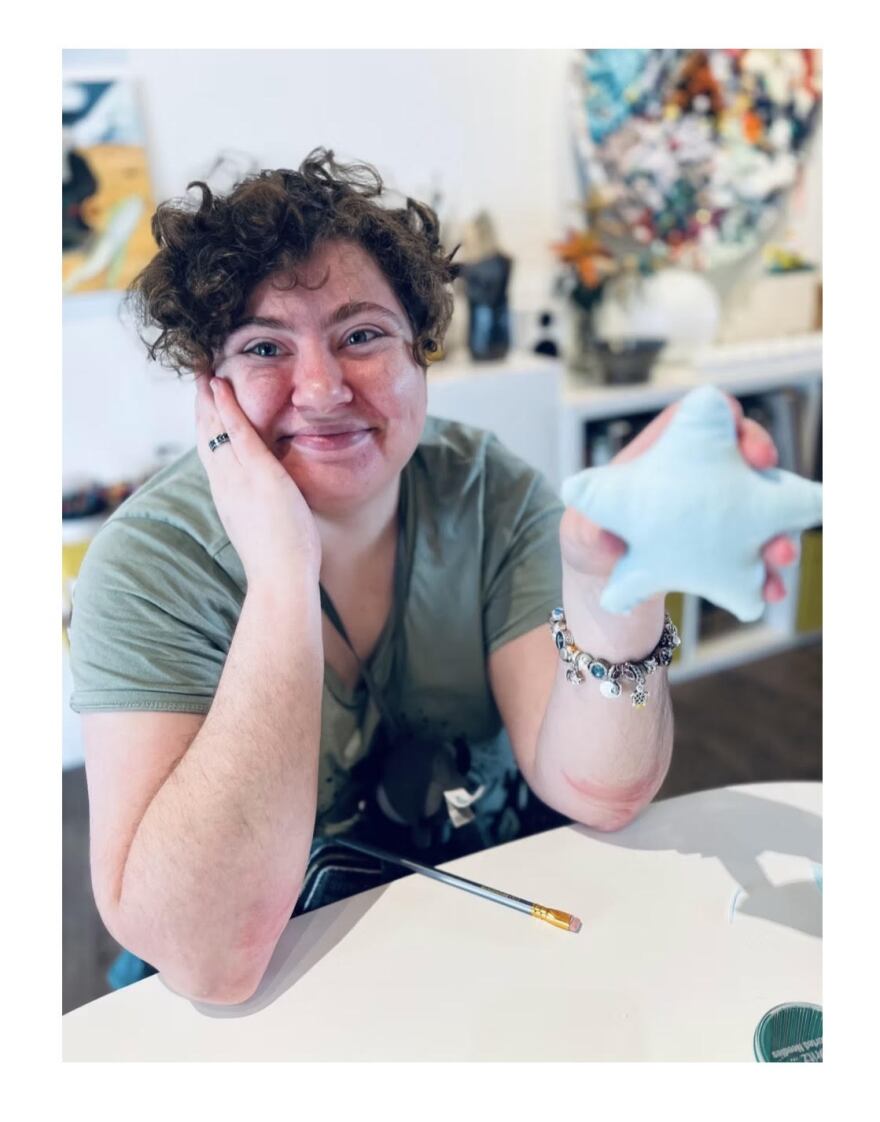
S4: I love making stuffed animals by hand completely. I also love , um. I've recently been doing miniature paintings using basically temper paint that's in a glue stick and micro paint brushes and a black paint.
S1: Well , I want to hear more about about that as well. But the stuffed animals you guys just showed off. Jessica.
S3: So you sow crochet as well. Mhm. Um , knit. More.
S4: More.
S3: Um embroidery.
S4: Embroidery a.
S3: Lot of. Yeah. So , so the stuffies that she makes are so whimsical and cute. This this one here is a teddy bear , and this was actually featured in a huge art show in Los Angeles. So Zoe. Zoe had her piece there at the Central Library , and the whole show was for progressive Art studios. Um , so it was a big deal for revision to participate as well as the other studios involved. And this little bear here made its way all the way to Los Angeles to be part of that show. So Zoe's creations are fun , bright , colorful , whimsical , um , cute , I would say , uh , she loves. What's your favorite animals to to make stuffies out of Katy ? Cat.
S1: Kitty cats. Nice way to go. Yeah.
S3: Yeah.
S1: But you know , you can you hold up that bright one ? I mean , there's all sorts of colors in that one , right ? It's orange and green. Zoe , tell us more about the inspiration for that.
S4: That is actually a character from a video game that I really like. And it its name is stitch and it's a teddy bear. And it's always really. It's one of the characters that I always liked seeing in my game , because it was always so cute , and it's like , it's not the traditional cute , it's unique and it's designed to be different , and I love that.
S1: Oh , that's. Yeah. That's great.
S4: Um , visually , I can't picture things in my brain. Like if you said pic , close your eyes. Picture in orange. I can't do that. I'd just see black. So when I get struck by an idea , I'm like , okay , let's go. We're going to do this.
S3: For the people who don't know about that , um , condition.
S4: Wow.
S1: Wow.
S3: There's a name for this. The way that the brain works when it does not have the ability to picture something visually. And so , Zoe. I guess you've had this for some time , but didn't know that there was a name for it.
S4: I was watching a video on YouTube and another artist was like , yeah , I can't do that. And all the other people in the. You're like , what ? That's not normal. Like it's it's not. Wow.
S1: Wow.
S3: So as a as an artist , to be able to create without that , that visual is , is something special.
S1: It's really a process. Yeah.
S3: Yeah.
S4: Really hard sometimes. So I use images from Pinterest or just when I am asleep , I can see the things I want to create. So I'm like , okay , I'm awake. I know what I need to do now. Yeah.
S1: Yeah. First thing in the morning , you get right to it. Yeah. Yes.
S3: Yes.
S4: I just get into the studio. I'm like , okay , we're doing.
S3: This like , we have to act quickly or I'm gonna lose the inspiration. Yeah. Jessica.
S1: Jessica. Art therapy has been shown to help with stress related symptoms in autistic children , and it's also been found to improve social communication.
S3: It's art. Art therapy. I think art is therapeutic in nature. I would venture to say most artists believe it to be that way. Uh , that's that creates passion and also healing. While while an artist creates. So revision is all about us being a safe space. As in , everyone's accepted , no matter their personality , their quirks , their sensory issues. Um , so everyone's welcoming that way , but then create creatively we have a lot of freedom to. So we do not , um , we do not have a strict lesson plan. Artists are completely able to. Have their own artistic journey. They choose what they'd like to work on , which mediums they'd like to try , which projects they want to step into. So it's it's an incredibly free and healing space.
S1: Zoe , you mentioned video games earlier and I want to talk a little bit about pop culture , but as it relates to autism , from TV to movies , the reality series love on the spectrum , it's become a huge hit over the last year or two. Right ? Um , it's this it's reality series on Netflix , and I'm just wondering how you view shows like that.
S4: It's exactly that a person. And each person is different. Yeah.
S1: Yeah.
S3: Good point. Good point. It it has taken a long time , but it's a it's great. It's great that it's more mainstream that people can understand differences , um , that individuals have with their neurodiversity. And , and it's a long time coming. But but I think it's , it's fabulous that people can now recognize some of these characteristics.
S1:
S4: We have opinions and ideas , and a lot of times we can't bring them up because people don't see our ideas as just as valid , or we don't get the chance to use our voices , because a lot of people don't even think we have the voices to do so. So just being interviewed like this and having a space like revision gives people like me a platform to just do stuff that makes us feel like regular people , and it's amazing and it really means a lot to me.
S1: Oh , thanks for sharing that.
S3: Um , we have a variety of art forms here , available to view to purchase as gifts , and we also participate in art shows within the community. So the art forms go from painting , drawing , your traditional visual arts all the way to ceramics. We have a ceramic program , we have textile arts , we have illustration , digital , I mean , you name it and we will try to make it happen here.
S4: We even started having , um , resident artists led , um.
S3: Oh , yes.
S4: Um , events at least. Um , every Friday. Yes.
S3: Yes. We , we started a new series of teaching artists. So our , our artists are getting experience teaching the community members their , their skill and their , their craft , which has been really fun. Zoe was a I. Was.
S4: Was.
S3: The first.
S4: Person to be , um , a resident artist. That was a teacher for revision , and I taught About 20 people. How to make key. Like a little plush keychain. Oh , great. And it was.
S3: So sorry about our Siri in the background she's talking to.
S1: Oh , I missed that. But , Zoe , I mean , you kind of shared a little bit your journey here of creating the art from , you know , the the , the stuffed animals , you shared the cats , but also you mentioned your painting styles and it just sounds like you have a lot going on. And I'm wondering if you can tell us a little bit about what you've planned for your art.
S5:
S4: To have it displayed , but in a museum. I also would love to sell my jewelry that I make. Um , unfortunately , all the jewelry that we had at the store was sold before we could get it.
S3: Fortunately , unfortunately. Unfortunately. Right. Unfortunately. Because you have to make more now. But no.
S1: It was too popular.
S3: She's sold out.
S1: Well , Jessica.
S3: We're on fourth Avenue near Sisters Pizza. If you know where sisters is. We're right next to that. And we have an Instagram that is always updating. So if you want to check out what's live and new , check out our Instagram revision San Diego. And then , um , in addition to coming in in person or checking out Instagram , we also have our website. So check us out. Revision San diego.com.
S1: I want to thank you both so much for sharing more and sharing a little artwork. We're going to try to have some images up on our website , because I know this is great audio because people can't see the great stuff. But I've been speaking with Jessica Berenson , a creative mentor with revision , and also Zoe Berlin , a resident artist there. And you can find more details about it and work. You know the photos of Zoe's work on our website at npr.org. Thanks so much. We really appreciate. It.
S3: It. Thanks again so much. We appreciate. It.
S6: It. Thank you.
S1: Up next we hear about the three A's. Autism , anxiety and ADHD. KPBS Midday Edition returns after the break. Welcome back to KPBS Midday Edition. I'm Andrew Bracken in for Jade Hyneman. The podcast voices del Valle spotlights coming of age stories from the Imperial Valley. It's told through the eyes and ears of local teens at Central Union High School. Today , we're bringing you a portion of their episode called The Three A's Autism , anxiety , and ADHD. Podcast host Angela Sanchez spoke with Eileen Ojeda to talk about her experience with autism and how she uses poetry to express herself. Hello.
S7: Hello. Thank you for joining me today. It's Angela. Um , I'm here with Lola. Um , today we're here to discuss your poem. Um , can you give me a little bit of insight on that ? Sure. No problem. Uh , my poems , my computer , that computer is supposed to be. It's supposed to be on metaphor , on autistic identity , and how it functions in a world where difference , especially neurological difference , is not normalized , nor is it generally accepted yet. So my goal with the poems was To show you both sides of the coin. So we have the person who , uh. For a stand in for identity was a computer. Since computers , though , they look the same , they function the same. Their inner workings are vastly different. That sets them apart from each other. Let's say an Apple , a MacBook. Compared to a Dell computer. They work the same. They do exactly what they're intended to do , but their functionalities and their haptics are significantly different from each other that , you know , that sets them apart. So my goal with my poems is to use that as an allegory , as a stand in for autistic identity. So in my poems , I explore how how our first protagonist feels about the second protagonist feelings on the different computers , and how strange it was for the second protagonist to see the first protagonist , um , a device , and how confusion quickly developed into alienation and , you know , villain ization of the first , uh , protagonist. It's something that I've heard happened to so many autistic individuals , and it has even happened to myself. And by expressing that through my poems , I feel like let's a lot of other people , autistic people like myself , be seen and heard. And it shows how scary and cruel the world can be. Just because someone is different. Mhm. That's beautiful.
S8: I think that's really inspiring because even , um. Growing up , I had a lot of neurodivergent cousins and , and , um , family members , friends. And they were always so nervous to speak to me when we first would meet. And it's so like , I know , like , and this is a safe space , dear. Everybody's equal. This , um , but especially here in the Valley , people are very kind. Not very. But it's a possibility that some people can be , um , narrow eyed or people.
S7: Have a very narrow view on autism because of either the media they consume or like hearsay , they would hear from either their parents or just friends or just passing comments from their environment. And they just they feed into , um , they feed into this idea that autistic individuals are inferior , that they're not capable of certain things , or it's something that can be cured or fixed if you do certain things and it actively harms the community. And with my poems , I actively wanted to show how quickly that can develop , how those ideas of like , you know , this person's weird because of how they act. And because of that , I want them to feel miserable. I want them to see how because of your difference , it won't make anybody like you or like because of your difference , no one will want to be with you because you're different. And especially now since , um , since people hate when other people are different or deviate from the norm , it's automatically a response to bully or harass that person or make them feel lesser. And I feel like that is like in the fact that it's being normalized and people are being desensitized to those actions. It hurts me a lot , especially because I went through exactly what those people went through. I was bullied in the fourth grade because I was different. I liked certain things , and one person didn't really like that , and I was physically and verbally , um , bullied because of that. And I still hold some of that trauma with me to this day. And seeing it now more louder than ever , being normalized more than ever. It it hurts. It really does hurt.
S8: It does. And I'm sorry that you had to go through that. No.
S7: No. No worries. I'm. I'm all good now. Trust me. I've had very supportive people around me that helped me go through , um , that very tough time in my life.
S8: That's amazing. It's always amazing to have , um , people surround you by love and know and feel that you're loved. So that's beautiful.
S7: And this revolves the second poem with the second protagonist. The very last line I thought was like , like even when I typed that , I was like , wow , this. Even though it's a short line , I was like , wow , this , this hits something in me.
S8: And sorry , the line was , um , I'm gonna tell everyone , right ? Um , okay , perfect.
S7: That Line saying that I'm going to tell everybody. Meaning ? Because they're weird. I'm going to spread so many lies , so many rumors , so many things about you that is going to break you down and to show that you are lesser than everybody else.
S8: It's kind of giving them a taste of their own medicine , like proving to them , you're not going to push me down because even everybody deals with that. But it's just it's just becoming louder now.
S7: And they find fulfillment in causing harm to other people because they don't have anything else other to do than to cause harm. They do nothing but cause harm to others , and that's what brings them the most joy and satisfaction and then makes them feel more , makes them feel more empowered because they have these people under their thumb to keep telling them , I'm better than you because you like the certain thing or you are a certain way.
S8: That kind of mindset is so harmful. I remember in my experience , I'm young , I'm growing up , my friend , my friends would try to push me down because I was a little. I acted a different , um , in a certain type of manner. Um , but I was always so happy with myself. I was the happiest. Like nothing could ever stop me. Exactly.
S7: Exactly. People thrive off of misery. And because they're miserable , they feel like they have the right to make everybody , everyone else around them feel miserable as well. And that , especially is become the norm that past like year or so.
S8: And and it's it's so you can be so blind. Anybody can so be can be so blind to it. Your best friend or not saying it will happen but and it's it can it's always a possibility that somebody will feel better at you than something. It's just how they vocalize it to you if they accept you. If they reject you. Mhm. Um , it's like game of cards. You never know what's going to happen. Right. But it's always best to take it in stride. You , um , make the best out of it , I think. I think that's what's helped me. Mhm. How do you feel ? What do you think about that.
S7: Like to be happy. Like content where you are.
S8: Like do you feel like you're at a place that's.
S7: After what's happened the past four years ? I'm a senior. Now I'm happier more than ever that I'm. That I'm leaving this school because , um , freshman and sophomore year , I would say it were the lowest points of my life. Mhm. Um , I came out of quarantine right after eighth grade , so I didn't have the chance. I didn't have the chance to finish middle school properly. Uh , I came into high school completely , like kind of lost because , you know , I , I had to stay at my house for more than a year , uh , going into a brand new school without , you know , without preparation , without any help. And I feel like that's what really I feel like that's what really hurt me. The first two years , freshman and sophomore year , my grades were awful. I was an upstanding student. Yes , but if you take a look at my grades back then , they were. They were atrocious. Um , but junior year is when I really got a grasp of myself and decided to turn that on its head. I decided to say , enough's enough. I'm actually gonna , you know , work towards things now. I'm going to take things seriously. And junior year , I was I worked hard , I did great , and now here senior year I've learned from the past three and was like , you know what ? This time I'm actually going to stay on top of my game , and I did. I have stellar grades across the board. A's and B's. I'm doing fine. And I'd say right now I am happy that I've ever been.
S8: Thank you so much for joining me today. Um , I'm so excited to discuss your poems.
S7: No problem. Hey , this is a set of two poems. I'll read out the first to you. It is called My Computer. I sat at my desk , as I always have , starting a new day. I reached into my bed to grab my computer. Trusty sleek and grey. The one ? No , no , the only one anyway. I look around me. People are staring. Their computers are black and bulkier. Was I in the wrong room ? It's class time and I have to work with someone else. My mind is filled with dread and doom. Things were fine. There was nothing to know. We had to use computers. A lump come in my throat. We came across a few errors , a few bumps in the road. Nothing major. We can make things up. But then she asked the question was a major hiccup. Your computer is weird. Why isn't it like mine ? It's all that I have. I don't really know why. Back and forth we went. No longer meeting eye to eye. And class is over. She didn't bother saying goodbye. But why does it matter ? They work the same , don't they ? Inside and out , they're almost one to none. At least to me anyway. And this is the second poem. It is called that computer. Another day again. Nothing special. Today I got out my computer standard , black and heavy , just like everyone else. And Evie comes in. I saw what they have. Thin and dainty. Why does their computer look like that ? The bell tolls. The lesson starts. We have to work with partners. Let's see. They talk funny. Look at me. Bizarre. That's fine , I guess. When their heater came out , it was a mess. It's bugging me like a tag in the back of my shirt. I can't keep this in forever. This needs to be addressed. Your computer is weird. When is it like mine ? I said it's all that I have. I don't really know why. They replied into dread. Playing a game of tug of war with a rope was our words , feeling the tension come off like a bad rope burn ? It's weird. They're weird. The computer they have is weird. And I'm gonna tell everyone. Wonderful.
S8: Wonderful. That was beautiful. I love it so much. Um , thank you so much for sharing your poem and your problem and your thoughts , ultimately your perspective. Um , um , and to our listeners , I do hope you enjoyed this glimpse of the created mind of of this beautiful poem. Thank you for having me.
S7: It's an honor.
S1: That was an interview from the podcast Voices Del Valle about growing up with autism. The podcast highlights coming of age stories from the Imperial Valley. You can listen to all episodes at KPBS. Org. Season two comes out this fall , and we actually had some of those students behind the podcast visit KPBS last week , and we asked them to help us close out the show.
S9: Thanks for joining us today. If you miss anything , you can download KPBS Midday Edition on all podcast apps. Don't forget to watch Evening Edition tonight at 5:00 for in-depth reporting on San Diego issues. Also , you can always share your feedback or segment ideas at midday at KPBS or call us. The number is (619) 452-0228. Thanks for. Listening.
S10: Listening.