In the face of parking fee changes at Balboa Park, there's increased scrutiny on accessibility and who the park — and by extension, culture — belongs to. But for Balboa Art Conservation Center (BACC), a park organization without ticket revenue or even a front door, accessibility means expanding who it serves and what is considered art worth protecting.
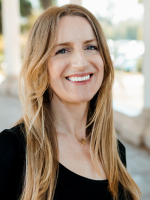
"I like to think of us as like a hospital for artwork," said Leticia Gomez Franco, executive director of BACC, a nonprofit that helps museums and the public treat, protect and care for paintings, paper, sculptures and artifacts.
"When something gets damaged, something gets broken, something is torn, it comes to a place like this, and our art conservators are like doctors for artwork and cultural heritage materials," she said.

Conservator Morgan Wylder knelt on the floor in front of a sculpture of the Virgin Mary sent to BACC from Mission San Luis Rey in Oceanside. With a slender brush, Wylder dabbed peach and beige paint across small faces at Mary's feet.
She pointed out some of the elaborate patterns and coloring — silvers and golds, a floral dress and cloak of stars — now tarnished and muted. It's important for conservators to consider whether identical, mint restoration is the goal, or whether the parishioners would still recognize their art.
"You could imagine she had this sort of very beautiful, very queen-like wardrobe," Wylder said. "We don't want to make her look brand new again — we want her to look historic. But at the same time, we want to make sure that she's stable and that there's no paint loss visible."

Beyond repairs and mending, Gomez Franco said BACC also does preventive work, just like doctors. Preventive health in art conservation means taking stock of and fine-tuning environmental factors like humidity and temperature, or carefully measuring exposure to light.
They're also detectives, solving mysteries about objects and art using forensic tools like imaging and chemical testing.
A small lab-like room in BACC's headquarters in Balboa Park is dedicated to imaging and this forensics work, with a new digital X-ray machine, a light board and more. A periodic table is affixed to the wall.
Imaging can show underpaintings or mistakes, the direction of a sculptor's knife, even a cover-up: Goliath's severed head in a San Diego Museum of Art painting was once considered too gory.

Conservator Alexis Miller held up an XRF device, or handheld X-ray fluorescence analyzer. It looks like something out of “Star Trek.” By holding it up to a painting, she can glean even more information, telling the art's full story, and caring for the people who come in contact with it.
"It gives the elemental composition of what the pigment is. So if it has mercury, we know that it's vermilion," Miller said. "But it can also be used for pesticide residues on community objects. Like if it has arsenic, has been treated with arsenic, that the community needs to know that before they handle it."
When museums return objects like baskets or textiles to Indigenous communities, those objects were sometimes treated with pesticides or arsenic while in storage. XRF can detect that.

Traditional X-ray technology in art conservation was expensive and only available to the highest bidder. After fundraising for digital equipment, the center can do more, for more people.
"Some of these things can be lifesaving," Gomez Franco said. "And it isn't until we have the luxury of access that we can actually begin to think of how we can begin to repurpose these tools and these spaces for a broader use."
It isn't until we have the luxury of access that we can actually begin to think of how we can begin to repurpose these tools and these spaces for a broader use.Leticia Gomez Franco, BACC
One of the co-founders of The Front Arte y Cultura gallery space in San Ysidro, Gomez Franco has worked in nonprofit art and culture spaces for years. Access in art is something she spends a lot of time thinking about.
"You can literally go down a list and think about the reduction of barriers that prevent access."
She said those barriers include transportation, cost, language and physical accessibility. But she also wants more arts groups to consider belonging.
"You can do all of those things. You can have a free park with free parking, with free everything, and still people not feel like they're welcomed," Gomez Franco said.
In recent years, park groups have been doing the work to make Balboa Park more welcoming, " I myself feel more welcomed in the park. I haven't always felt that way," she added.
For the five years Gomez Franco has led the organization, the center has reduced its reliance on earned revenue, such as client treatment services. For an arts nonprofit without visiting hours or an open door, thinking about access means thinking outside the box.
"It made us only available to the paying customer. And that is not how a nonprofit should behave. It wasn't until the team here really got to think about: What is our purpose? What are we doing that is different? What is our contribution to the public good? And really thinking about the ickiness of having to turn away cultural materials that were damaged or in need of care because communities didn't have the funds to pay for them," she said.

In 2020, BACC — which is the only nonprofit art conservation organization in California — made some big changes. It moved away from transactional work and gradually built programs and projects that served the community, looking more to grant funding. It also diversified its workforce.
It matters that there are folks advocating for all cultures and for all communities.Leticia Gomez Franco, BACC
" The field of art conservation is one of the least diverse in the entire arts ecosystem," Gomez Franco said. " That is a problem. If these are the roles that are charged with caring for items and deciding what items get to live on, it matters that this field is diverse. It matters that there are folks advocating for all cultures and for all communities."
Helping people understand how to conserve anything from family photos to graffiti or heirloom quilts — it's all part of the work Gomez Franco and her team are doing to help people see themselves in art. This includes internships, education programs and a conversation project with the Chicano community to explore what conservation may look like in their lives. Sometimes, it's just showing kids 200-year-old mortar and pestles and asking them if their parents cook with one at home.
She wants the public to think about preserving their own objects, even if they don't imagine them in a museum.
"We are trying to democratize and demystify the work that we do here so that everybody could be a part of it," Gomez Franco said.