


Catch up on the Winter Games: full event results, final medal standings and highlights from Team USA’s hometown heroes.
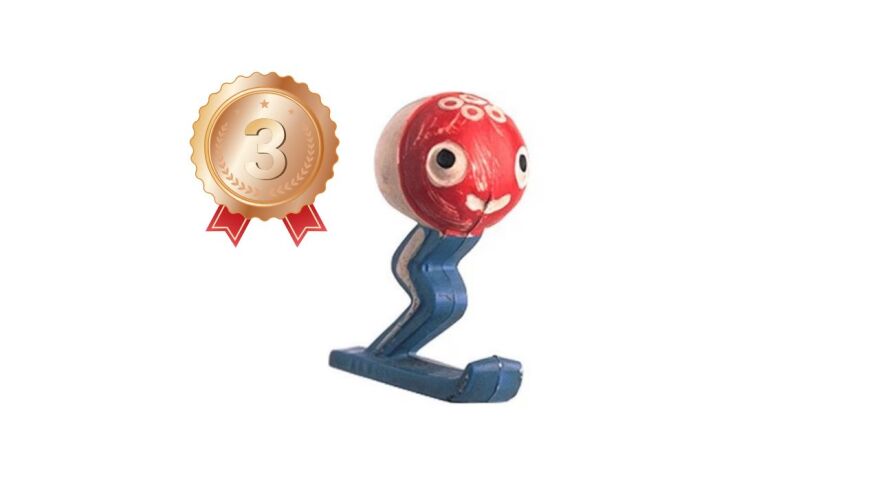
Since the first Olympic Winter Games in 1924 in the French Alps, mascots have become a quirky, beloved tradition — just like in the Summer Games. That first-ever winter mascot? A lightning bolt-shaped little ski guy named Shuss, created by Aline Lafargue for the 1968 games. With a two-toned head representing the Olympic rings, Shuss was bold, maybe a bit bizarre, and born under pressure — Lafargue had just one night to submit the design.
This year, we asked San Diegans: Which adorable (or weird) 2026 Winter Olympics mascots won your heart?
The votes are in; take a look at the winners.
1 of
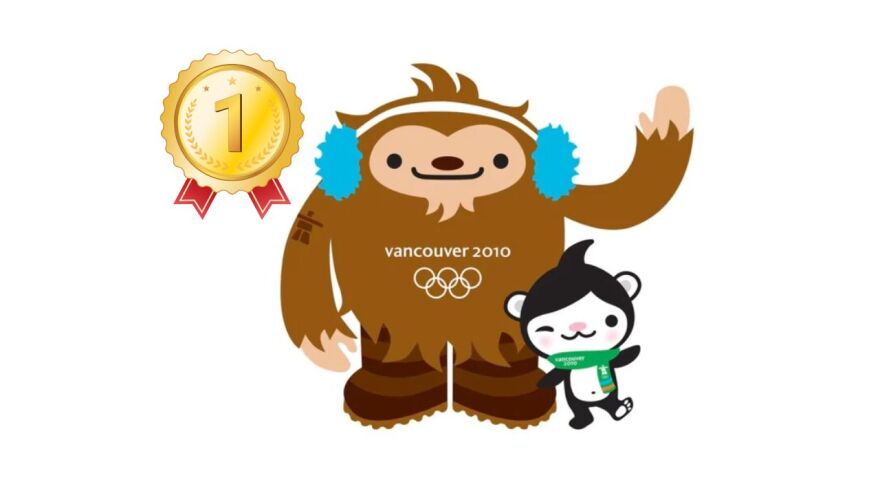
Mascots of the 2010 Vancouver, Canada Winter Olympics, Miga and Quatchi, were inspired by West Coast First Nations legends. Miga is a mythical sea bear, part orca and part Kermode bear. Quatchi is a sasquatch who lives in the forest and sports earmuffs and boots.
Meomi design

2 of
Bing Dwen Dwen, the panda mascot of the 2022 Beijing Winter Olympics, wears an ice shell resembling an astronaut suit — a nod to technology and the future. A colorful halo represents advanced sports tech, while a heart on its paw symbolizes China’s hospitality.
Cao Xue
3 of
Shuss is a little man on skis designed by Aline Lafargue for the 1968 Winter Olympics in Grenoble, France. Lafargue designed the mascot in a hurry, with only one night to create a plan for submission.
Aline Lafargue

4 of
Stoat siblings Tina and Milo gear up for the 2026 Winter Olympics and Paralympics in Milano Cortina, Italy, in this undated graphic. The siblings are playful, curious symbols of Italy’s vibrant and dynamic spirit. They love sports, the outdoors, and having fun — embodying the contemporary Italian lifestyle.
Milano Cortina 2026

5 of
The 2002 Salt Lake City, USA Winter Olympics featured three mascots named after Utah’s natural elements: Powder, a snowshoe hare; Copper, a coyote; and Coal, a black bear. Their names allude to the state’s snow, minerals, and landscape, with designs inspired by ancient Utah cultures.
Landor/Publicis

6 of
The 1984 Sarajevo wolf mascot Vučko was chosen through a contest entered by 836 participants. The Bosnia and Herzegovina mascot was chosen to embody courage and strength and symbolize winter.
Jože Trobec

7 of
Haakon and Kristin were the first human mascots in Winter Olympics history, created for the 1994 Games in Lillehammer, Norway. They represent historical figures from 13th-century Norway.
Kari and Werner Grossman, based on an idea by Javier Ramirez Campuzano

8 of
Sukki, Nokki, Lekki, and Tsukki — four colorful snow owls — were the mascots of the 1998 Winter Olympics in Nagano, Japan. Each owl represents one of the four classical elements: fire (Sukki), air (Nokki), earth (Lekki), and water (Tsukki), symbolizing the four years of the Olympic cycle.
Landor Associates

9 of
Neve and Gliz were the official mascots of the 2006 Winter Olympics in Turin, Italy, representing fundamental elements of a successful Winter Games. In Italian, “Neve” means snow, and “Gliz” is a nod to the word “ghiaccio,” meaning ice.
Pedro Albuquerque

10 of
The 2014 Sochi Winter Olympics featured three mascots — the Hare, the Polar Bear, and the Leopard — symbolizing the Olympic podium. Each was created by a different artist after a nationwide contest in Russia.
Silviya Petrova, Oleg Seredechniy and Vadim Pak

11 of
The Canadian bears, Hidy and Howdy, were chosen to represent Canada at the 1988 Winter Olympics in Calgary. The bears symbolize the region's hospitality; thus, Hidy's name comes from the extension of "hi," and Howdy's is short for "how do you do?"
Sheila Scott, Great Scott Productions

12 of
Meet Magique (Magic), a little imp in the shape of a star and a cube. Magique made his debut for the 1992 Winter Olympics in Albertville, France, and is the first mascot since 1976 that wasn't an animal. His shape is meant to symbolize dreams and imagination.
Philippe Mairesse

13 of
Soohorang, the white tiger mascot of the 2018 PyeongChang South Korea Winter Olympics, symbolizes protection and strength. The name combines “Sooho” (protection) and “Rang,” from the Korean word for tiger and a local folk song.

14 of
Schneemandl, or “Snowman," was created by Walter Pötsch for the 1976 Winter Olympics in Innsbruck, Austria. He wore a red Tyrolean hat, traditional in Innsbruck, the host city.
Walter Pötsch

15 of
Roni was named by schoolchildren in Lake Placid, USA, where the 1980 Winter Olympics were held. The raccoon was chosen as the mascot because it was native to the region.
Don Moss, Capital Sports


