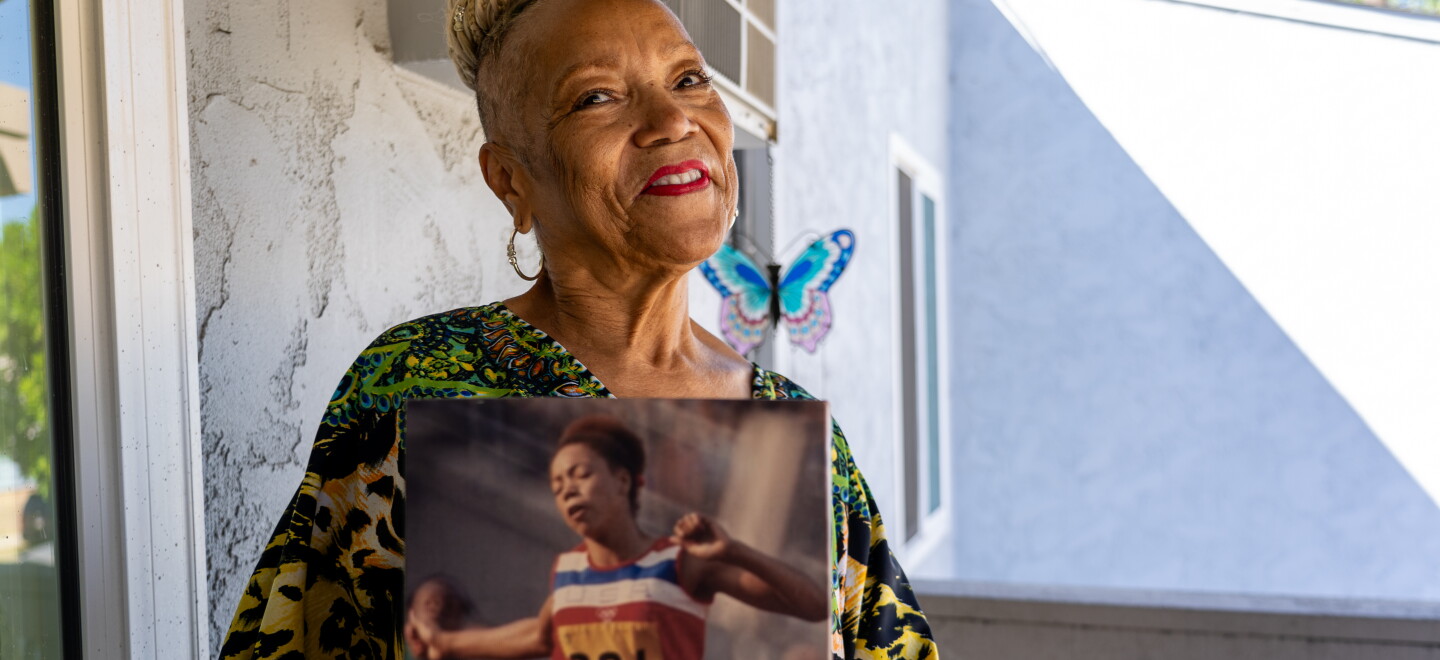
On his couch in Hemet, California, Wally Henry watches an old TV special about him.
“In the 20th century, the sports superstar has become an American hero,” the broadcaster – his cousin, Jimi Lyons – booms out as silhouettes of football players trot out of a stadium tunnel and onto the wide expanse of a National Football League field.
Henry played wide receiver and kick returner for the Philadelphia Eagles.
“For Afro Americans, in particular, a people who have been brutalized by 200 years of institutionalized racism and the violent denial of the human rights guaranteed by the Constitution, the athlete was the most visible image of success and manhood,” Lyons continues.
The walls around Henry are covered with photos of his life, including his 1950s and ‘60s childhood in Logan Heights.
Neighborhood kids would pile onto the open grass known then as “40 Acres,” off South 30th St. and Ocean View Boulevard, and play football, baseball and run track, marking lanes and lines with whatever they could, digging holes for starting blocks.
“Sports was seen as the way out of the ghetto,” Lyons says, as images of a younger Henry flit across the screen, sporting a crop top training tee and an impressive afro.
Surrounded by NFL giants, Henry was small – 5’8” and 170 pounds.
“Hey, this little guy he can't do nothing,” young Henry on the screen says. “Then they see me knocking down people. That's how I made the team, doing extra.”
In one incredible punt return, Henry bursts from the melee, dodging players twice his size, and zips all the way down the field for a touchdown.
At that time, sports made college possible for kids like Henry.
“We were all trying to get out of southeast San Diego. We were trying to make something of our lives. Our parents didn't have that kind of money to send us to college, so the only way we can get to college is to get a scholarship,” Henry said.
By the time Henry was in high school, the stakes were even higher. College was also one of the only ways out of the Vietnam draft.

Getting a college football scholarship is already an extraordinary feat, let alone making the NFL. Each year, out of over a million high school football players, only a few hundred do, according to the National Football Foundation.
It’s like getting struck by lightning. But Henry is very matter-of-fact about it – both the Henry on his couch now and the Henry on the screen.
“Deep down inside, I knew that this was just another test for me. I have to overcome. And I will, and I did,” his younger self says.
He credits that mentality all the way back to the Boys and Girls Club in Logan Heights.
“Having confidence in yourself to do what you can do and not not be a bullsh—. You know, you can't fool yourself. I mean, and people would say, ‘Got a big head or you're cocky.’ Well, so be it. If you think you're the best and you act the best, and you are the best, you are the best. Period,” he said.
He said communities in southeastern San Diego back then were close knit. Everybody knew everybody. It was a village-wide effort to raise the kids. Employment for Black San Diegans was limited, and parents worked hard.
“Actually, we didn’t really know, you know – too young to realize that you were poor,” he said.
By the late ‘60s, like now, the area was mostly Black and Latino and low-income. It wasn’t always that way. When Lincoln High School opened in 1955, it served mostly white students.
But San Diego demographics were changing. Black families took military and defense jobs and moved west to San Diego. Redlining and freeway construction funneled growing racial minorities into the southeastern neighborhoods. And white families, out.
Willie Jones is Lincoln class of ‘65. He said he witnessed “white flight” in real time, and by the time he graduated, he could count white students on a couple of hands.

Alumni say just the visual of a lot of Black and brown people in one area drew overpolicing and stereotypes.
“The news media was bombarding society with, you know, ‘This Lincoln High School, southeast San Diego is, you know, it's a rough place to live,’” Henry said.
Even many Black families, like Henry’s, avoided Lincoln. At first, his mom sent him to San Diego High School.
But the Civil Rights movement was unfolding across the country, and Lincoln gave Black students a chance to explore their identity. It offered African American studies, and it hired the district’s first African American high school principal.
“It was a wakening time,” said Jackie Thompson, who ran track for the school then.
She said at most schools, students weren’t allowed to wear afros. They couldn’t be themselves. It was different at Lincoln.
“We were proud of who we were,” she said. “Finally, you know, somebody saying ‘I’m Black and I’m proud!’”
Henry said the nationwide movement sparked a decision for athletes from southeastern San Diego.
“Look, if we all went to Lincoln, we can dominate the city, you know, and then show them what this Black power is really all about, you know, in a positive way,” he recounted. “Let's change the idea of what they think about us. Period.”
Instead of running from the stigma, they’d return to prove it wrong.
Proving the city wrong
Henry said he’s one of a group of athletes who transferred home to Lincoln then.
Earl Faison, former San Diego Chargers Hall of Famer, started coaching the football team, and he brought in other ex-professionals to help.
A lot of talent packed into one school.
Henry said practices were intense, long and hot. On a talent-stacked team, everyone wanted to brag they were a starter.
Still, they were a small team in a big league. Many had to play both offense and defense against teams that could afford to switch out players. Henry said when they did lose, it was often because they “just ran out of gas.”
What they lacked in numbers they made up for with the chip on their shoulder.
“We always had something to prove, see,” Henry said. “We have to beat the team, plus the zebras.”
The zebras – the referees – were all white then, he said, and made calls that felt unfair against the minority teams.
“Basketball comes down to the final shot and you make it and you go win the game and boom! All of a sudden it was a foul or traveling, something ridiculous. Something enough to make you so angry, you want to fight,” he said.
Some of the calls felt like they were punishing them for their differences.
“You score a touchdown or interception against, say, El Cajon or something, and you do a little dance or something like that – shoo! – see a yellow flag. You know what I mean? ‘Showing out, unsportsmanlike conduct!’ S— like that. That's how we play!” he said.
Lincoln didn’t have lights for their field, so they couldn’t play their night home games at home. They had to travel and play on enemy turf.
The community showed up anyway, carpooling and hitchhiking to games all over the city.
One alumna said community groups like the San Diego Black Federation, Brown Berets and low riders would keep a presence at the games to make sure the students got home safe from the schools north of Lincoln.
“You have to be strong mentally, and you're going to have to be able to take the n-word and all the other words that come with it,” Henry said, “and still keep going and keep your head, keep your cool, you know, and try to stay focused on the gold.”
The adversity didn’t stop them, Henry said: “For Lincoln, oh well, we're used to this s—. We're still going to dominate.”
Henry thinks all that adversity created a mentality that may have been their greatest strength.
“You expect this s— to happen and we just gonna fight through it. We gonna dominate. We gonna keep it moving,” he said.
Jackie Thompson graduated Lincoln in 1972, and ran for the U.S. at the Olympics that same year.

She remembers walking into the stadium in a white pleated skirt and red blazer, overwhelmed by the beauty of all the different countries marching in and the release of white doves flooding the air. She felt the responsibility of representing southeastern San Diego.
“We always wanted to be a credit to our community and shine,” she said.
Lincoln’s track is now dedicated to her. Hers is far from the only name emblazoned on the school.
Most U.S. high schools never produce a professional athlete, but Lincoln and Morse High School, just five miles down the road, have produced numbers that stun: at least 68 NFL, MLB and NBA players between them, more in other pro leagues, and at least three Olympians. They won Super Bowls and MVP awards, Heisman trophies and gold medals. They cross decades, generations, coaches and teams.
“I mean we joke about it a lot but it must be in the water because it is true. We have exceptional athletes in southeastern San Diego,” Henry said.
‘Something in the water’
Chances are, at one time or another, most of those athletes passed through Berry’s Athletic Supply.
Today, Berry’s is off Lemon Grove and Lester Avenues. The gear on the shelves has evolved over the last 74 years they’ve been in business – safer helmets, lighter baseball bats – but in the back office, you can still find co-owner John Enright.
He’s been helping Lincoln and Morse athletes, quietly, for many decades.
“Dorothy would say she needed something for a football player or softball player. We would give it to them if they couldn't afford it,” he said. “Just wanted to help.”
By Dorothy, he means Dorothy “Dot” Robinson. She oversaw Lincoln athletics from the ‘80s through the early ‘aughts as the district’s first African American female athletic director. The old gymnasium now bears her name.
“You've got a female that's in charge of men, and the men didn't take it too well, you know. And I understood that, but I still forged ahead,” she said.

She ensured the budget stretched evenly across genders and the school’s many sports, despite inadequate facilities and equipment – like a football helmet a player brought her with a screw coming through it.
When asked what this community’s secret athletic sauce is, she didn’t hesitate.
“Love for the kids, number one. You have to care about kids at a school in order for kids to succeed or even attempt to succeed,” she said.
When Robinson describes “care,” it’s a verb. Giving students rides home from late practices. Noticing whether or not they’d eaten, or if they needed to talk after school.
“I can be in the room with you, but do I see you?” she said. “If they needed to come away from the home, stay for a while, I ask the parents, ‘Can I keep your kid for a while? I'll take care of them. Here's my phone number.’”
She said she was far from the only one.
“That’s what we had at Lincoln was the village,” she said.
That’s crucial in an area with some of the lowest household incomes in the county, she said. The teams couldn’t always afford a bus. Robinson had to build a network of parents, and those parents had to extend that network to include the people around them.
People like John Enright.
“I could call them and say, you know, ‘I have a kid that need cleats. I don't get paid for such and such a day.’ And before I could get it out, he said, ‘Send them on down.’ And I said, ‘But I don't –’ He said, ‘Send them down.’ you know, and that's the kind of community that we had. It extended beyond the physical building,” Robinson said.
She said the athletes made the whole community proud. She still gives rides to neighbors who want to go to the games.
“Am I going to ever stop? I guess not,” she said, laughing.
She’s never changed her phone number, just in case an old student calls – and they do.
Robinson, Enright, Thompson and Jones were among many alumni that filled the stands for this year’s homecoming game. Decades of community pride shone in full force.

Up in the bleachers, Wally Henry sat alone.
Lincoln alumnus Harold Allen said all those superstar athletes from southeastern San Diego – once just kids who overcame enormous odds – are largely forgotten, “ghosts in their own community.”
He’s brother to Marcus Allen and Damon Allen, both Lincoln alumni, both widely seen as two of the greatest to ever play the game of football.
He sees both pain and power in southeastern San Diego’s history, but he doesn’t see the magnitude of that power being celebrated.
Let's celebrate us. We don't need anybody else to celebrate us.Harold Allen
“When I look back now, I say, ‘Well, how do we believe the hype that we're not good people or we're negative people because the color of our skin?’ And yet we believe what we hear from others and then we fall prey to it,” Allen said.
He’s on a mission to change that.
“I'm now 50, 60 years later, trying to highlight the good of who we are. So let's celebrate us. We don't need anybody else to celebrate us,” he said.
He started holding ceremonies honoring alumni and educating the current players on the legacy they’re now continuing.
Whether today’s athletes know it or not, they have many of the same challenges, and strengths, as alumni from a half century ago.
The legacy continues
Lincoln High School was bulldozed in 2003. Replaced with a brand new, $129 million campus – at the time the most expensive campus in the San Diego Unified School District.
They lost a lot of athletes during the four-year closure. Coaches had to rebuild legendary Lincoln teams from sparse rosters.
The school hired David Dunn to coach football, former Cincinnati Bengals wide receiver and Morse High School alumnus.
Despite the new campus, he faced budget challenges.

“We're talking $400 to $500 per helmet, $300 for a good pair of shoulder pads, and uniforms, and we can't keep up with some of the other things out there. We’re losing a bunch of kids to the private schools,” Dunn said.
The San Diego Unified School District allocated $98,200 this year for all of Lincoln’s athletics programs, not including coaching stipends, according to spokesperson James Canning. Dunn estimated his team received about $12,000 of that, including travel.
He has to fundraise the rest in an area with some of the lowest household incomes in the county.
By 2024, the need was even clearer.
“The field was not safe. Everyone knew it wasn’t safe,” he said.
He could pull back the turf in places to reveal concrete directly underneath. The field began to sink in places and water started puddling up. There was a hole in the track.
He brought out over one hundred red flags and tried to mark every problem area. He ran out of flags.
He convinced the school to fix it, leaving Lincoln with no field of their own that season.
They bused to facilities willing to share a field. Left school early. Stayed up late. Squeezed odd hours of practice in whatever field time was available.
“We lost so many hours of practice time,” Dunn said.
Sometimes the buses were too small, or came late. The team would sit outside with their water bottles and uniforms and whatever equipment they could haul, waiting for buses for over an hour.
When they did get to the shared fields, they weren’t always well equipped. Many didn’t have football markings, equipment or even goalposts. They didn’t have access to a weight room or sleds.
The players had so many valid reasons to skip practice, but they didn’t take them.
“It was so, so crazy,” said Jesus “The Beast” Jimenez, a center and guard on the current team who played in 2024. “All of us were just tired. But, you know, all of them, everybody on that team, really wanted it and wanted to show everybody wrong.”
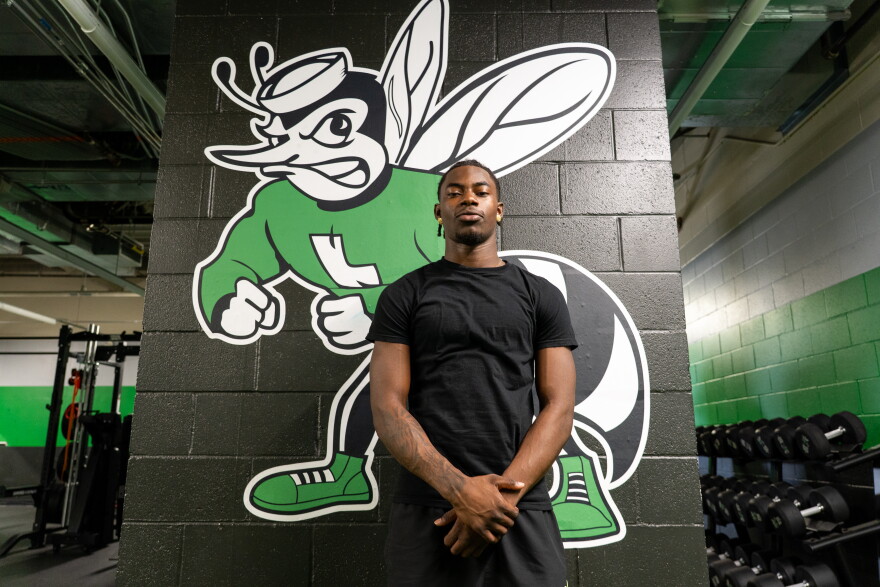

Wide receiver and cornerback Dareyen Bridges said something that echoed Lincoln alumni across the decades.
“As much as we went through, we was just playing on a chip on our shoulder because we know nobody else was doing this. So we had to go out there and win. Win every game,” he said.
It paid off. Despite all these challenges, the team went all the way to the state championship, and won.
Dunn still wonders if the team fully understands what they accomplished.
“To have none of the stuff available to you – you don’t really know how much this really meant,” he said.
He said this year’s team still doesn’t have a secondary utility field to practice on like most schools. They’re traveling farther to play harder schools, but without a bigger travel budget. And, like alumni across the decades, they still face racism.
Dunn remembers when he was a student athlete being told to not retaliate when he got called a derogatory name or even spat on.
“It's heartbreaking to have to tell my same kids, 40 years later, I’m telling them the same thing,” he said.
It's always been a struggle. But it's our struggle and it's our story.Coach David Dunn
At a 2021 game against Cathedral High School, social media posts circulated of a student wearing a T-shirt that said ‘Catholics vs. Convicts.’ It made headlines in the news, but alumni and current students say the racism is not unusual.
Dunn said this year, another coach told the Lincoln players “you’ll definitely be working at McDonald’s in three years” and “we’re going to college and you guys will be going to jail.”
Bridges has noticed.
“They just think we grow up, like, this is hood. But I wouldn't say that. I feel like we have great kids here who take very good responsibility,” he said.
Jimenez agreed.
“People call it ghetto. But for me, I don't think it’s ghetto at all. I think everybody around here knows each other, and I think it's just like a big old family,” he said.
Dunn said that stigma is still causing enrollment challenges for the school and the football team, but like the teams of the ‘60s and ‘70s, they hold high expectations regardless – and that chip on their shoulder.

“No matter what they put in front of us, watch how we come out of this,” he tells his players. He developed a motto: “They hate to watch us win, but they have to watch us win.”
Generations of alumni cheered them on at this year’s homecoming game. Some, with remarkable pro athlete careers behind them.
More than half a century of shared struggle and power filled the stands to bear witness to their continuing legacy. A sea of kelly green, white and black marked the undefeatable spirit of Lincoln and the surrounding communities.
Together, they watched today’s students win, 43 to 15.
“It’s always been a struggle,” Dunn said. “But it’s our struggle and it’s our story.”