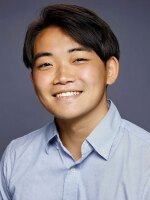
Federal immigration officials released a Ukrainian immigrant from detention Tuesday after arresting her last week immediately following a green card interview in downtown San Diego.
Viktoriia Bulavina arrived in the U.S. three years ago under a humanitarian program for people fleeing the war in Ukraine. She is married to a U.S. citizen and is currently in the final stages of applying to be a permanent resident.
In an interview with KPBS Wednesday, Bulavina said ICE officers held her for three days beginning last Thursday inside the lower levels of a federal building downtown. She said she and other women had to use an open toilet in view of the guards and didn’t have room to sleep. One person, she said, had her migraine medication taken away.
Bulavina said the detainees were given expired sandwiches and had to huddle together for warmth. When they were moved, she said ICE officers ordered them to line up against the wall and restrained their hands and feet with shackles and chains.
Bulavina’s husband Victor Korol, who translated for her during the interview, called the conditions there “absolutely atrocious.”
“I would like to have answers,” Korol said. “I would like to have people to assume responsibility for what happened and be punished.”
Korol and Bulavina’s attorney began pushing for her release on Thursday, and KPBS and other news outlets reported on her detention. ICE released her Tuesday morning.
The agency did not respond to questions and a request for comment Wednesday.

Bulavina’s immigration lawyers don’t know for sure why ICE decided to release her so swiftly after transferring her to a federal detention center, but they strongly suspect that agency officials realized they had made a mistake.
In their charging documents, Bulavina’s attorneys said, ICE accused Bulavina of overstaying her original immigration status, a Biden-era humanitarian parole program called Uniting for Ukraine. But according to her attorneys, Bulavina had already applied for and received a separate immigration status called Temporary Protected Status that didn’t expire until 2026.
Bulavina is far from the only person who has faced potentially unlawful detention by the federal government because of errors like this, said Caroline Matthews, a supervising attorney at Pathways to Citizenship, a San Diego-based immigration law clinic.
“This error is happening repeatedly,” Matthews said. “That suggests to me — and I'm seeing firsthand — that there is a system in place that is putting arrest and detention numbers ahead of accuracy.”
Bulavina’s experience offers a rare window into parts of the U.S. government’s growing immigrant detention system which are often hidden from public view. In recent months, various news outlets reported that ICE has been holding people in the basement of the Edward J. Schwartz federal courthouse in downtown San Diego.
Those reports prompted members of Congress to attempt inspections of the courthouse multiple times. Twice, the U.S. Department of Homeland Security (DHS) denied them access to the building, before eventually allowing them to enter in late November.
It’s unclear if the courthouse is where Bulavina was being held, but her description of holding cells with metal benches and an exposed toilet matches how U.S. Rep. Scott Peters, D-50, described the facility during a press conference following the lawmakers’ visit.
Bulavina said she was held there with around a dozen other women at a time. The holding rooms were cold and brightly lit, she said, making it hard to sleep. Because the toilet was exposed, she said the women would use their bodies to create a wall so people using it could have some privacy. They had to show the guards an empty toilet paper roll to get a new one.
Each night, Bulavina said the officers attempted to move her and other detainees to the Otay Mesa Detention Center.
The first night, they left at 2:20 a.m., according to a clock in the van, Bulavina said. The officers lined her and the other women up, shackled them and led them out to the vehicle, which was waiting underground. The cuffs around their ankles and wrists made it painful to climb into the van, Bulavina said.
At 4 a.m., they arrived at the detention center located southeast of Chula Vista, Bulavina said. They sat waiting in a line of vehicles outside for two hours without being able to enter the facility.
As the sun rose, the van turned around and drove back to downtown San Diego.

Bulavina said the ICE officers told them they were trying to move the detainees to Otay Mesa so they could sleep. Instead, she said, they ended up in the van for hours on end, unable to sleep or use the restroom.
ICE officers tried to move them on the second night but were again unable to enter, she said.
By the third day, Bulavina said, she was having panic attacks. The detainee whose migraine medication had been confiscated was also having a hard time, but the guards would not return it.
Finally, Bulavina said, they were moved to Otay Mesa at 11 p.m. on Saturday. There were more than 150 people being held there, she said, including women as young as 18 and as old as 80.
The conditions there were similar, Bulavina said, but they were given hot meals and were able to shower. After the showers, the officers confiscated their towels, so she and other women had to huddle together to try and keep warm as their hair dried.
When Bulavina was finally released Tuesday morning, Korol said the officer who led her out of the gate apologized.
Matthews, the lawyer, said they were thrilled that Bulavina had been released, and said it was “justice being served.” However, she noted that Bulavina is still facing an active removal proceeding. She said they still would need to unravel a tangle of overlapping federal jurisdictions in order to set Bulavina’s case back on track.
Broadly, Matthews said Bulavina’s case showed clearly that the federal government is aiming to arrest and detain people first, and then later sort out whether they had any legal basis for doing so.
“That is really unacceptable, and it should feel unacceptable to us as Americans,” Matthews said.
For now, Korol said he and Bulavina are hoping to finish the process for her green card. They remain worried about the status of those proceedings, but are hoping that Bulavina will be able to successfully get permanent residency now.
Bulavina keeps thinking about the other women with roots in countries like Mexico and Thailand who she was detained with — how they comforted each other and tried to support each other despite the harsh conditions.
One day, she said, they hoped they would meet again, far from their cells, and have a meal together.