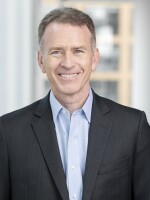
STEVE INSKEEP, host:
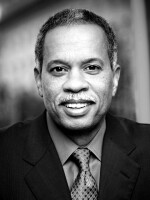
NPR's Juan Williams is just back from his own mission to China. Along with a group of other journalists, he spent 10 days visiting Beijing and Shanghai and Hong Kong. His trip was sponsored by the Committee of 100, which, if you've never heard of them, is a group of prominent Chinese-Americans - including artists and astronauts, former members of the military, business people.
Juan, who are these people?
JUAN WILLIAMS: Well, it's an interesting group. And by the way, ni hao to you, Steve.
(Soundbite of laughter)
INSKEEP: Ni hao.
WILLIAMS: But, you know, it's an interesting group. I mean, obviously, you got people like Maya Lin, I.M. Pei, the famous architect, Yo-Yo Ma, the musician, people who founded Old Navy, people involved in the high-tech industry out in Silicon Valley, lots of Chinese-Americans, and who are concerned about China's relationship with the U.S., the U.S. attitudes towards China.
INSKEEP: If I look at headlines about China recently, it's China as a threat, China as a world competitor, China grabbing all the resources, China polluting, China sending us horrible broken toys and hazardous materials - I assume these people, as Chinese-Americans, have a different perspective on things.
WILLIAMS: No, I think everybody is concerned about it, including the Chinese. They are all very much aware that this could poison American relations. But, you know, what's interesting to me is that in China, if you talk to - I just remember going over to Peking University and there still is, it's still called Peking University when I was now in Beijing - and talking to professors there and the young people, and - they are all about opening doors towards the U.S, and they're about growth. And so they don't necessarily focus on the kind of issues that we're talking about, you know the poisoned products or the human rights issues, the Democratic movement. They see that as American values being imposed on Chinese people, and they see it as an effort to undercut or somehow demonize the Chinese. And they worry that the United States - there's an element in the United States that, you know, just out of fear or anxiety, doesn't wish China well.
INSKEEP: Are prominent Chinese-Americans trying to add something, then, to our picture or our understanding of China?
WILLIAMS: I think that's why they want people who are in the media - in the American media - to have a broader understanding of what's taking place in China.
INSKEEP: So you went at their invitation, got a look around - what did you see?
WILLIAMS: Well, you know, what's amazing to me, Steve, first impressions, you know, I went to Beijing, Shanghai, Hong Kong and the amount of economic activity, the amount of people is just stunning. You know, you think about places, like, well, Washington, D.C., our capital, as opposed to Beijing - so many more people, construction cranes all over the sky, the new Olympics stadium, the Bird's Nest being constructed, all of the work being done around that Olympic village, this huge society that's in the midst of transformation. And transformation means, for them, they want to get rich. I ran into a developer in Shanghai. This guy said to me, you know what, I can do development more easily here in Shanghai than I can in Los Angeles. Easier to deal with regulations, deal with zoning permits, all of that - easier in Shanghai.
INSKEEP: Don't have to worry about those pesky environmental reviews.
WILLIAMS: Well, no, right because the government - government officials in China are judged on whether or not there's economic growth taking place in their areas, and so they're all about making sure that growth is taking place.
INSKEEP: Sounds like you're saying the things that American businessmen and women have been seeing for quite sometime when they've said China is the future and we've got to be active in China; that's the message from many American businesses.
WILLIAMS: I don't think there's any question that when you look at the number of markets that are opening there, the relationships, especially, in terms of strategic military relationships, you think about China in Latin America, China in Africa going after resources; you think about China on environmental issues.
And, by the way, I went up to the Great Wall with my wife and it was the one time in my life when I said breathe, Juan, you know, remember to breathe, because the air gets pretty heavy in Beijing.
INSKEEP: When you said you were telling yourself to remember to breathe, I wondered if you were trying to remember to breathe because of the awesomeness of the spectacle or because of the pollution?
WILLIAMS: The pollution.
(Soundbite of laughter)
WILLIAMS: I don't know how the athletes are going to cope with the pollution, but it's going to be an issue unless the winds blow in the right way.
INSKEEP: Good to talk with you.
WILLIAMS: My pleasure, Steve.
INSKEEP: And welcome back.
WILLIAMS: By the way, the developer in Shanghai, he had developed a shopping mall, office building, residential complex around I guess what's the - what was the communist party headquarters in 1921; that Mao Tse-tung and others, you know, founded the communist party.
INSKEEP: All right, cool.
NPR News analyst Juan Williams. Transcript provided by NPR, Copyright NPR.