Episode 32: One of Their Own's Ciara Transcript
Julia Dixon Evans: Hey, everyone. Today we're sharing an episode of an amazing new KPBS true crime podcast called One of Their Own. I really loved this project and I think you will too.
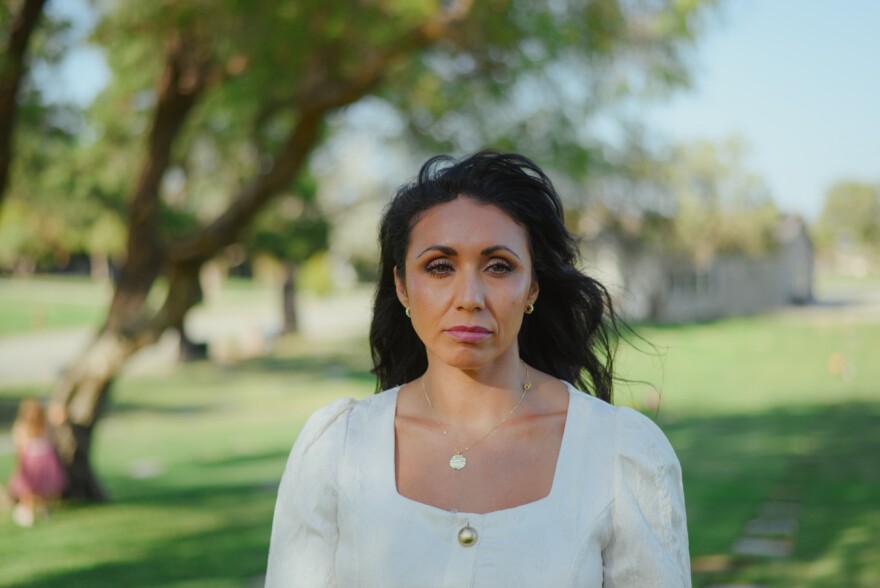
A police officer is found dead in her home and the department's investigation leaves more questions than answers. It's a super compelling and captivating story, so be prepared to get sucked in from the beginning. This is investigative reporting and storytelling at its best. I had a chance to see some early drafts of this project and I was absolutely brought to tears. The writing is powerful and heartbreaking. The story is propulsive, and I don't think I've stopped talking about it since. We have the show's creator and host here with us, KPBS racial justice and social equity reporter Katie Hyson.
Katie Hyson: Hi, that was such a kind introduction.
Evans: Well, Katie, can you tell us a little bit about the show?
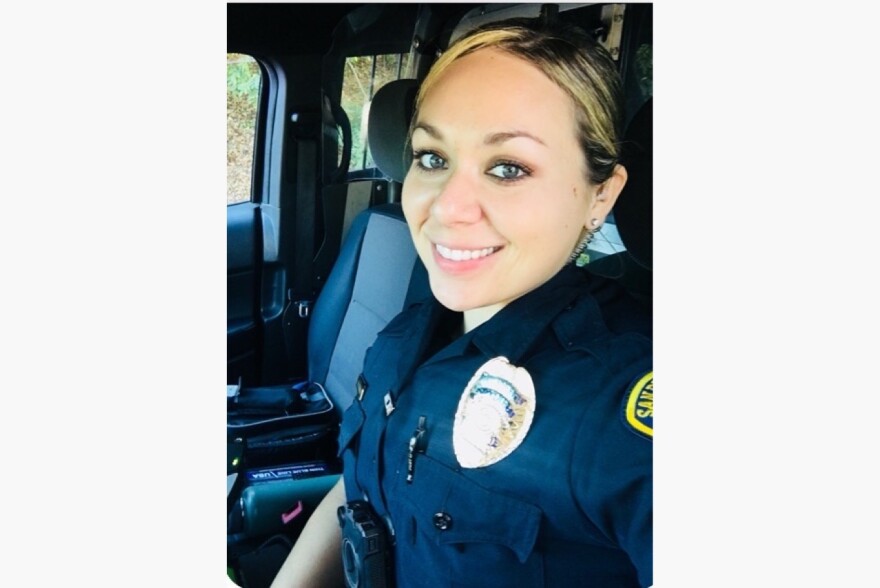
Hyson: Yeah. So this happened 8 years ago. A San Diego police officer, Ciara Estrada, went to a New Year's Eve party on her last night alive. The next day she was found dead in her home with a bullet hole between her eyes and her gun in her lap. And her own department investigated and almost immediately started calling it a suicide. But the people who knew Ciara and knew the unhealthy relationship that she was in are still divided. They don't think the police dug deep enough and they find it hard to trust the investigation's findings because it was her own police department that investigated.
Evans: One point that you made in the podcast was how this event received almost no media coverage before now. That alone is kind of staggering. But it also makes me curious, like how did you come across this story?
Hyson: Ciara's own mother, well, she reached out to me and she had seen reporting I'd done about a lawsuit that alleged domestic violence by a male San Diego police officer against the female officer he married. And she said to me that her own daughter's story had never been told. And once I started looking through the case files, I started having a lot more questions than answers. And Ciara's story just really pulled me in.
Evans: You uncovered a ton of fascinating details in this story. Can you talk about your reporting process?
Hyson: Yeah, it was such a crazy journey. I have this kind of manic accordion folder filled with thousands of pages of documents. And I got as many firsthand accounts as I could from the people that knew her or were with her or spoke with her on her last night. And the family also gave me a really like a humbling amount of access to who she was in her life. They lent me her laptop to go through. I went through her text messages, her notes to herself. In some cases, I was learning things that even her family didn't know yet, all these years later. And thankfully, because of the longer format, I had time to dig deep in a way we don't always get for our daily broadcast news stories.
Evans: The story is tragic and it's also really intimate. You have real quotes from texts and testimony. How did you approach using that material in the podcast?
Hyson: I had to rope in a lot of my colleagues, including you, to do voicing of written documents. You voiced for Ciara, and that really mattered to me because I think people listen in a different way. When someone's speaking words from a first person. And so we have some of Ciara's own words. We have her notes to herself. We have her text messages, and she's not here to participate herself. She's not here to say what this experience was like for her.
And so it kind of felt like the closest I could get would be to have someone read aloud her own words that she wrote, that she could have a presence in her own story as best that we could.
Evans: Katie, thank you so much for joining us today and for doing this podcast, doing this work. I want to get into the episode here, but before we go, can you tell our listeners one thing they can expect from the first episode we're about to hear, or maybe from those that follow?
Hyson: The first episode is really all about who Ciara was, which was really important to me that we care about her life before we start picking apart how she died. And then from there, we'll get into her relationship, what her last night alive — we pieced together what we can know about her final hours, SDPD's investigation, and then a new law that might have changed everything for her case.
Evans: All right, here is Episode 1 of One of Their Own, "Ciara." And after you listen, be sure to find the rest of the episodes on the show's main feed. Just search One of Their Own wherever you get your podcasts.
Hyson: This podcast contains discussion of suicide and domestic abuse. We discuss opinions expressed by others. We at KPBS don't endorse those opinions. No one has been charged with a crime relating to Ciara Estrada's death, and we don't intend to imply that anyone should be charged or engaged in wrongdoing.
Ciara Estrada: Get off of me!
Hyson: This is San Diego police officer Ciara Estrada . . .
Ciara Estrada: Stop! Trevor, stop!
Hyson: … playing with her beagle, Trevor . . .
Ciara Estrada: Get off me! Get off of me!
Hyson: She took this video in December 2017. Her last month alive. She was 25 years old. On New Year's Eve, she went to her older sister's house. They put waves in her long hair. Painted her lips red to match her floor-length sparkling dress. Hung fake diamonds in her ears. Her parents stopped by. She said she'd see them the next weekend. She headed to a party at the Hilton hotel overlooking the bay. Photos taken around 10 p.m. show her smiling. Radiant.
The next day, her fellow officers found her in that dress, on her bathroom floor, with a bullet hole between her eyes. Her gun was in her lap. A fired bullet casing was still lodged inside. Soot marked a finger on each hand. San Diego police investigated her death themselves. Almost immediately, they called it a suicide.
I'm Katie Hyson. I report on racial justice and social equity for KPBS News in San Diego. And this is One of Their Own.
[Music]
Hyson: It doesn't appear local news outlets ever reported her death. But Ciara grabbed the world's attention when she was alive. A video of her went viral in 2016. Eight and a half million views on YouTube alone. The video is just Ciara doing her job.
Ciara Estrada: I'm just letting you know I'm here, 'cause somebody inside said you were out here panhandling.
Seth: I am, but I'm not aggressively panhandling so I don't think I'm breaking any laws.
Ciara Estrada: You're not.
Hyson: It's titled "Finally, a NICE cop."
Ciara Estrada: What's your name?
Seth: Seth.
Ciara Estrada: Seth? So, I guess they had some complaints . . .
Seth: I'm pretty sure he made that up . . .
Hyson: It was posted by a man the nearby business called to complain about.
Ciara Estrada: Well, you know, that's alright. You have every right to be here.
Seth: Thank you.
Ciara Estrada: Just make sure you're not obstructing the sidewalk –
Seth: Of course.
Ciara Estrada: – and give you people a nice little walkway here to walk by –
Seth: Course.
Ciara Estrada: because you know, some people are just a little intimidated –
Seth: Mhm.
Ciara Estrada: – that's all. To each their own. I'm just going to take some of your info down, OK? It's not a ticket, nothing like that.
Seth: Sure, no problem. You need me to get my ID out for you?
Ciara Estrada: Perfect! Yeah, if you have that!
Hyson: He was struck by the way she treated him.
Seth: The female cops are always much nicer. And I've been taping asshole cops for the past week, and you're the first person who was nice.
Ciara Estrada: Unfortunately, we can't all police the same way. It's all discretion. It's all, you know – for me, talking to people is a big thing. And the way you talk to people is a big thing, so.
Seth: People, some cops don't realize if you escalate…
Hyson: This simple video of Ciara received more attention than her sudden and complicated death.
I'm telling you this story today because seven years later, I got an email from Ciara's mom. She reached out because she saw a story I wrote about a lawsuit. The lawsuit alleged domestic violence by a male San Diego police officer against the female officer he married. And it described a department culture that both enabled it and covered it up.
In five years of reporting on this beat in San Diego and elsewhere, these kinds of complaints have become familiar to me. Police departments are expected to enforce the laws that keep our society functioning. And they're given a lot of power to do that. But they're also real, flawed workplaces with conflicts and culture issues. And sometimes those flaws collide with that power. Especially when they investigate one of their own.
In this podcast, I explore Ciara's story and SDPD's investigation of her death. How did they reach their conclusions? Did they dig deep enough? Would they have handled it differently if the people involved weren't their coworkers?
These questions have haunted Ciara's mother. She says Ciara's story – the real story – was never told. Her family wasn't up for talking to reporters in the shock that followed. But now, they're ready.
So on a clear April day, I make the hour drive north to Murrieta to meet them. When I arrive, Ciara's father waves me into the driveway.
Larry Estrada: Hey, I'm Larry.
Hyson: I'm Katie. Nice to meet you.
Larry is retired military. It shows in his posture.
Julie Estrada: Katie, you made it!
Hyson: Hi!
Julie Estrada: You made it!
Hyson: Nice to meet you.
Ciara's mother, Julie, is about half Larry's height, and twice as loud.
Hyson: Their house is covered in Easter decorations.
Julie Estrada: Yeah, the holidays were so special to her. It was everything.
Hyson: Her, meaning Ciara. She's there, too. Among all the eggs and rabbits and symbols of new life are reminders of her death. Larger-than-life-sized portraits of her hang above our heads.
You look so much like her.
Julie Estrada: Oh, thank you. Thank you. You know what…
Hyson: Ciara and her mother share the same brown hair, big eyes and wide cheekbones. One portrait of Ciara hangs in a circle with her three siblings. An older brother and sister, and a younger sister.
Julie Estrada: My oldest daughter and my youngest daughter are water and oil. Ciara was the mediator in all the family. She could always make anybody see the other side.
Hyson: Cheyenne, the youngest, is here too. She's 31 now. Older than her older sister would ever be.
Cheyenne Estrada: People that knew Ciara, they say me and her talk alike, laugh similar, or look alike.
Julie Estrada: Yeah. Every time she laughs, I'm like, oh, my God, it's Ciara.
Hyson: Cheyenne and Ciara grew up together. Took baths together as kids. They shared a bedroom, years of falling asleep to night-time chit chat and back scratches. Ciara taught Cheyenne how to drive on the freeway – a secret from their mom.
Cheyenne Estrada: Yeah, we're the same zodiac sign, too, so that made it harder.
Hyson: What zodiac sign?
Cheyenne Estrada: We're both Aquarius. We were definitely closer, though, than me and my older sister. So our relationship was really hard to lose her.
Hyson: Yeah.
Cheyenne Estrada: If I ever struggled in school, she'd be the first one to help me. With work or anything that I had trouble with going on, Ciara was the number one person who was there for me to help during any type of situation that I was going through.
Hyson: Hm.
Cheyenne Estrada: Yeah. So that's – we were really tight.
Hyson: What was the – you said you were both Aquarius, so –
Cheyenne Estrada: Yeah.
Hyson: What's the vibe? What's the personality?
Cheyenne Estrada: We're not really the life of the party people. If we ever went to a function, we're usually the quiet, the reserved, watching from afar. But we seem to make an impact on the people that we do interact with. She was kinda like a girl's girl. She'd be the person you'd call if you needed um, a maid of honor. She was that, like, to anyone and everyone she met.
Hyson: Hm.
Cheyenne Estrada: She would literally give you the shirt off her back to total strangers. So I don't think there was anything that she kept private. The way she was with her family was the same way she was out in the public. Very, just, like the girl you would want by your side through anything.
Hyson: Like any sisters, they fought.
Like, what kinds of things would you get into it over?
Cheyenne Estrada: It's so sad with memories. They start to fade. But I don't know, like, movies. So she used to love to stay up late and pull all-nighters. So she just liked to stay up the whole entire night. And if I was like, 'I can't do it anymore. I have to go to sleep.' She'd be like, 'Oh my God, come on. Don't leave me hanging.'
Hyson: Memories fade. But reminders cover the home.
Ciara's locker door from the precinct's changing room hangs in the garage. It's covered in messages from her fellow officers.
Cheyenne Estrada: Truly a beautiful spirit. Will miss trying to save the world with you, but will always cherish our friendship, forever your partner.
Hyson: In one corner of the garage, child-sized handprints are pressed into the cement floor. Ciara's. It's a small thing that makes the house feel impossible to sell. Her parents still have her wallet, with cash inside they can't bring themselves to spend, and an expired coupon. Ciara was thrifty.
Cheyenne Estrada: So like a Mason jar glass, that's going to be used for Q-tips. Or a candle glass that's clear. 'I can use this, I can use this to hold hair ties and nail polishes.'
Larry Estrada: So she saved all her T-shirts or jerseys, even ones when she was in fifth grade softball or something. All her clothes went from her apartment basically into a tote. And then so when you open the tote up, you basically smell her.
Hyson: A quilt made of her T-shirts covers an entire wall in a room downstairs. It's a patchwork of an active, varied life.
Larry Estrada: She wanted to try choir. She wanted to be a cheerleader, but she wanted to try softball. But she wanted to try soccer. So she wanted to be in the military. She went to the Coast Guard Academy Prep School –
Julie Estrada: She went to Hell Week. She went to Hell Week at the Coast Guard Academy, Connecticut.
Larry Estrada: – She did ROTC in high school, was in a leadership position there –
Julie Estrada: She was the second command in high school –
Larry Estrada: – Right, so when she went to San Diego State in her freshman year, she told us, 'Mom, Dad, hey, there's this opportunity to be on the rowing team.' I said, 'Rowing? The only boat you've ever been on is at the beach! I mean, rowing, that's a pretty tough sport!'
Hyson: Her mom shows me a photo of Ciara's hands after a crew race. They're covered in open wounds and blisters. She demanded a lot of herself. I find more evidence of this in her high school scrapbook.
What is this first line? 'I was not one to accomplish much in elementary school.'
Cheyenne Estrada: I don't know what that would mean. Why would she write that?
Hyson: She's really hard on herself.
Cheyenne Estrada: Yeah.
Hyson: The scrapbook is a time capsule of the 'aughts. Ciara was just months younger than me. So these photos I've never seen are familiar. Angled down onto side bangs and skinny jeans and racoon eyeliner. The pages are filled with "Twilight" and Chris Brown, notes between friends and inside jokes.
Cheyenne Estrada: This is addressed to Ms. Shakira Estrada. Living at 32 My Hips Don't Lie Court.
Julie Estrada: Oh, my God.
Cheyenne Estrada: That's hysterical.
Julie Estrada: Shakira. Oh, my God.
Hyson: Her head seemed tight on her shoulders for someone so young. Her family says she wasn't a drinker in college. She took care of the girls who were. Cleaned up their throw up and made sure they got home safe. According to her family, her biggest vice might have been Monster energy drinks.
Julie Estrada: She was obsessed with those. I'd buy her cases of Monsters.
Cheyenne Estrada: Right. She needed those. Those were a necessity.
Julie Estrada: I fetched breakfast burritos for her when she came home.
Hyson: She didn't date in school. She meticulously planned her workouts. The documents folder on her laptop is filled with motivational quotes to print out. Like: "It's not that some people have willpower and some don't. It's that some people are ready to change and others are not." Ciara had wanted to follow in her dad's footsteps.
Larry Estrada: She wanted to kind of lean in the military. I tried to convince her not to go enlisted. She was a terrible test taker, even though she graduated cum laude–
Julie Estrada: Smart. Very smart, yeah –
Larry Estrada: – She just couldn't take standardized tests. Anyway, she got talked to by somebody at San Diego State –
Julie Estrada: He was a track coach.
Larry Estrada: He tried to get her to go be a police officer.
Hyson: So instead of the military, she joined the police academy. It didn't surprise anyone in the family. It was on brand for Ciara. The academy was demanding and physical. She showed her family bruises from their wrestling matches.
Larry Estrada: You have to beat each other up. It's called fight for your life. So shooting, driving, the academics, I knew she would get through all that.
Julie Estrada: She did! She blew it away! She did good!
Larry Estrada: But it's fight for your life, where you're basically – you're in hand-to-hand combat with an instructor. And it's called fight for your life. So if you're ever in a struggle and the guy's going for your gun, and you're wrestling each other on the ground, you have to come out the winner or you're dead.
Julie Estrada: You have to show the other officer at the academy teaching that you have what it takes.
Hyson: As I'm trying to understand more about who Ciara was, Cheyenne says…
Cheyenne Estrada: I think a lot of people out there already know about her just from that video. I don't think there's anything that people would need to know more about her because that video just shows all her character, who she was. An earth angel.
Hyson: Her family says they didn't see any warning signs for suicide.
Larry Estrada: You know, she had just moved to a new apartment. She was so happy to move in and be on her own and decorate the apartment, getting groceries that weekend. Uh, so these weren't traditional signs of someone who is not thinking of the future. She was thinking of the future. She left no... There was no . . .
Julie Estrada: Two nights before she died, she was grocery shopping.
Hyson: The story continues after the break.
[Break]
Hyson: The San Diego police investigated Ciara's death and closed the case. But for her family, it's still wide open.
Larry Estrada: For us, for me, it's January first all the time. It's always January first, 2018, because, like today – it's not your fault, but it's always – the time doesn't move on past that date.
Hyson: In their living room, they put on the DVD slideshow that played at Ciara's funeral.
[Music: "Somewhere Over the Rainbow"]
Hyson: For the first time during my visit to the Estrada's house, it goes quiet.
We watch 25 years flick by in minutes. Halloween costumes and a first communion dress and a graduation cap. Ciara grows taller. Blonde highlights appear in her hair. Then, it's slicked back into a tight bun. A badge appears on her chest.
The photos stop.
But her mom thinks her spirit goes on.
Julie Estrada: She's still doing from beyond, being a good Samaritan and humanitarian from beyond the grave. Her soul is going through me, telling me, 'Mom, do this, do that.'
Hyson: Julie believes Ciara sends her strangers to help. She hears the footsteps of her ghost upstairs. She visits mediums, who give her all the answers the police never did. She sees signs everywhere. In numbers and nature. She shows me a large vase and ziploc bags full of bird feathers.
Julie Estrada: Since Ciara's died, the angels have left me feathers.
Hyson: Oh my gosh, that's a lot.
Larry, who is not sold on angels or ghosts or mediums, offers another explanation for finding feathers.
Larry Estrada: We walk the dogs.
Hyson: Julie is undeterred. Maybe, she says, Ciara's spirit is at the table with us right now.
Julie Estrada: They know everything about us, everything that we're doing. I'm sure Ciara is sitting right here. Thanks for showing up, Ciara.
Hyson: She believes Ciara is invested in their quest for answers and justice. Because she doesn't believe Ciara killed herself.
Julie Estrada: I will tell you flat out to your face and anybody that my daughter did not kill herself. She did not kill herself.
Hyson: Ciara worked hard to keep her life in order. But no one's life is as simple as they plan.
Julie Estrada: You don't know what Ciara went through the week before she died. She broke up with Eric.
Hyson: Next time, on One of Their Own, we look at Ciara's complicated reality with her boyfriend, another San Diego police officer.
Brandie Estrada: She had so much optimism and so much... She was living for the future. But I do know that that relationship tore her down.
Hyson: If you or someone you know have thoughts of suicide or need emotional support, please call or text 988. Help is available 24/7.
One of Their Own is produced by me, Katie Hyson, and edited by David Washburn with support from Elizabeth Hames. Mix and sound design by Emily Jankowski.
This transcript has been edited for clarity and conciseness.