Part two of a four-part series. Read part one here.
Rudy Recaido’s backyard is lush and green. A wind chime lilts on a light breeze. Gardening tools are strewn about. But here you won’t find landscaping like turf grass or concrete hardscape.
Instead, sprigs of kamote leaves burst from the ground. Sitaw hangs from home-made trellises. And Recaido’s favorite vegetable to grow but he says, is the most difficult, ampalaya.
Recaido’s garden is not unique in its crops. His garden is part of the collective story of many other Filipino-Americans who have set down roots in San Diego.

These home gardens speak to a bigger part of Filipino culture that Joanna La Torre grew up with in her grandparent’s house. Then, she made it central to her PhD research at University of Washington.
“This is just a very important site of cultural reproduction, where they're not just growing foods, they're also practicing their culture, a culture of generosity, a culture that they have been practicing since before they got here," La Torre said. "(It) is how they are raised and they continue to do it.”
Planting the seed
Recaido comes from a family of farmers. He joined his parents working in the fields back in Luzon when he was 9 years old.
“Being a poor family, you know, I have to help my father because he cannot do all the work in the field, so I start young to grow up and you know help him growing this,” Recaido said.
When he thinks back on that experience, he gets emotional. He says joining the U.S. Navy changed his life.

“When I was 16 years old, I planted rice for all day from sunrise to sunset, two pieces the whole day," Recaido said.
Recaido said he was paid 10 centavos and the two pieces were equivalent to $1.
"I was so lucky," Recaido said. "I was lucky to join the Navy.”
Joining the Navy gave him financial and social status that he did not have before. Through that service, he and his wife moved to the U.S. and he was stationed in San Diego.
His story is one much like many other Filipinos in San Diego.
Migration of Filipinos to the U.S.’s west coast dates back to the Manila/Acapulco trade routes between 1565-1815. However, Filipino migration to San Diego began in earnest following 1898 when the Philippines became a territory of the U.S.
The U.S. military set up bases on the Philippine islands. Migration to San Diego was heavily influenced by military enlistment to branches like the Army and Navy. Servicemen who were stationed in San Diego would petition to bring their wives and children to set up their lives in areas like Paradise Hills and National City.
“When I think about ways of immigration, I always push the Navy influence because of what I saw in terms of how it affected San Diego,” said Salvador Flor, an organizer in San Diego’s Fil-Am community whose dad was a Navy veteran.
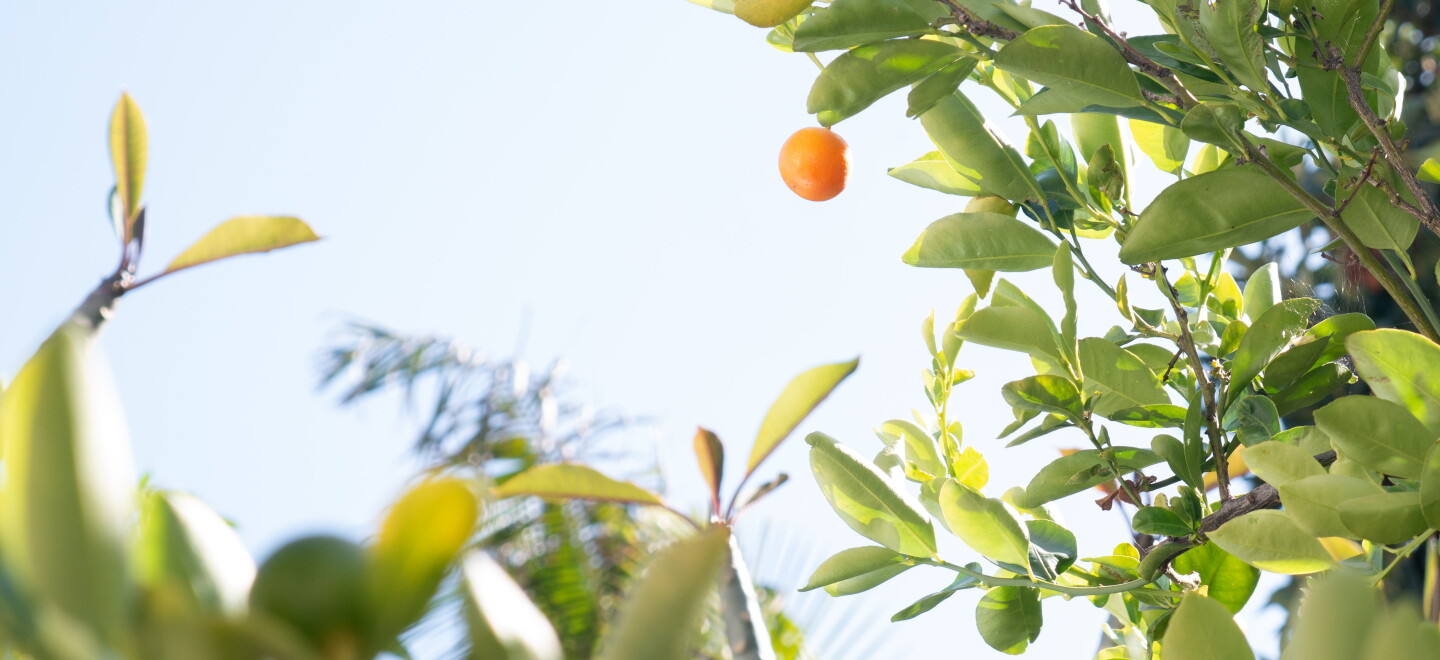
When they arrived, servicemen and their wives established these gardens out of a desire to continue to have access to food from their homeland, like kamote, calamansi, lemon, sitaw and ampalaya. All fruits and vegetables from the Philippines that are foundational to the traditional Filipino dishes like sinigang.

Spring Valley resident and veteran Alfonso Villamora grew up like Recaido, growing crops out of necessity.
“My gardening started even overseas, it was in my psyche,” Villamora said. “When I grow up, that’s what I do. Self sufficiency was what our parents taught us.”
That lesson stayed with him even after he joined the U.S. Navy in 1975. Wherever he was stationed during his service, San Diego, Guam and Japan, he’d plant gardens. In 1992, he and his wife purchased their current home in Spring Valley and planted their permanent garden.
Villamora said access to Filipino fruits and vegetables in San Diego looked a lot different in 1975.
“Back here, I started growing many vegetables,” Villamora said. “At that time we had to go downtown just to buy vegetables and meat. There weren’t a whole lot of oriental outlets here.”

Recaido bought his first home in 1974 and began his own garden. He’s moved homes since his first one in Paradise Hills. But the garden in his backyard today is a reminder of where he came from.
“If I'm gardening, my mind always go back to the Philippines – where I came from and how I grew up, how poor I was,” Recaido said.
For Modesta Gunnawa Amiling, her home garden in Paradise Hills has a similar origin story.
“While growing up as a kid, our parents don't have to tell us to plant. We are already, we are still babies, and we know that when we grow up we were going to start doing the soil and plant something for food, for survival,” Gunnawa Amiling said.
Setting down roots
But over the years, Recaido, Villamora and Gunnawa Amiling’s gardens have represented not only survival in both the Philippines and the U.S., but a connection to home and space for thriving.
“When I go to my gardens, it will ease all my mind, you know,” Recaido said. “If I am gardening, my mind is focused to that – my plant. No worries, no car payment, no mortgages.”

It offers a spiritual connection for Recaido.
“It makes you wonder how God gave you this,” Recaido said.
Gunnawa Amiling feels a sense of accomplishment with her garden.
“I feel rich when I plant my own. I feel like I'm so satisfied with it. I don't have to go anywhere. I don't have to go ask for everybody's vegetables. I have my own in my backyard,” Gunnawa Amiling said.
And, her garden is a safe space.
“That's my therapy,” Gunnawa Amiling said. “Yeah, because I can talk to my plants. I love planting.”
Villamora said as he’s gotten older, he’s developed an appreciation for seeing his grandchildren in the garden – 6-year-old Eleanor (Ellie) Rigby Henderson, 12-year-old Abbey Rhode Henderson, 14-year-old Penny Layne Henderson (yes, all inspired by Beatles).

“They got a lot of memories here,” Villamora said. “It reminds me that they were part of this garden, their lives. Especially this little one crawling over the place. Abbey was always there… this is how I remember them.”
Gunnawa Amiling and Villamora said they’ve tried to make their gardens a place for their families and the next generations. La Torre said these spaces impart generations of cultural history and knowledge.
“The garden is a way of maintaining Filipino-ness,” La Torre said. “It's a way of refusing to be erased and to continue engaging with the foods, of course, but also with the culture.”
'Where I come from'
Villamora set aside spaces for his grandchildren in the garden. Abbey Rhode and Penny Layne have their own street signs in the front yard.
“I feel a sense of comfort knowing the garden is basically where I come from,” Penny Layne said. “That’s the garden I’ve lived with my whole life.”
For Abbey, it’s a space to reset.
“I just feel really calm,” Abbey Rhode said. “It’s all quiet and peaceful back there.”
Ellie Rigby has her own hideout and strawberry garden
“It feels like love coming from a long way,” Ellie Rigby said.

For many families, the gardens aren’t only a connection to fresh food, but a long history of cultural practices and traditional medicine. Gunnawa Amiling’s daughter, Kirin Amiling Macapugay, shared what she’s learned from her mom’s garden.
“I think it's important to still be able to hold on to these traditional belief systems, these centuries, centuries of how to plant, how to heal," Macapugay said. "How did we know that the ginger was good for you? How did we know that the calamansi is going to be good for getting over the flu? I mean, that's the thing we don't always write that stuff down. We're trying to now.”
The food has played a central role in how the younger generations maintain their connection with the culture. Both Recaido and Villamora cook food for the grandkids.
“I cook in the house 99.999%,” Recaido said. “I could cook five or six dishes without the help of my wife, just me.”
His son Ron Recaido describes his dad’s cooking as “top tier.”
“Pretty much every single time we have a gathering, my dad is catering the family parties or family get-togethers,” Ron said.

Point Loma Nazarene Sociology Professor Jimiliz Valiente-Neighbours researched what “local” food means to Filipino immigrants living in San Diego for her master’s degree.
“They don't think of food as just something to eat,” Valiente-Neighbours said. "They think of it as community building, home building, and whenever my mom knows I'm coming home, they're always like, ‘What do you want to eat?’ So it's like bonding as well like that.”
For Macapugay, it’s a form of love.

“When you think about love and what that looks like in the family context too, it's little things like that, right?" Macapugay said. "Because in many cultures it's not a very verbal type of showing… my grandma used to make tea out of ginger. My other Lola, when you had the flu, coughing and colds, (she’d say) the calamansi is good, just a little salt on it.”
Villamora isn’t so sure his granddaughters will plant Filipino fruits and vegetables because of the growth of Asian grocery stores like Seafood City. And, because they didn’t grow up with that survival and self-sufficiency mindset that motivated his gardening.
“We transplanted ourselves here into the new culture,” Villamora said. “I really expected them to be part of that culture, not so much of mine because mine I lived it. They didn’t.”
But he is still tending to the garden with his granddaughters’ futures in mind.
“Someday I hope they move in here when I’m gone,” he said. “I planted trees so that someday they can hang a hammock and put a blanket to have that time in the garden.”
But the girls intend to continue the lessons their lolo taught them in both gardening and cooking.
“When I’m surrounded by traditional fruit and Filipino dishes, I feel most at home because that’s where I know I come from,” Penny Layne said. “That’s where most of my family comes from.”
Penny Layne and her sisters dream of the day they’ll have their own spaces to nurture and grow, just like their lolo.
“Definitely, I want to learn how to make adobo and I’d like to learn to make sinigang in case this girl or this girl have any kids, I’d want to make that when they come over,” Penny Layne said.