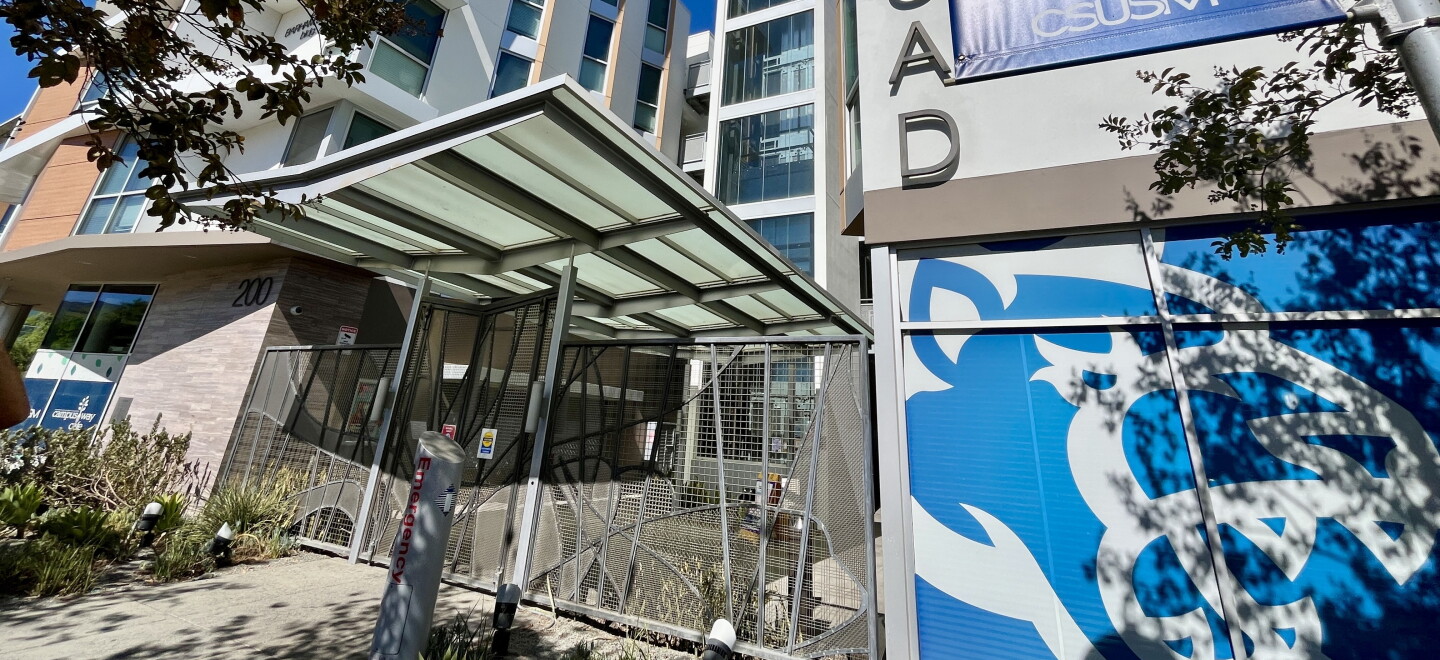
A sixth case involving rape or sexual assault has been reported at Cal State University San Marcos student on-campus housing since the start of the 2026 fall semester.
Five of those reports, from Sept. 9 through Sept. 21, triggered Clery Timely Warnings — a mandatory campuswide alert.
The university said in response late September that it increased University Police patrols, added additional overnight security and increased front desk staffing at residential communities.
So far, there have been mixed reactions from students as to how the school is dealing with the spike in sexual assault cases.

“I'm more fearful. I mean I feel like every woman has pepper spray. I have a taser,” said junior Hannah Herd. “School is such a gift, and not being able to feel safe in this environment is really upsetting.”
The school said in a written message to parents that the “reported incidents are not connected, and there is no serial or random attacker targeting students.”
CSUSM said law enforcement has identified individual suspects for the cases reported this year. It also said University police investigators have been in direct contact with the San Diego County District Attorney’s Office. The cases are still under investigation.
Even with the updates to safety and security, Herd said the changes haven't gone far enough.

She’s a commuter student and said she hasn’t noticed many of the changes, which are focused in residential areas.
Herd agreed with what another CSUSM student posted in an Chage.org petition regarding the reported assaults, requesting the university “provide more campus security in parking lots, the quad and other poorly-lit areas on campus.”
Herd also said there hasn't been enough campus-wide discussion on the matter, nor enough accountability for victims.
“I think it just impacts how safe I feel on this campus. But also I've seen the sense of every woman I talk to has a fear on campus, and why is this being normalized?” she said.

Freshmen Larissa Millikan and Faye Dumont live in the newly-opened student residence Black Oak Hall, where some of the assaults took place according to Timely Warning reports shared with KPBS.
“We know some of the victims, we know some of the perpetrators which is really intense,” Millikan said.
The 18-year-old roommates said they've noticed a significant change in safety and security measures in recent weeks at their dormitory.
“We have security … in the hallways. And then we have to check in every time. It feels really safe,” Dumont said.

They said it was shocking to hear about the sexual assault reports, but ultimately they’re proud of how the school has responded.
“It's just a little scary for (me and my) friends, just to be nervous about are we in a safe space? But I think the most frustrating part for me is that a lot of people have said (CSU) San Marcos isn't a safe campus, and that they're not doing enough,” Millikan said.
According to the U.S. Department of Education Campus Safety and Security Database, CSUSM has specifically tracked criminal rape and fondling cases on campus since in 2014.
Data show the university reported the most rape and fondling incidents in 2015, with 11 rapes and five cases of fondling, and in 2023, with 11 rapes and six cases of fondling.
2024 and 2025 saw a slight decline in both reported rapes and fondling cases.
On Monday, the university confirmed to KPBS that so far in 2026 there have been 10 reported rapes on campus and four fondling incidents.
The year still isn’t over, and those numbers are close to the peak years of reported cases in 2015 and 2023.
Herd said what’s been happening at Cal State San Marcos and other U.S. colleges like Cornell University is why higher education needs to change the way sexual assaults are reported and handled.

Specifically, she said the Title IX reporting process does not go far enough to hold perpetrators accountable.
Title IX is a federal law that prohibits sex-based discrimination at any educational institution that receives federal financial assistance. It requires schools to respond when sexual assault affects a student’s education.
Still, a campus Title IX investigation is separate from a criminal police investigation.
“It doesn't start a judicial process for students. It doesn't start a way of going through the criminal justice system,” Herd said.

Anita Rodriguez is a fourth year student at the university. She’s describes herself as a victim of sexual harassment.
“Going through the Title IX personally myself, the Title IX process can take up to three semesters and that doesn't guarantee you a success in your case at all. And it's very hard to go through,” Rodriguez said,
She said she and other young women want to feel safe on campus.
“We want to be able to have the motivation complete our academics without having to worry about safety or going through mental health issues because we were affected by sexual violence,” Rodriguez said.

She agrees with the changes third-year student Herd proposes — like campus-wide discussions on sexual assault, more security across campus, brighter lighting in dimly-lit parking lots and pathways, and big picture changes to Title IX reporting.
Rodriguez said she also views requiring more rigorous sexual assault trainings as a key to changing college rape culture.
“They require us to do a Title IX training, but it's all online and not in person,” Rodrguez said. “And the only students subjected to go to sexual harassment meeting is first-year students living in the dorms.”
CSUSM President Ellen Neufeldt posted a video on Sept. 22, but has not agreed to any interviews since. In the video she explains how CSUSM has implemented additional education measures regarding sexual violence and consent.

The school is also encouraging all students to download CSUSM Cougar Safe, the school’s official public safety app.
A University spokesperson said the app will eventually replace the blue light emergency poles across campus, which they plan to phase out over time.
Herd and Rodriguez said some of the emergency poles have not been working on campus.