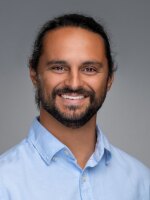
A federal judge ordered United States Immigration and Customs Enforcement (ICE) to release an immigrant surfer who was detained for four months after he accidentally wandered onto a beach on Marine Corps Base Camp Pendleton.
In her order granting Hagop Chirinian’s release, U.S. District Judge Janis Sammartino said ICE violated its own protocols by detaining him even though the circumstances of his case meant he couldn’t be deported.
“Therefore, because (ICE) have failed to follow their own regulations in redetaining (Chrinian) and have failed to demonstrate that his removal is reasonably foreseeable, the court grants the petition,” wrote Sammartino, who was appointed to the bench by President George W. Bush in 2007.
In August of last year, Chirinian was on a surf trip with friends when they accidentally wandered onto the Camp Pendleton beach. Military police briefly detained the group, but Chirinian’s friends were issued trespassing tickets and let go.
But because Chirinian is not a U.S. citizen, military police called ICE. Agents arrested him and took him to the Otay Mesa Detention Center where he spent the next four months. He was released a few days after Christmas.
Tambra Sanders-Kirk, Chirinian’s partner, immediately noticed how weak and pale detention had made him.
“He’s got more color now,” she said. “ He looked really pale when he was in there.”
Chirinian described the privately run detention center as a depressing place with horrible-tasting food, men constantly crying and little access to sunlight.
“It’s hard to get sun,” he said. “The only outside you see is maybe about a 50-foot-by-50-foot square area and the sun doesn’t even get to the ground — especially in the wintertime.”
According to court documents, Chirinian was born in Lebanon and was five years old when he came to the U.S. with his family on a tourist visa in 1975.
In the 1990s, Chirinian was convicted of two non-violent drug crimes and an immigration judge ordered his deportation in 2005. However, Lebanon had no record of Chrinian and refused to issue travel documents or accept him as a deportee.
Since Chirinian could not be deported, ICE released him under an order of supervision, which grants him a work permit and requires him to comply with regular check-ins with ICE. He has not been convicted of any other crimes in the nearly 30 years since the drug convictions, court records show.
While Chirinian was in detention, his family filed a federal lawsuit known as writ of habeas corpus petition. It essentially claimed the federal government is violating his constitutionally protected due process rights by detaining him.
More than 14,000 people in immigration detention centers nationwide have filed habeas petitions in federal courts.
Judge Sammartino appointed a public defender for Chirinian who reviewed the case and helped advocate for his release.
Chirinian’s defense rested on the fact that people under orders of supervision have special protections from being redetained, and that ICE failed to honor those protections.
Specifically, if ICE wants to redetain someone under an order of supervision, the agency must first give the person an opportunity to respond in court and then ensure they can be deported within the “reasonably foreseeable future.”
Finally, the agency must make a specific finding that there’s been a change in the circumstances that make the order of supervision no longer applicable.
“Yet ICE did none of those things when it arrested Mr. Chirinian,” his defense lawyer, Kara Hartzler, wrote in court documents.
ICE did not respond to questions about this case.
Sanders-Kirk said it’s galling to see someone detained after they followed all the rules.
“These people are doing the right thing,” she said. “That’s not right. You tell them to do it the right way; they’re doing it the right way.”
Weeks after his release, Sanders-Kirk continues to help Chirinian put his life back together.
“When he came home, he didn’t have his work permit, they didn’t give it back to him and they didn’t give him his driver’s license back,” she said. “So, he still doesn’t have the work permit, but he has a temporary license, finally.”
Despite all this, Chirinian still believes the U.S. is the best country on Earth.
“I wouldn’t want to live anywhere else actually,” he said.