If you work in an emergency room, there's a good chance you've watched HBO’s medical drama, “The Pitt.”
Emergency room doctor James Elia said he was hooked when he heard the show — while fiction — uses real cases to inform its storylines.
“I kind of try to figure out what's going on with the patient,” Elia said. “But at the same time you get a little bit of anxiety because it kind of brings you back to thinking, geez, am I back on shift.”
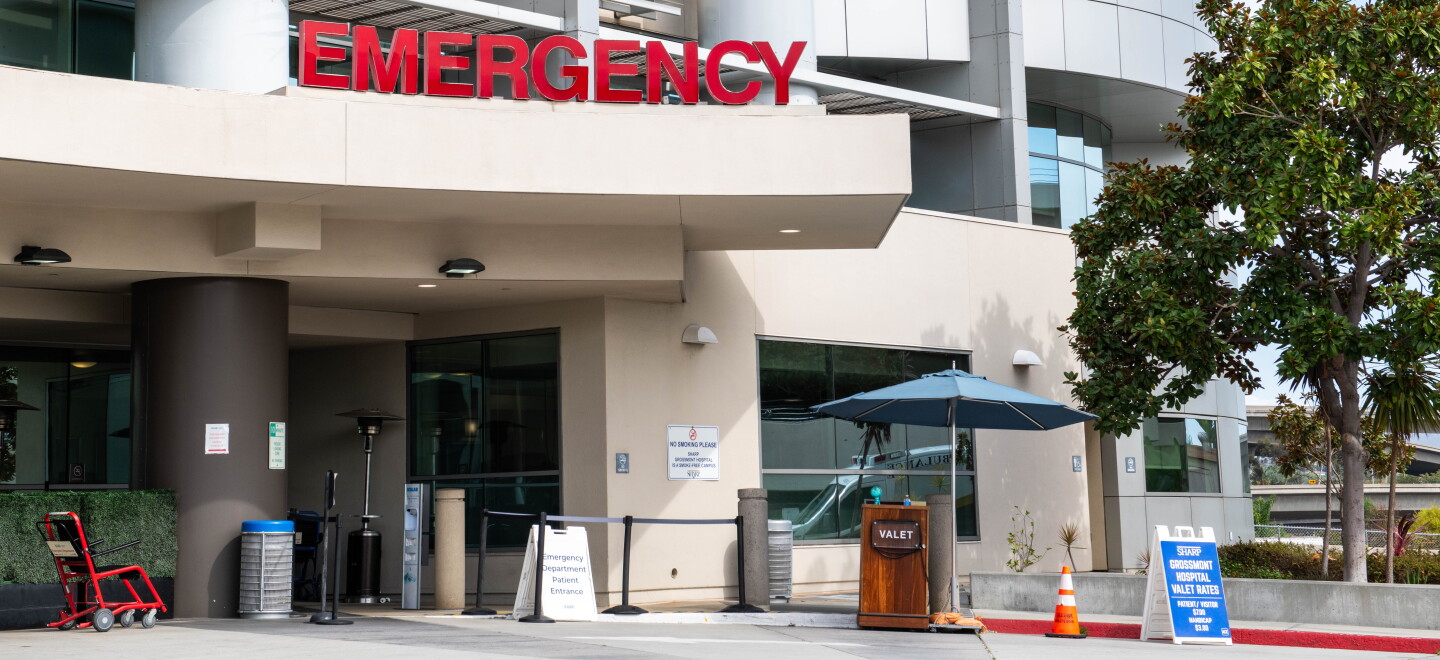
Elia has worked in the emergency department at Sharp Grossmont Hospital for 17 years.
“Some days we are like ‘The Pitt,’” he said. “And it's not every single day. It's not every single hour. But we definitely have days where it's that busy.”
That familiarity is part of what has made the HBO series stand out to healthcare workers and to some of their patients.
Television can create very different expectations about what actually happens in an ER, Elia said.
“People throughout the years would ask me, for example, are you going to pump the stomach, which we don't really do, but you see that on some of these shows,” he said.
“The Pitt” still has some Hollywood exaggeration, Elia said. But he thinks it gives viewers a more realistic sense of what emergency medicine can actually feel like.
“I've had some that might be and say, 'Oh, I know what you go through because we watch ‘The Pitt,’'” Elia said.
Then there are the moments that may show viewers a side of the ER they rarely see.
“There's a fight scene with this nurse,” emergency room nurse Amber Dinh said. “She gets in a fight with a patient because the patient is getting aggressive.”
The scene hit close to home for Dinh.
“I was recently in a fight with … a patient on a hold, and she's in a psychiatric moment,” Dinh said. “She ran out of her room and started swinging fists at people.”
“That stuff's real,” she said. “I think it's finally opening the public's eyes and like, oh my gosh, like, people actually do this every day and have to help people in these conditions.”
But she said the show isn't just capturing the dramatic moments.
It also shows the constant juggling that happens behind the scenes.
“Someone's dying in room five and someone's, you know, asking for a hot blanket in room two,” she said. “Everything's going on at once … and I think it's nice that people see like, oh, there's something bigger going on than just sometimes what I'm going through.”
For patients, that can be difficult to see from the other side of the waiting room.
And it turns out, the show may be teaching people more than she realizes.
A study by USC's Norman Lear Center surveyed more than 1,400 viewers of “The Pitt.” Researchers found that people who watched the storyline about end-of-life care were more likely to say they planned to take steps to prepare for future medical decisions, including making a living will or designating a power of attorney.
Nicki Rao, a palliative care physician at Sharp Grossmont, said the show is helping start important conversations.
“So it is sadly very common that people have not ironed out their wishes for end of life,” she said. “So I probably see this scenario on a weekly basis, if not more often.”
The show has also put a spotlight on medical roles that can be invisible to the public.
“I hope there can just be more awareness, especially for the fields…that are not as popular,” Rao said. “So like palliative care, like death doulas, like chaplains, the people that are really supporting our patients.”
Rao said that is part of what makes “The Pitt” different from the medical shows many people grew up watching.
“Before you'd watch medical TV shows for the drama, the affairs, the crazy scenarios that you couldn't figure out,” she said. “And now they're showing real medicine.”
Dinh said pulling back the curtain on the people who run emergency rooms may be the real impact of “The Pitt.”
“They'll be like, 'Oh, I see ‘The Pitt’ … is your job like ‘The Pitt?’'” Dinh said. “They're curious and it's kind of nice because they're actually interested to know what I do.”