
Rapper Boots Riley made his film directing debut eight years ago with the brilliant "Sorry to Bother You." I have been eagerly awaiting his return to the screen, and "I Love Boosters" does not disappoint.
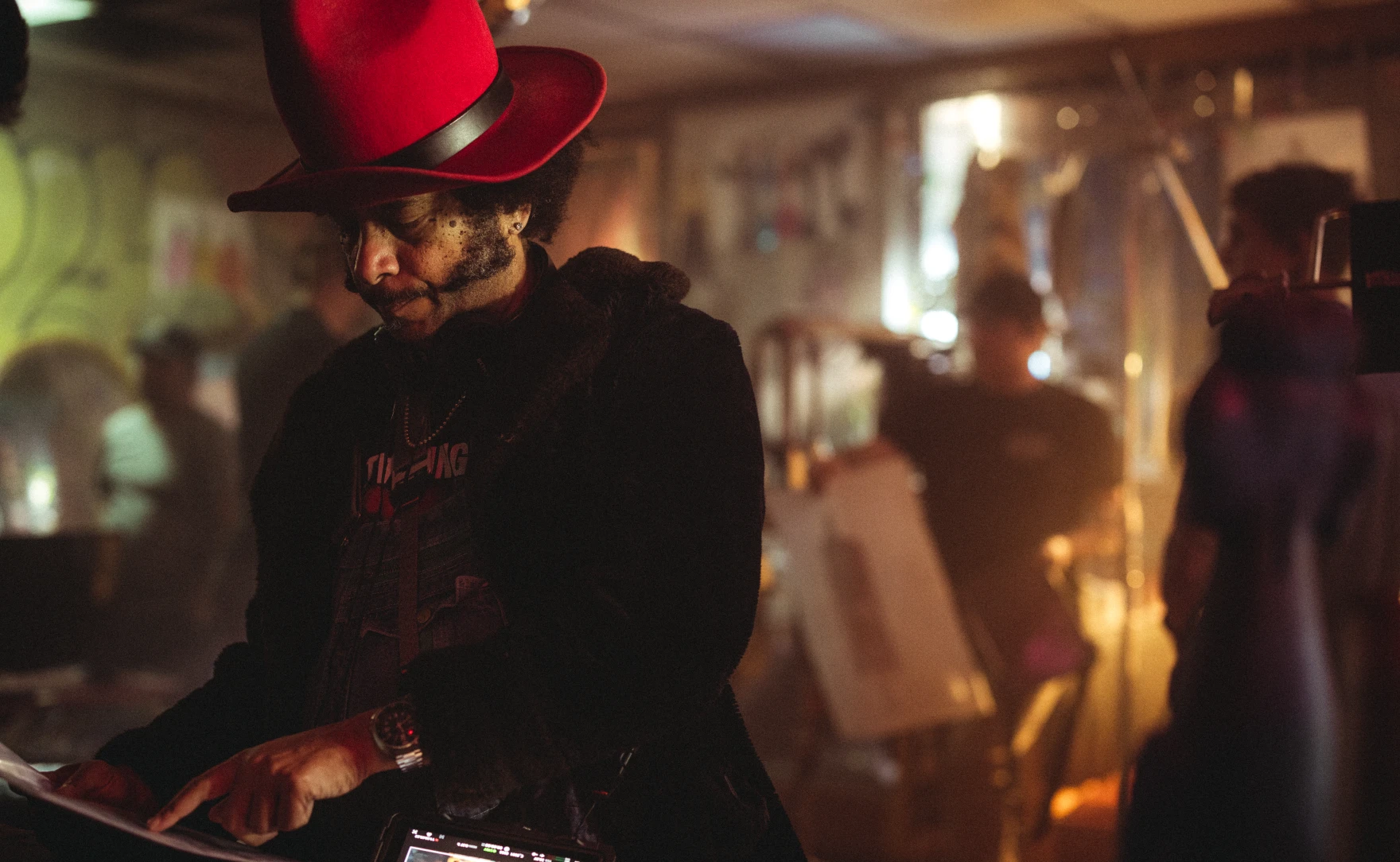
The Oakland-based Riley came to filmmaking after decades of success as a rapper, music producer and activist-organizer. He studied filmmaking back in college but got sidetracked by music and, in 1991, created the political activist hip-hop group The Coup.
His art tackles issues of race, capitalism, workers’ rights, creativity and activism. His films deal with those themes in ways that feel fresh and radical.
Riley described his first film, "Sorry to Bother You," as “an absurdist dark comedy with magical realism, and sci-fi inspired by the world of telemarketing.” His new film, "I Love Boosters," is less dark but equally absurdist and still fueled by an urban magical realism. But this time, the sci-fi-inspired elements play out in the fashion world.

The film follows the Velvet Gang, riffing off real-life Bay Area boosters known as the Rainbow Crew. Aspiring fashion designer Corvette (Keke Palmer) leads this crew of shoplifting “boosters” — people who steal clothes from upscale stores and then sell them at discounted prices to people who cannot afford retail. Corvette and her crew target obnoxious fashion mogul Christie Smith (Demi Moore, who is having a grand time), who calls humanity her canvas and the boosters "urban bitches." She also relies on sweatshop labor in China and poaches fashion ideas from others.
Riley focuses on the often-vilified boosters but insists capitalism is the real villain because it’s based on theft and on a class system in which many people can’t afford the products they are told they need to have. I have seen some online discussions fixated on how the film might be glorifying the boosters and crime, but that seems to be missing the point of the film — boosting is merely a symptom of deeper problems.
Earlier this year, a short film called "Rainbow Girls" debuted and also dealt with a crew of young Black boosters. Filmmaker Nana Duffuor posted on Instagram, "“What I’ve come to understand is that when two filmmakers independently look at the hyper-gentrification of the Bay Area, the crushing weight of late stage capitalism, and the rebellious art of boosting luxury goods, and decide to make a movie about it — that’s not a case of copycats. That is a cultural distress signal. It means a story is begging to be told.“
In "Boosters," Corvette applies to work in one of Christie's stores in order to execute a heist. When applying for the job, she's asked what would be the biggest challenge in a job like this.
Her answer: "I shop here a lot, and I feel like I should have it all. Just want to take it all home, eat it up and shoot it out my eyes. I just feel like, give it to me, it's mine anyway."
Corvette's anger and frustration are intensified by the fact that Christie has also literally stolen one of her fashion designs.
“Boosters" does not fit neatly into any category. Instead, Riley mixes up a genre cocktail of intoxicating ingredients including farce, satire, sci-fi, horror, politics and magic realism. More so than "Sorry to Bother You," "Boosters" is joyously entertaining because Riley has stated that he wants to create a box office success, “a popcorn hit with a revolutionary heart.”
So the film has frantic energy, bright visuals and a bouncy score that contrast with the serious themes in a way that makes you see the social issues from a new angle.
If there is one constant in Riley's work, it is that revolutionary spirit. Once again, he tackles serious issues — mainly revolving around the evils of capitalism — but never in a preachy, morally smug way.

I had a chance to interview Riley when he was doing press for "Sorry to Bother You." He said there’s a reason the tone of his activism is different.
“I think that’s because I have a background as an organizer, which is different than an activist,” Riley said. “Because to be an organizer and doing things like grassroots organizing, you get people in their place of work or place that they live and trying to do things around those areas. Doing that makes you approach politics less from a standpoint of 'you don’t agree with me so, therefore, you are on the other side of the line,' more to trying to figure out, 'OK, you don’t agree with me, how do I get this person to agree with me? How do I get them on my team?' I would be working against my ultimate goal to just try to show that person that they are wrong and smash them down in some way because my goal is to have the working class united.”

In "Boosters," Corvette and her crew are boosting just to make ends meet, but Violeta (Eiza González), a clerk in one of Christie Smith's stores, and Jianhu ( Poppy Liu), a sweatshop factory worker from China, get Corvette to realize that there are bigger issues at stake and that the underclasses need to come together and fight for a united cause. Our current divisive political rhetoric is designed to prevent that from happening.
I don't want to say too much about where the story goes because it takes some wild and unexpected turns that include a succubus, a crazy piece of technology and some wacky practical effects.
The film is also gorgeous to look at. Fashion is not just the backdrop for the story, it is the story. Every frame pops with bold color and creativity. The costumes are insane, the production design is inspired and the cinematography is next-level. Riley delivers sensory overload as the film is propelled by frenetic energy.

Christie's shops serve up monochromatic products that force consumers to visit a different store if they want a different color. And the employees are forced to buy new clothes to match the color scheme and the latest fashion trends, and their paychecks shrink as a result.
There’s delicious irony to "Boosters" being in theaters at the same time as "The Devil Wears Prada 2." The vacuous, feel-good "Prada" feigns rebellion while maintaining the status quo of both the fashion world and Hollywood, with the message being: Everything is just fine.
Meanwhile, "Boosters" explodes off the screen like a Molotov cocktail of vibrant pop agitprop advocating for radical change and a global uprising of workers because it asserts that everything is far from OK. "Prada" has five times the budget of "Boosters" but none of its ferocious style. "Boosters" pulses with life while "Prada" feels DOA.

In my earlier interview with Riley, he also made this observation that fits "Boosters" as well: "It’s just a movie that has a class analysis and that analysis allows you to understand how the system works and puts all the chaos that we get from the news feed into a working framework and allows you to see ways that we might be able to fight things. But the news and most media usually doesn’t supply that class analysis so all the events we hear usually seem like they are coming out of nowhere or they are crazy or make people shrug their shoulders and walk off into the distance of feeling like they can’t do anything about it.”
"I Love Boosters" delivers its message and activism with such audacious style and bold originality that it makes you sit up and take note in new ways. It’s calling for revolution both in society and in cinematic storytelling.


