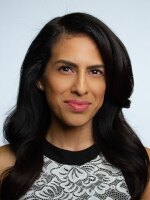
Dr. Nicki Rao propped up her phone on a selfie tripod in her dining room and hit record.
“A New York Times article came out that goes through something that's very sadly common,” she read aloud. “And it's when a patient who has cancer or any other serious illness feels unheard by their doctors, and then they go online so they can have more control.”
Rao is a palliative care doctor at Sharp Grossmont Hospital.
“Sadly, many patients are victim to misinformation that could actually worsen their prognosis,” Rao said as she stared at the camera.
Rao made a social media post about The New York Times story because it reminded her of one of her own patients.
“I’ll never forget it,” she said. “She sought a kind of an alternative therapy for her lung cancer. She was told to not get any more imaging, not to go to her oncologist, and she put these electrodes all over her body, kind of like a TENS machine.”
Her patient spent her life savings on the therapy, Rao said.
When the patient eventually came to the hospital, Rao said the cancer had progressed dramatically.
“Cancer everywhere. I had never seen anything so bad. And she unfortunately passed away just days later. And the person who scammed her never had to deal with these consequences. But we did,” Rao said.
A survey published by Pew Research Center in May found 40% of U.S. adults said they get health information from social media. But figuring out what to trust online can be difficult. Pew found half Americans said it is somewhat difficult to determine whether the health information they encounter is accurate.
Rao said the experience with her patient made her realize the need for accurate health information online.
Earlier this year, she started posting as @palliativecaredoc, where she talks about palliative care, hospice and serious illness.
“I don’t want the first time that people hear about palliative care to be in the hospital when their loved one is having a really serious situation,” she said.
Rao now has about 8,000 followers on Facebook, Instagram and TikTok.

Dr. Willough Jenkins, a child and adolescent psychiatrist at Rady Children’s Hospital, began posting on social media in 2023. She now has more than 600,000 followers across all platforms.
“Patients and families were asking questions in the office, and I wished I’d seen them sooner. I also thought about all of the families that I never get to see,” said Jenkins.
Jenkins said social media also gives doctors a window into what patients are seeing and worrying about.
“My patients are the greatest informers of what's happening in the latest trends cause I get to hear all about it,” she said.
One trend Jenkins sees is self-diagnosis.
“There's a lot of content about ADHD,” Jenkins said. “A lot of times people will self-identify, go, 'oh, I think I might have ADHD. I've seen this video. It describes me.'”
She encourages patients to bring what they see online into the doctor’s office rather than relying on a social media post alone.
“I feel relieved when they bring it to me (and say), ’Hey I saw this. What do you think?’” she said.
Research from UC San Diego suggests that attention-grabbing health content can be more engaging, but may leave out important context about how studies were done and what findings actually mean.
That’s why Jenkins said she works with the World Health Organization to amplify accurate health information online and combat misinformation.
“That really helps elevate kind of my credibility beyond just the 'I’m a doctor because I say so' type sentiment you find online,” she said.
Rao said credibility can be complicated online. A white coat doesn't automatically make a video true. And millions of followers don't make someone an expert.
“You can go viral just by being confident online. And confidence doesn’t actually mean that you’re accurate. And so it's really important to vet your sources,” she said. “The moment someone starts selling you something as a treatment you really want to be thinking about, 'are they gaining something from this?'"
A Pew Research Center analysis published this week looked at more than 500,000 posts from health and wellness influencers.
Nearly 4 in 10 promoted a product, service or subscription. And just 9% of posts making a health claim referred to an outside source.
For Jenkins, social media has changed the way she practices medicine.
“So it truly is part of every time I meet a patient and family now. What are you consuming online? What did you look up? What did the AI agent tell you about what we should talk about today? Because that truly is the norm. And I think as a physician, I have to just have to embrace that,” she said.
Neither doctor is telling patients to stay off social media.
Instead, they said the goal is to be online, too, and try to cut through the noise.
“You can just reach so many more people online than you can in person,” Rao said. “And if we truly want to make an impact, we should meet them where they’re at.”
And that may be the bigger challenge for doctors. It’s not simply getting accurate information online, but competing for attention in a space where confidence, personality and virality can be just as powerful as expertise.