


Update
Burn All Books' "psychotic optimism" has paid off, and they have secured a new, cheaper location in Barrio Logan. The owners will start moving out of the old location on Adams Avenue next week.
Nick and Amanda Bernal are excited to partner with The Woo, a nonprofit that is offering rent that’s $2,000 less. The new shop will have the same square footage, plus access to the Woo’s large common areas for events.
"The two CEOs of the Woo, Tony Salamone and David Garcia, used to be students at the Woodbury School of Architecture, and when the school was set to close down, they approached the building owner about transforming it into the multiuse arts space it now is," Amanda Bernal explained. "Tony recently reached out to us after seeing one of our Instagram posts about becoming a sort of anchor tenant that could help activate the space outside of openings and rentals, and help the community learn more about what the Woo offers. They have been incredibly generous and are transforming a former security office and part of a former studio into a lovely turnkey storefront for us, located near their current outdoor event area. There is a huge opportunity for growth and collaboration here, and I am so grateful that we seem to have found a home with like-minded colleagues who believe that artists require space and support within their means to thrive."
Construction is underway, and Burn All Books hopes to reopen in early August.
At a glance
Independent brick-and-mortar bookstores have always faced challenges. The launch of Amazon in 1995 and the rise of e-commerce, with its lower prices and convenient online shopping, led to a significant decline in physical bookstores. Starting in the 2000s, both independent and chain bookstores faced financial challenges that prompted many closures, including Borders filing for bankruptcy in 2011. In San Diego, the increasingly high cost of rent is forcing some indie stores to close or look for new locations.
Sticker shock
Burn All Books is not your typical bookstore. It's not even a typical indie one. It's more like a community space where people can gather, collaborate or just chill. Sure, it sells books, but it's also a print shop and Risograph publisher that works with San Diego and Tijuana-based artists, writers and creators to produce zines, artists' books, alternative comics and art prints.
Located at 3131 Adams Ave. in Normal Heights, Burn All Books (aka BAB) is a small, joyously cluttered space that invites exploration into its nooks and crannies to find books, gifts, clothing and vinyl. It now also shares space with & Friends Gallery and SCANNERS Archive, which is home to an archive of zines and ephemera.
The whole venue feels more like an artists' commune than a business. So when co-founders Nick and Amanda Bernal faced their third rent increase in three years and were looking at a nearly $6,000 monthly rent, needless to say, they were taken aback.
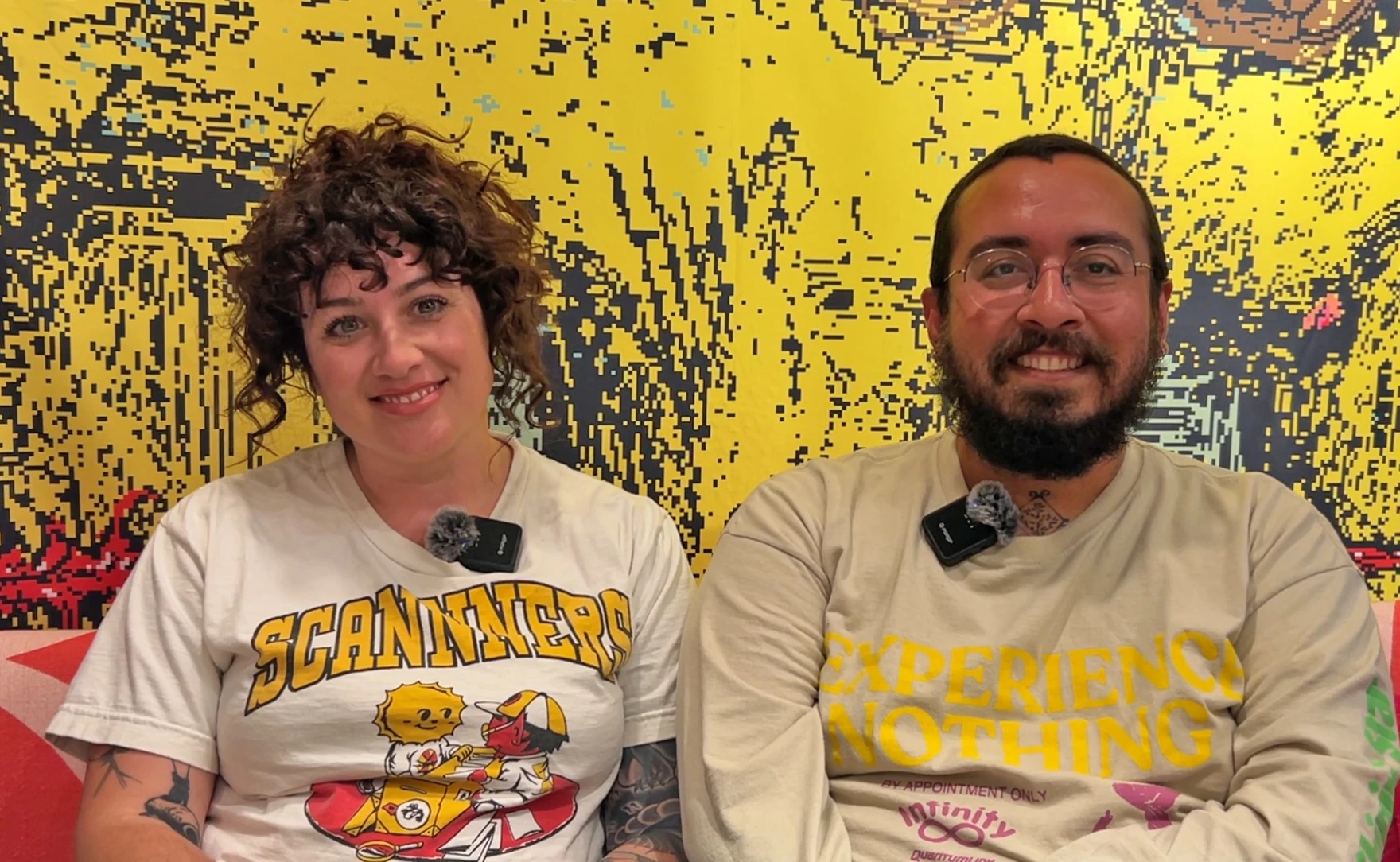
"The space has changed ownership a couple times, with a couple different property managers, and our rent's about to go up for the third time," Amanda Bernal said.
Initially, they only had the bookstore, but eventually added the small gallery.
"So when we just had the bookstore, we were paying about $3,000 a month," Amanda Bernal explained. "Now with this space and the next one (now totaling about 1,200 square feet), and the rent hikes coming in July, we're set to be paying like $5,750. The rent has just been going up faster than we can accommodate."

The breakdown
BAB is not alone. A number of other indie bookstores are facing similar rent increases.
In August 2024, North County Beat reported that the Carlsbad independent bookstore Farenheit 451 Books closed after the expiration of a longtime property manager’s ground lease, which had provided the tenants with below-market rent.
In the article, the store’s owner, P.J. Phillips, criticized the decision, saying, “Just another landowner that exterminates bookstores. It’s an old, old story. I’ve watched a few thousand go down during the 33 years I’ve been a bookseller. It’s always the same story.”
Phillips also told the publication that under his 52-year lease with the original owner, his rent was $2.12 per square foot, but that Pacific Coast Investments planned to charge tenants up to four times that amount and did not offer Farenheit 451 Books a new lease.
Some bookstore owners said they are reluctant to talk publicly about rent increases for fear of antagonizing landlords. Many bookstores often face an annual 3% rent increase that is described as a "cost-of-living increase" for property owners. But at least that is a predictable cost that can be anticipated and budgeted for.

Property being resold can aggravate the problem. Each time a property is sold, it can mean renegotiating a lease and facing a rent hike. That cost, combined with the uncertainty of not knowing when new owners might step in, makes it difficult for indie bookstores to plan.

By the numbers
BAB rents about 1,200 square feet, which makes it a mid-sized indie bookstore. But the space is oddly shaped, like a slice of pizza that gets smaller as you head back toward the print shop. Nick and Amanda Bernal have made the building fun and cozy, with lots of care taken in covering the walls with art, creating an archive for people to look through and offering a space for the community to congregate. In other words, they have made it uniquely their own, and it is hard to imagine anyone else coming in and appreciating the building's potential.
Based on interviews with local bookstores, one store nearly double BAB's size is paying $7,300 for a prime location, while a smaller shop of — about half the size of BAB — pays $3,700 a month. Shops that are located in strip malls or other properties with shared space can face both rent and a common area maintenance fee.
Allison K. Hill, chief executive officer of the American Booksellers Association, noted, "A physical gathering space is one of the most valuable things an independent bookstore offers its community, but it comes at a high price. Rent is one of the top expenses for independent bookstores, behind cost of goods and payroll, and many bookstores that have closed in recent years have cited rising rents as a contributing factor. This is especially disappointing given that independent bookstores are often one of the reasons a neighborhood has become more desirable — providing community and character — and thus more able to demand higher rents. Based on our member data, at least 56 brick-and-mortar independent bookstores closed in the U.S. in 2025."
Those numbers only reflect data from the American Booksellers Association, which last year reported 3,281 member locations.
Hannah Walcher, executive director of the California Independent Booksellers Alliance (CALIBA), added, "Rent is definitely a main pain point for independent bookstores across the state of California. Being priced out in cities and downtown areas is a real issue for small businesses and bookstores in particular."
Nancy Warwick, owner of the venerable and beloved 128-year-old Warwick's bookstore in La Jolla, noted: "The independent bookstore has been especially vulnerable to hardship and closure due to annual rent increases, economic downturns and online shopping, not to mention the damage done by the aggressive expansion of mega bookstores in the 1990s."
Back in 2021, Warwick's almost had to leave the building it had occupied for seven decades when the building owner informed Nancy Warwick that she had two weeks to meet an all-cash offer of $8.3 million for the sale of the property. Fortunately, the community and book lovers rallied to save the La Jolla icon. Warwick's has benefited from being in La Jolla, where it has loyal, local patrons as well as good, strong traffic from tourists.
In addition, Warwick's has a smart business practice that emphasizes great customer service, strong events featuring a diverse range of authors, community engagement and meticulous attention to product selections.
"Perhaps key to the store's longevity is the range and depth of product," Warwick added. "The store is of a size that allows for a large and well-curated selection of books, yet only half of the sales floor is dedicated to books. The other half of the store is devoted to gifts, stationery, art and office supplies. The presence of different departments adds to the appeal of shopping at the store and is critical for generating the sales volume necessary to withstand ongoing challenges."
What's next?
BAB is taking some pages from that Warwick's playbook. On a much smaller scale, it does split its space between books, zines, gifts and other products. It also is a cherished part of the community, with people rallying to support the business at this challenging time.
But it's not all bad news on the local indie bookstore front. San Diego saw Hey Books! open in East Village last year, and Manga Spot and North Park Comics have just opened this year.
Joe Chouinard is especially enthusiastic and optimistic as the owner of the brand-new North Park Comics, which opened earlier this month.

"We’re a brand new shop," Chouinard said. "My landlord has been generous in trying to attract new business to the City Heights area. My rent for March, April and May is $1,100 and then goes up to $2,200 in June. It’s a 500-square-foot store. We try to do a lot with what little space we have. I don’t have employees and haven’t paid myself yet as we are starting to get the business off the ground. Parking is an issue for customers, but that’s par for the course in City Heights. It’s just very expensive to start a business and difficult to find a space with reasonable rent, and then there’s the challenge of competing with Amazon and Barnes & Noble. But hopefully, with us being a neighborhood shop, we’re in a great location by the 805, and offering new weekly comics will attract customers and keep us around for a long time."
Parking also impacts Now or Never Comics in East Village, where parking rates can climb as high as $10 an hour during Padres games or special events, according to owner Aaron Trites. Business may be down on those days, but it bounces back the next day. In fact, business has been so good that the store recently doubled its retail space.
Trites said, "2025 was our best sales year yet, and we are on pace to beat that this year. But we're also doing a lot more to make more money: expanding the shop, hiring more staff, ordering more product, buying more collections and hosting more events. It's high-stakes poker. We stand to gain more than we do playing penny slots, but it's obviously a lot riskier."

Being a comic book shop rather than a traditional bookstore helps.
"Comic books have the benefit of being serialized in a way that most books are not, so there's motivation for people to come back every single week," Trites said. "We have also seen an increase in business after the closure of two other shops in San Diego — Southern California Comics and Nuclear Comics — in the last year. "
Walcher is optimistic about bookstores adapting.
"Stores already in brick-and-mortar spots are relying on smart business practices, community support, and their abilities to constantly adapt," Walcher said. "We've seen new bookstores open as pop-ups within community spaces or existing businesses, as well as choosing to be mobile as a business model. Some choose this as a starting format, with a dream to one day have a brick-and-mortar, while a handful of others are choosing to stay mobile so they can serve their communities by coming to them."
And BAB is definitely good at adapting.

"Burn All Books is a Risograph press that Amanda and I started with some friends in 2017," Nick Bernal said. "It sort of evolved into a zine shop, and from there into like an artist gift store and a bookstore, and it's sort of the entry point into SCANNERS, which as an archive, and it expanded to become a 501(c)(3) nonprofit organization. It's sort of the umbrella that all of our programming and our organizing take place under."

Working under a nonprofit status means they can seek donations for support. They also have a "Mail Mag" for monthly subscribers who, at various levels of support, get a monthly physical mailer of zines and ephemera as well as other perks. They currently have about 400 subscribers paying a minimum of $10 a month, and that reliable income has been a huge help.

Nick and Amanda Bernal are dedicated to keeping BAB and SCANNERS alive and well. The rent increase is daunting, but it is also inspiring to consider what their future could be.
"I think that we have some potential spots that we're looking at that would be amazing," Amanda Bernal said. "We're going to find it. I think it will be even better. It's just a matter of making it there — making it through that transition is the difficult part."
But BAB has a team of volunteers who run programming at the shop and bring people in to help build a bigger community.
"So I can't imagine, with all of that, that any of this really going away," Amanda Bernal said. "It might change, but I have so much faith in the community that we've built. So that makes me pretty positive about everything, honestly. We have a good thing going on, and I think we all feel that it's just a matter of getting to the next step. We are all continually being priced out of places that we live and work. So trying to find and maintain our places in those is really a challenge sometimes that I think we're all like working towards figuring out together."

But change can be hard and challenging.
"It's just a question of, do we want to have to move so far away from our community that we're going to be asking people to do something that doesn't make sense? Or are we going to be able to find a space that will work for everyone, that meets people where they're at? And that's what we are hoping for," Amanda Bernal said.
_


