The Supreme Court on Wednesday heard arguments on restrictions to birthright citizenship — a momentous case that could upend decades-long precedents on who qualifies for citizenship.
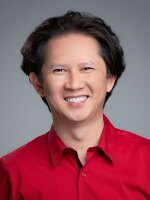
"It's clear that birthright citizenship is for everyone," said Kathleen Dang, a board member for the Chinese Consolidated Benevolent Association, one of the oldest Chinese organizations in San Diego.
She was born in San Diego to Chinese-Vietnamese immigrant parents. Under current law, that makes her an American citizen. Her concern is what might happen if President Donald Trump prevails at the Supreme Court.
“There's definitely that worry of how this would impact the, you know, estimating millions of people and hundreds and thousands of families who have been coming to the United States for over 150 years," she said. "Would this be impacted all the way up our family trees?”
On his first day in office for his second term, Trump signed an executive order declaring that children born to parents who are in the United States unlawfully or temporarily are not U.S. citizens. The order has been blocked by a lower court and has yet to go into effect.
University of San Diego School of Law Dean Robert Schapiro said the order upends the traditional understanding of who is a citizen, rooted in the 14th Amendment and the Supreme Court's ruling in United States v. Wong Kim Ark in 1898.
"The state of California argued that even though Wong was born in the state, because his parents did not have any kind of permanent status, that he was not a citizen," he said. "And the Supreme Court, with the language of the opinion, said that, 'Oh, yes, he is a citizen.'"
That case was settled nearly 130 years ago, but now it’s being dragged into the present with some of the same arguments being made. He said there could be many implications for the children of immigrants.
Schapiro said it could affect “the feeling in this country for the children of immigrants,” including how secure they feel and the uncertainty it may inject into their lives.
That feeling is more acute in the Asian community, who have always been seen as perpetual foreigners, Dang said, despite some families having been here for more than 150 years.
"The historic racism that (Wong) experienced at that time, we can't forget that because unfortunately, still there's still some societal and racist feelings present here for Asian Americans today,” she said.
Another issue this case brings up is what happens to foundlings — babies who are given up at fire stations or hospitals — or children whose parents were later found to be here unlawfully or temporarily.
"One thing you can say about birthright citizenship is it's clear, if you're born here, then you're a citizen," Schapiro said. "So, trying to document and prove who was a citizen and was not a citizen would be a major issue under this executive order.”
That issue was a concern for the justices at the Supreme Court on Wednesday. Their ruling is expected this summer.