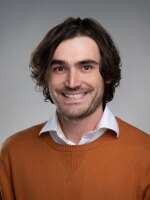
In 2022, Dianna Cowern's YouTube channel, Physics Girl, had more than 2 million subscribers, making her one of the internet's most popular science communicators. She was living her dream: sharing her passion for science and shooting videos all over the world.
"We went to the Arctic," she said. "We went to Death Valley and filmed a really, really cool and then really successful video there."
She called that time "the best days of Physics Girl. And we were having the best time as well."
That same year, Cowern married her longtime partner, Kyle Kitzmiller. Everything seemed to be going her way. She remembers telling her friend and video editor, "I'm sorry but this is my year."
But on her honeymoon in Scotland, her big year got hit with what seemed like a minor snag. She got COVID-19.
"The typical symptoms," she said, "like a sore throat and a cough and a stuffy nose. But it wasn't anything alarming."
Those symptoms passed, and a few weeks later, the couple set off on a multiday hike they'd been planning for months. The first couple of days went fine.
"On the third day I started hiking, and I would rest and I didn't feel recuperated," she said. "And I got in a cab and went to the next location while Kyle hiked it by himself."
But more rest didn't help, and Cowern began experiencing unfamiliar symptoms.
"Brain fog like I'd never experienced before. I couldn't walk. I couldn't think. I had nausea and headaches," she said. "And I never recovered from that crash."
The newlyweds cut their honeymoon short. Back home in San Diego, Cowern's condition continued to worsen.
"I just deteriorated," she said. "First I couldn't run, I couldn't hike. And then I couldn't work, and then I couldn't walk anymore, and I became bedbound. And then I couldn't speak, and then I couldn't read or use my phone."
Eventually, she was confined to her bed in a dark room, wearing dark glasses and noise-cancelling headphones to "take away every environmental stimulus."

Kitzmiller became her full-time caregiver.
"She had a really weird thing where her heart rate would get really, really low. Like in the 30s," he remembered. "I put a pulse thing on her that would have an alarm if it went too low. I would sleep waiting for this alarm to go off.
"Every day I didn't know if she was just gonna die," he said.
In a matter of months, the couple went from traveling the world and interviewing scientists to being confined to their apartment and searching for answers.
"Nobody knows what to do," Kitzmiller said. "The best scientist in the world doesn't know how to treat or cure long COVID."
Doctors ran numerous tests on Cowern, but told her they couldn't find anything wrong.
The message Kitzmiller remembers getting from the doctors: "There's not a real disease here."
The couple soon discovered that while science has helped explain everything from gravity to DNA, post-infectious chronic illness remains a mystery.
For reasons scientists don't yet fully understand, some people who get COVID or other viral or bacterial infections don't fully recover. Their symptoms can persist for months or years, ranging from debilitating illness, as in Cowern's case, to symptoms that are more manageable.
These conditions are sometimes grouped under the term post-acute infection syndromes (PAIS). Long COVID, the condition Cowern developed after COVID, is the best-known example. Another is post-treatment Lyme disease syndrome, in which some people continue to experience symptoms such as fatigue, body aches and difficulty thinking after treatment for Lyme disease.
These conditions affect millions of Americans, though estimates vary depending on the condition and how it is measured. One large study found that about 1 in 6 people infected with COVID-19 developed Long COVID.
For many, like Cowern, it is life-changing. An estimated 1 million Americans are out of the workforce due to Long COVID.
And for them, there are very few options for treatments.
"A lot of people who have this disease are so desperate for treatments," Cowern said.
As there are currently no FDA-approved treatments for Long COVID, Cowern turned to unapproved ones suggested by researchers. A couple of them made a significant difference.
" I was able to start looking at my phone again and reading and listening to music, which was amazing," she said. "And then everything improved."
Cowern eventually got out of bed and made her first science video in three years. Physics Girl was back.
Cowern's come a long way, but her health is still a struggle. She estimates she's functioning at about 30% to 40% of her previous capacity.
And while she continues to work toward feeling better, Cowern and Kitzmiller are raising awareness about chronic illness with their large platform. Kitzmiller is even serving on the advisory committee for clinical trials into the treatment that helped them the most.
"There's still a lot to learn," Cowern said. "There's so little that's understood about this disease, but I will say that everyone that has it is desperate to live again."
Listen to Cowern's episode of The Finest podcast to hear more about her story, including how she rose to prominence as a YouTuber, how her experience with Long COVID changed her perspective on medicine and science, and which treatments helped her feel better.