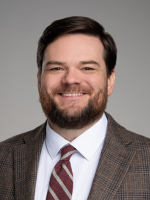
Hector Rivera had been in the Marines less than a year on Sept. 11, 2001.
He had just finished his final exam in the motor transport school at Fort Leonard Wood, Missouri, and he was hungry.
He walked to a food truck — the "gut truck," as he calls it — ordered lunch and bought a Gatorade.
The radio in the truck was loud enough that he could hear it. And what he heard would change his life — again.
Rivera's first major life change came in 1990, when he arrived in the U.S. as a child from El Salvador. In 2000, he joined the Marines to serve his country and to experience "something different," he said.
Rivera, and everyone who joined the military during that time experienced a different service life than the generation that preceded them.
The U.S. military has been engaged in constant combat operations for the last 25 years. The 9/11 terrorist attacks transformed American life — and life around the world — in ways that are still difficult to comprehend.

For the generation of service members impacted — multiple generations, now — the shift is clear. After 9/11 combat was no longer something for which everyone trained but few experienced.
Combat became something that impacted everyone in uniform whether they experienced it first hand or not.
Almost 70,000 U.S. troops were killed during the Vietnam War. Between 1964 and 1973, more than 8.7 million troops served in the war.
High casualty counts and the draft contributed to the counterculture revolution of the 1960s. The Pentagon suspended mandatory conscription in 1973 and the U.S. military has been an all-volunteer force since.
For a quarter century after the Vietnam War there was little combat and few casualties. Until 9/11.
'Everybody was on alert; nobody knew what could happen...'
The Global War on Terror was beginning. Commercial flights in the U.S. were grounded for two days after the attacks.
Rivera remembers covering the 1,000 miles between Fort Leonard Wood and Camp Lejuene, North Carolina, in a bus. The Marines couldn't wait for the skies to reopen, he said.
"Everybody was on alert," he said. "Nobody knew what could happen following the attacks."
Rivera was told to pack two seabags and stand by, he said, because Marine leadership believed they could be called into action at any moment.
After 30 days, Rivera's unit was told to stand down, he said. They wouldn't be going anywhere — yet.
The U.S. launched Iraqi Freedom in March 2003 with airstrikes and a ground invasion. By June of that year, almost 240,000 U.S. troops were either in Iraq or on ships participating in combat operations there.
Rivera was part of that first wave of ground forces.
It was the first of six combat deployments he'd do in less than 20 years — two of them to Iraq and three to Afghanistan.
Combat as a career
Today, Rivera is a Sergeant Major — the highest enlisted pay grade in the Marine Corps.
He's the battalion sergeant major for Headquarters Btn., 1st Marine Division at Camp Pendleton.
He spoke with KPBS about his career in combat near the old 1st Marine Division Headquarters on the base. There's a memorial to the I Marine Expeditionary Force Marines and sailors killed in action in Iraq and Afghanistan across the road from the old headquarters.
There are names on the memorial of Marines he led — Marines he knew, he said.
"They're not statistics only," he said. "They were sons and daughters — fathers. They were somebody special to their families."
Marine units from Camp Pendleton rotated in and out of Iraq and Afghanistan for years. San Diego-based Navy ships frequently deployed to the Middle East to support operations — the famous photo of George W. Bush speaking in front of a "Mission Accomplished" banner was taken on the San Diego-based USS Abraham Lincoln.
Rivera said deploying into combat zones is what he joined the Marines to do, and doing it frequently made the Corps better and more efficient at it.

"It makes you more proficient and it creates (a) bond with the Marines and sailors," Rivera said.
Rivera said he didn't pay attention to the politics and anti-war movement that emerged as the wars dragged on.
The fall of Kabul
In 2021, Rivera was the senior enlisted leader of 2nd Battalion, 1st Marines, when the unit deployed to Kuwait to serve as the Special Purpose Marine Air-Ground Task Force for U.S. Central Command.
The unit was there to respond to any crisis that may arise. In August of that year, one did.
A resurgent Taliban was winning its fight against U.S.-allied Afghan forces to retake control of Afghanistan.
Rivera and most of the battalion were sent to Kabul to help secure the Hamid Karzai International Airport, or HKIA.
As Taliban forces closed in on Kabul, Afghans who'd allied with the U.S. over the previous two decades were desperate to leave the country.
To Rivera — who was in Iraq when that conflict started, then in Afghanistan as it ended — this mission meant a lot, he said.
"They decided to side with us and help us," Rivera said of the Afghans they evacuated. "Being there, I felt I was doing something for humanity."
U.S. forces helped more than 120,000 Afghans evacuate Kabul.
"If you wanted to make a difference as a human being — not just a Marine or sailor, but as a human being — HKIA in the summer of 2021 was the place to be," Rivera said.
On Aug. 26, 2021 a suicide bomber detonated a bomb near the airport's Abbey Gate, where thousands gathered daily to try to get onto evacuation flights.
The blast killed more than 160 Afghans and 13 U.S. service members — 10 of the troops killed were part of Rivera's battalion.
Hundreds of thousands of Afghans could still be eligible to resettle in the United States but are not able to apply due to travel and visa bans enacted by President Donald Trump, according to an August report from nonprofit #AfghanEvac.

The next generation
Following the U.S. evacuation of Kabul, military planners refocused long-term strategy on countering what they call "near-peer" and "pacing threat" countries — Russia and China.
The Pentagon is investing heavily in emerging technologies around unmanned vehicles and artificial intelligence.

The experiences of the wars in Iraq and Afghanistan has soured the country's appetite for prolonged ground wars.
Rivera said even without the same pace of combat he experienced, the young Marines he works with are just as capable. That's because one thing that never changes is what makes a person want to serve in the first place, he said.
"It's something that I see ... but I can' explain it ... because it comes from the heart," Rivera said. "I believe you are born with this instinct."