In 2010 some 1,000 Camp Pendleton Marines deployed to Afghanistan's Helmand Province on a mission to root-out entrenched Taliban fighters.
The tone of the deployment was set early.
On the first day, the Marines with the 3rd Battalion, 5th Marine Regiment took charge of their part of the Sangin Valley, four Marines were killed. An improvised explosive device ripped their vehicle apart.
On the second day, three more Marines were killed stepping on improvised explosive devices or IEDs.
By the time 3/5 — aka the "Darkhorse" battalion — returned to California, 25 Marines had been killed with 200 wounded.
It was the highest casualty rate suffered by the Marine Corps in 20 years of fighting in Afghanistan.
A new documentary series seeks to go beyond the casualty count to tell the story of 3/5's deployment.
"Ronin 3: The Battle for Sangin" follows one platoon (Ronin 3) step-by-treacherous-step through the battlefields of the Sangin Valley.
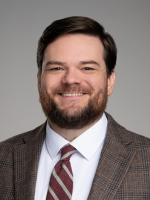
Marine Veteran Stephen Brooks, of San Diego, was there. He's featured in the documentary series.
"I think everybody is familiar with that saying, you know, 'you prepare for the worst and you hope for the best,'" Brooks told KPBS in an interview. "We prepared for the worst and we — we got the worst."
Sangin Valley has been described by Marine veterans as "Hell on Earth." Taliban fighters deployed pressure-plate activated IEDs — essentially landmines — throughout the valley the Marines were responsible for patrolling.
It's also where much of Afghanistan's lucrative opium poppy crop is harvested — Afghans with interests in the drug trade joined forces with the Taliban to resist the occupying U.S. forces.

Ronin 3 Marines in the documentary say they could expect to get into firefights every time they left their forward operating base on patrol.
Brooks' job as a combat engineer was to walk in the front of troop columns and find then disarm IEDs.
He said that by the end of their deployment, they had succeeded in pushing the Taliban out of the area.
"It was an area that had never been occupied by American forces before," he said. "We didn't exactly know what we were going into. We faced overwhelming odds and overcame."
Jeanne McKinney is the filmmaker behind the series. She said by the time they rotated out of Sangin, the battalion had pushed the Taliban out of the area. She wanted to tell the story behind the statistics that made headlines.
"The battle is not about the casualty count — the battle is about what has stopped in the area that you're fighting in," she told KPBS.
At Camp Pendleton this month, McKinney and others from the production hosted Brooks and some current-day 3/5 Marines for a special screening of the first episode of the series.
Lance Cpl. Matthew Leyen was among them.
"I didn't know much about the history," Leyen said. "Watching it actually makes me, like, even more prouder to be with 3/5."
The battalion is currently deployed with the 11th Marine Expeditionary Unit on the USS Boxer. Leyen just returned from the ship and is now part of a small Darkhorse contingent at the base.
It took more than five years to make the series, McKinney said, so her interviews don't include conversations about the American withdrawal in 2021 or the ongoing plight of Afghans who allied with U.S. forces during the war.
McKinney said Afghan interpreters and contractors were an important part of the American mission and that their service has to "mean something."
"After making Ronin 3, we see the tremendous amount of effort and work and the cost — the high cost of human life — over there," she said of the Afghans. "It's got to mean something. And we have to tell the world that what we do in in a war — a 20 year war like Afghanistan — meant something."
Brooks agrees — he said he'd like to see the U.S. honor its promises to resettle the Afghans who helped him and his friends.
"(Afghan allies) risked almost more than we did," he said. "They had no requirement to volunteer and help the Marines that were there. A lot of them did it with the promise of being granted ... if not citizenship, you know, residency in the United States. And we should honor that promise."
McKinney said Veterans Day offers an opportunity to reflect on the war and its legacy on the people who served.
"This is your next door neighbor; this is your UPS driver — people now that are blended back into civilization," she said. But they were wearing that uniform, walking around in a kill zone in 2010."
Brooks was 19 when he deployed to Helmand Province. He turned 20 shortly after arriving.
Looking back, he said he has complicated thoughts on what his experience meant.
"For me personally, a lot of different things — brotherhood, survival...joy, loss — everything kind of all rolled into one," he said.
He served in the Marines four years, left, and now works in San Diego as a project manager at a credit union.
He said combat experience doesn't define who he is.
"Most people who meet me have no idea that I was a marine or I went through such a traumatic deployment," he said.
He said he'd like people to understand the stereotype of the "damaged veteran" is just that — a stereotype.
"That's not the case, you know, for everybody or most people," he said. "Honestly, mental health resources are amazing these days, and there's so much less stigma around seeking mental help."
"Ronin 3: The Battle for Sangin" is streaming now.