What does a county supervisor do?
County supervisors are the elected officials that oversee the county government, which is responsible for administering state- and federally-funded social welfare programs such as CalFresh (commonly known as food stamps), Medi-Cal and the foster care system. The county has limited control over how these programs are run.
The supervisors have much more direct control over the county's unincorporated areas — mostly rural communities that are outside of San Diego County's 18 cities and therefore don't elect their own mayors or city councils. In these areas, the county government does everything a city government would otherwise do: trash collection, infrastructure planning, zoning and permitting, emergency services and more.
One role of county supervisors that has grown in importance and visibility in recent years is public health. The county monitors and responds to outbreaks of infectious diseases such as hepatitis, mpox, HIV and other STDs, influenza and COVID-19. During the early stages of the COVID-19 pandemic, decisions around business restrictions, masks and vaccine mandates put the county supervisors in the spotlight.
Some branches of the county government have their own elected officials, such as the San Diego County District Attorney's Office and the San Diego County Sheriff's Department. The DA and sheriff have autonomy over their own departments, but county supervisors approve their budgets and can pass laws that impact how they operate.

How much does a supervisor get paid?
According to the county's Job Descriptions and Salaries database, a supervisor has an annual salary of $220,254.30.
District 4
← Go back to your ballot in the Voter Hub
The candidates

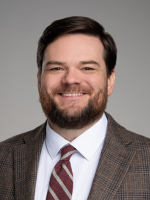
| Kristine C. Alessio |
- Party: Republican
- Professional background: Attorney, La Mesa City Councilmember
- Top three priorities:
- Affordability with opposition to new taxes
- Accountability for January 2024 floods
- Land use opposition to higher density housing
- The Republican Party of San Diego
- The Lincoln Club Business League
- The San Diego Union-Tribune
District 4 is heavily Democratic. In the 2023 Special Election, the Democrat received more than 62% of the vote and the Republican less than 39%.

| Monica Montgomery Steppe |
- Party: Democrat
- Professional background: Incumbent District 4 Supervisor, criminal justice advocate at the ACLU, Former San Diego City Councilmember
- Top priorities: Montgomery Steppe did not respond to questions from KPBS. Her campaign website lists a number of positions on various issues including affordability, housing and homelessness and public health and safety. She touts her work “securing millions in grant funding” for local businesses, directing $200 million to affordable housing in District 4, and “prioritizes transparency” in public safety.
- San Diego County Democratic Party
- California Federation of Labor Unions, AFL-CIO
- San Diego & Imperial Counties Labor Council
Outside money isn’t going to this race. As of Sept. 23, 2026 no independent expenditures on behalf of either candidate had been reported.
The issues
Under state law, the county isn’t allowed to touch its reserves without supermajority approval — 4 out of 5 votes. The board’s Democrats were able to circumvent the supermajority via an accounting scheme in which they shifted funds from mental health services and used reserves to backfill funding for those services, Voice reported at the time.It again tapped those reserves in March to fund more than $47 million in social services affected by federal cuts. In June it passed a $9.2 billion budget further tapping reserves to bolster social services and fund $95 million in projects for the Tijuana River Valley, according to The San Diego Union-Tribune.
- Kristine Alessio opposes using reserve funds. She told KPBS: “Regarding the taking from reserves to, among other things, give bonuses to employees, that was wrong, using loopholes in procedure to … create distrust in government. People's trust of government is already at historic lows, but not following the normal process, the people got slighted.“
- Monica Montgomery Steppe voted in favor. She didn’t respond to KPBS’ questions about her vote. She previously said: “This is not a hedge fund — this is a government entity that is mandated to take care of our most vulnerable communities.”
- Alessio opposes Measure B and new taxes generally. “I don't want to move out of state and leave San Diego, but unless changes are made, many of us are faced with that possibility,” she says on her campaign website. “We can do something - together we say NO to more taxes.”
- Montgomery Steppe supports the measure. She did not respond to questions from KPBS but has consistently sought to fill funding gaps left by Trump’s cuts.
Alessio says she opposes it.“Measure A is a disaster, she said. “First, there is no sunset provision, it goes on forever. Second, the petition gatherers (I was approached by them multiple times) stated that it was to give help the Tijuana River Valley, in reality a small percent goes to that cause and the remainder is loosely earmarked for families in need, but appears to be able to be used for whatever — maybe paying bonuses to employees again?”
Democrats and labor unions pushed a successful ballot measure to establish term limits for the board in 2010. Until then, the board had been dominated by Republicans and the move was seen as a way to help Democrats get elected, as KPBS reported at the time.
District 5
← Go back to your ballot in the Voter Hub
The candidates

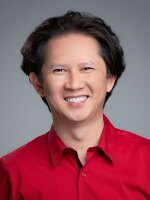
Rebecca Jones | Rebecca Jones |
- Party: Republican
- Professional background: San Marcos Mayor, small business owner
- Top three priorities:
- Public safety
- Affordability
- Homelessness
- San Diego County Republican Party
- Reform California
- California Women’s Leadership Association

Kyle Krahel | Kyle Krahel |
- Party: Democratic
- Professional background: Former deputy chief of staff and district director for Rep. Mike Levin, former Planning Commissioner for the city of Oceanside
- Top three priorities:
- Housing
- Climate
- Transit
- Sen. Adam Schiff, D-California
- Planned Parenthood Action Fund of the Pacific Southwest
- San Diego Building and Construction Trades Council
You can track the most recent filings yourself through the San Diego County Campaign Disclosure portal.
💡 How to find the data:
- Visit the portal and select "Search by ballot item" on the left column menu
- Select "Election Type: Primary" and "Election Date: 6/2/2026." Use the "Ballot Item" dropdown to select the specific race you are interested in (e.g., Board of Supervisors District 4).
- Click on a campaign to see filings.
- Find the most recent Form 460. Make sure it's not from years prior to 2025.
- Pay close attention to the "Statement covers period" dates at the top of the form you want the latest available time period.
- Check Line 5, Column B on the Summary Page to see the "Calendar Year to Date" total. This automatically combines the contribution amounts from previous months.
- Go to Schedule A to see donor names and other details
The issues
- Rebecca Jones supports clearing encampments and increasing funding for shelters and mental health services. She also touted her record of building 3,400 affordable housing units in San Marcos during her term as mayor.
Kyle Krahel advocates for transit-oriented "smart growth" to create walkable, job-adjacent housing. His approach to homelessness is to expand mental health and substance abuse treatment, along with strict enforcement for repeat offenders and system abusers.
- Jones touted that under her watch, San Marcos has the lowest crime rate in its 63-year history and was ranked among the top 15 safest cities in California. She also credited the opening the San Elijo Storefront Sheriff Substation to expand police presence.
- Krahel supports enforcing existing laws and holding repeat offenders and system abusers accountable. He lists criminal justice reform as one of his overarching core policy priorities. Krahel calls for connecting individuals experiencing homelessness with mental health care, drug treatment and shelter services alongside enforcing laws.
- Jones focuses on what she calls practical environmentalism, such as flood control projects and wildfire defense to protect homes and lower insurance premiums. She touts her success in achieving a Class 1 Fire Rating for San Marcos and sees it as a blueprint for the rest of the district to mitigate climate-driven fire risks.
- Krahel wants to significantly reduce greenhouse gas emissions by 2030 through beach retention and water conservation. He also advocates for public transit to reduce greenhouse gas emissions.