S1: I had to get up at 2:30 a.m. by the time I left the house , it was 3:30 a.m. and my younger brother and I would get in the car and I would drive us to the border.
S2: This is Mitzi Salgado. She used to cross the border from Tijuana , Mexico to San Diego , California for school.
S3: Starting in her early years in elementary school and continuing all the way through college.
S1: We would get in line at about 4 a.m. and we would just find the end of the line. There's always this anticipation , like you're driving , you see all the lights in your face in pitch black darkness.
S3: For Mitzi , getting a comparable education in Mexico would have been too expensive , and living in the US wasn't an option.
S2: So given the proximity to the United States , American students living south of the border like her find ways to make it to school in the US.
S1: You're just driving , driving , driving , driving , waiting to find the end of the line. And the more you drive , the pit in , your stomach just gets bigger and bigger and bigger as you realize how much longer you'll be sitting there.
S3: The weight would be around 2 to 3 hours on a good day , up to 4 or 5 on a bad day.
S2: And then there were days she had to walk across.
S1: It's more exhausting. You're standing. It's cold. Sometimes it's raining.
S2: Yet the weather was the least of her worries.
S1: It's , I think , more hostile. You're more vulnerable as a woman.
S3: Missy's body language began to shift as she shared this.
S1: So , like I remember one time I was crossing the border and the CBP asked me to lift my shirt because I could have a weapon. Obviously , I was 16 years old. What weapon would I carry ? And he asked me to turn around , so I had to give him a 360 turn. And I was so angry and so embarrassed. And he made me do that in at the port of entry pedestrian , where everyone else is watching you. You know , you're all kind of standing in a group , awkwardly nervous , waiting for this crossing to happen. Finally , I just said I'm tired of. It's early. I don't want to have to argue. I'm already running late for school. I've been up for five hours. I've been in this long line. I'm just gonna oblige. I felt dirty , I felt harassed , I felt embarrassed and ashamed. You know , I felt all those things. And I was 16. In the name of national security , you're kind of in their hands.
S3: Tens of thousands of students make this journey to school every day across the US-Mexico border. They referred to as trans border or transfrontier ISO students. They live in border cities like Tijuana for a range of reasons , including being a part of mixed status families , like having a parent who's a Mexican national without authorization to enter the U.S. , or because of the high cost of living in the United States , has pushed them to live south of the border.
S1: So that's just a typical day. So for some , then you have to deal with the public transportation , you know , and then getting to school. And then if your community college says that you're not a resident.
S4: You gotta pay them. Yeah , exactly. So insult to injury. Yeah.
S2: Yeah. The irony that this grueling commute is only the beginning of the complications is not lost on Missy.
S1: You have to.
S5: Fight for yourself there , too.
S3: A US citizen living in Tijuana is not recognized as a California resident and does not automatically qualify for in-state tuition.
S2: A community colleges. That can mean paying up to $4,500 per semester , compared to about 600 for residents.
S3: At four year universities. The costs can climb to nearly $13,000 per semester. This financial strain affects students who live south of the border but can't afford to live in the U.S..
S2: These circumstances often force students into difficult workarounds , like using a California address where they don't actually live , or delaying college for a year or two to establish residency.
S3: But then in September 2023 , A sign of Hope.
S6: Students who live south of the border will soon be able to go to college in the U.S. and spend less money while attending.
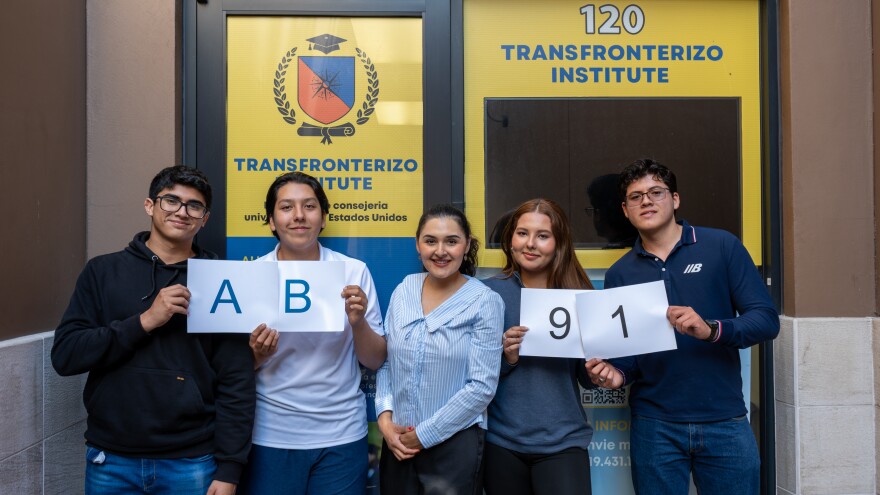
S7: Governor Newsom recently signed Assembly Bill 91 , which offers in-state tuition prices for low income students in parts of Mexico , including Tijuana.
S3: The news of Assembly Bill 91 being signed into law was widely welcomed in the trans border community , raising hopes for students seeking a more affordable path to college.
S2: Now in its second year , the program has helped over 400 students attend school north of the border across the nine participating community colleges.
S3: But as the program rolled out , many transborder students continue to fall through the cracks.
S2: If this is your first time tuning in , we are featuring stories of visionaries and shapers of the borderlands. Today's story is about how Assembly Bill 91 passed and what's keeping it from serving more transborder students from KPBS.
S3: This is Port of Entry.
S2: Where we tell cross-border stories that connect us.
S3: I'm Alan Lilienthal.
S2: And I'm Natalie Gonzalez.
S3: You're listening to. Port of entry.
S8: In Las Americas. If I can only find. The spot.
S2: Our producer , Julio , made his way to Las Americas Outlet mall in San Isidro , just steps from the border.
S3: Weaving through the mall's corridors next to the bathrooms and the mall's maintenance room. Julio spots a sign over a glass door. The capital letters read TFI for the Transfrontier ISO Institute. Inside a small , cramped two room office. A few students sit with books open , surrounded by college prep materials. Talking with each other. They were startled as Julio made his way in. Voila.
S9: Voila. How are you ? Hi.
S2: This is Mitzi Salgado headquarters , where she helps other transborder students. She was trailing behind. Hello.
S10:
S4:
S3: She gave him a brief tour of the space.
S11: Okay , so this is a common student area.
S1: And then the classroom is here. So we hold classes here once a month.
S3: In 2021 , she founded the Transfer Ontario Institute , an organization dedicated to helping high school graduates from Tijuana applied to universities in the US. Despite the flushing from the restrooms and the constant beeping from the maintenance room next door , Mitzi is happy that this space exists.
S11: I'm excited. This is a big.
S1: Deal because first of all , the transporter institute or transporter students never really had , almost like , um , I feel like we've always been in isolation and it never really had , like a visible space that represented us. Also , it's at the border. The port of entry is facing my office. I can physically see people coming through the border , it into the parking lot of the mall. It's an accessible location for families and cross border folks , and it's also a place for the students that work at the mall. So , uh , this this mall is usually the first place where students actually get their job. It's their first , you know , introduction to the United States labor force. And so a lot of my students currently work at Plaza Las Americas.
S2: The role of the institute also goes beyond academic support.
S1: We also advocate for policies and state laws that ensure that students who are transported are able to , you know , their their rights are maintained legally and that there are enough legislative policies that can protect them.
S2: In 2023 , when AB 91 was being debated , Mitzi got involved.
S3: By then , her learning center was fully operational and had already worked with multiple cohorts of students.
S2: As AB 91 moved forward , she saw an opportunity to bring their voices into the effort.
S1: So one of the key things that we did was we organized the families to send letters of support to Governor Gavin Newsom and call calling his office to get him to sign the bill.
S3: She also helped produce his social media video to raise awareness about the bill with a direct call to action.
S12: Hi , my name is Sofia mendez Reynolds. I'm from Tijuana , Mexico. When I was little , I realized like the situation we were in.
S3: In the video , trans border students shared their experiences and encouraged viewers to contact and pressure Governor Newsom to sign the bill.
S12: If they were to move to the US tomorrow. It would be very difficult because the education that they have as us , it's not that cheap. And then they took my mom's list that way. That day was really sad because now my mom does have a visa.
S2: Mitzi wasted no time building momentum and rallying support for the bill.
S1: So I organized the families and ensured that we sent out letters of support and made sure that we called beyond the the video that the Cultura media created.
S2: Cultura media is a non-profit media and research arm of our learning hub.
S1: And so I was in constant contact with David Alvarez's office and offering students testimonials and also traveling to Sacramento to basically discuss this.
S3: Passing the bill required a monumental effort from many sectors , and Assemblymember David Alvarez , the main sponsor of the bill , ensured it was presented on the legislative floor.
S13: So my name is David Alvarez. I represent this community that we're in is actually the community that I grew up in.
S2: We caught up with the Assembly member in his home neighborhood of Barrio Logan.
S13: When my parents first came to this country in 1976 , they lived in that corner , building an apartment right there. And so I've been here my whole life. I represent the 80th Assembly district in the legislature. There's 80 Assembly members , and I'm the 80th because I'm the one at the bottom at the state border with Mexico.
S3: His ties to the border begin with his family's journey to the United States , a narrative that mirrors the very fabric of America.
S13: So I was born here. I was the youngest of six. My siblings and my my parents were not documented so we could not cross the border as a family. It wasn't until 1986 , after the federal Immigration Reform Act , that granted amnesty and allowed people to become documented , that my parents got their documents , that I started to become more of a border crosser.
S3: That would be the start of Alvarez's transborder journey. Although from San Diego to Tijuana.
S13: This community did not have a grocery store. And so we actually went to the Mercado to buy our groceries when I was a kid. My parents never had health care. And so when we got sick , we went to the pharmacies , usually to Tijuana , to get our medical care.
S3: Dispelling myths about the border was essential to passing AB 91.
S13: People envision like people running across the border , which we we all know does not happen here. There's like a triple fence , right ? And then we have again , 170,000 people waiting for hours to do this. Uh , no one's rushing through. And so but that is still the narrative that still gets the news coverage. It's the scandalous , the drug bust that happened , what happened once in a while. But then it's like , oh , that must happen every day.
S3: And if it's challenging to make San Diegans aware of this reality.
S13: That's even harder to do. When I'm in Sacramento , which is as far as you can get from the border. And I have 119 other legislators , senators and Assembly members who need to understand why this matters. And if it just sounds like you're giving free college to people from Mexico , they freak out and they're like , what are you talking about ? This is a horrible idea. We have so many kids that need college access in California.
S2: To anyone who needs convincing. Always just points to our neighboring states.
S13: Texas , who is as anti-immigrant as you get , has their , um , their program where they are have been doing this for , I think , well over 20 years. They University of Texas system , which is their state university system , allows Mexican students to attend their university system to the tune of almost 2000 students every single year. Um , as , uh , Texans , not as foreign students , because Texas has realized many years ago that their border region is really important to their economy.
S3: And it isn't just Texas. Arizona and New Mexico have similar programs.
S13: We are the only border state that does not recognize that our border students are an asset to our region , and so this bill tries to accomplish that.
S2: Well , Bilko agrees. He's the director of the binational office at Southwestern College , the community college closest to the border and a pioneer in implementing AB 91.
S3: He worked closely with Assembly member David Alvarez and was instrumental in providing data and insights for the bill.
S14: And if we don't provide an opportunity to them , then they're not going to study and then how we're going to respond to the workforce needs of the region that are created now. But they're really going to be critical in 2030 if we don't do this work.
S3: Creating the bill required acknowledging that gap and reclassifying trans border students as in-state residents. To achieve that , a task force was put together of policy analysts , educators and legislators from both sides of the border. Alvarez and Joel joined others to discuss key points of impact and what the program would look like.
S13: All of the community colleges were in support. Like , they all not only supported their embracing it , they want to serve more students.
S3: Joel Southwestern College , being the closest college to the border , experienced the greatest demand for this program. Alvarez , Joel and other administrators also collaborated with institutions in Baja California to support transborder students seeking to begin their education in the U.S..
S13: So then we present the bill in January of 2022 , and then in March , we start going through the committee process. We started going through higher education committee.
S2: We started the bill was approved by committees and moved to the Senate floor for a vote , where it passed with overwhelming support.
S13: But and then what happens is the governor has a 30 day period to either sign bills or veto the bills.
S3: The bill reached Governor Newsom's desk. Alvarez , Joel and the others involved waited for news of the signing. The first week passes with no movement , and the second and the third week , the bill sat on the governor's desk for the full 30 days. But Alvarez wasn't pessimistic.
S2: He remembers the showdown he had with the governor and the ace up his sleeve.
S13: One of the things I told the governor , I said , hey , Greg Abbott is doing this in Texas. He's out doing you. So I think you should really get on and support this idea. So , you know , challenge him a little bit because he always wants to challenge other states , right ? He wants to do what other states are doing better than them.
S3: Alvarez believed that Governor Newsom's drive to outcompete other states would motivate him to sign the bill.
S2: And 30 minutes before the bill expired.
S13: The governor's office calls me and says , we want to let you know that we are. The governor has signed Assembly Bill 91. And , uh. We just want to thank you , because you and your office has been really great about informing us and educating on this. And without that effort , we wouldn't governor would not have signed the bill.
S3: Aside from the ace in his sleeve , Alvarez believes one factor made the biggest difference of all.
S13: About every one of our committees , we had students come up and say , I am a student , like , this is what you know , my experience is like , and that the voices of the students were really powerful.
S3: Howell's college coordinated student testimonies and worked closely with Alvarez's office to ensure they made an impact.
S2: And so did Mitzi.
S1: We were ready to fire and do whatever he needed to get done.
S2: Mitzi traveled to Sacramento to meet with legislators , lobby for the bill , and present her students letters.
S1: But for me , that was a really important piece is engaging the binational transportation community to civically engage a through that type of advocacy , which is really getting their voices out and sending not just the standard letter. Right ? It was a personalized anecdotes of students experiences crossing the border and how they would benefit from such bill.
S2: In the end , it all added up and the bill was signed into law. You are listening to Port of Entry. The bill kicked off a five year pilot project running from January 1st , 2024 to January 1st , 2029. It was then up to the community colleges to lead the rollout and implement the bill.
S14: So the community colleges came together , which was a requirement by the law to have a uniform application system and documentation system. We started visiting high schools in Tijuana , having meetings with students and parents in Spanish.
S3: As with any new program , they faced challenges.
S1: So the implementation of HB 91 was slow. The way that the bill was created and passed gave the community colleges a lot of , um , administrative decision making on how the law would be implemented.
S3: While the bill included a list of prerequisites to determine eligibility. It did not provide criteria for how to weigh them against one another. This was left to the colleges.
S2: According to Mitzi. This meant students could be accepted at one school but rejected at another.
S3: Additionally , the pilot program has an extremely limited enrollment cap compared to the size of the demand.
S1: So the number of students that are able to enroll in a five year period is an average of up to 200 students. Um , if they're not full time students , if they are full time students , then the spaces available to them through the AB 91 bill is less than that.
S3: So each school has a 150 full time equivalent student or FTEs limit per year for the duration of the pilot program. Once the program is full , space is open only when a student leaves.
S2: But that wasn't the biggest flaw in the rollout.
S3: The most egregious issue , according to Mitzi , is that some students who declare they live in Tijuana or have recently moved from Tijuana are not informed they may qualify for the program.
S1: So some students would get funneled. Others were not. Others were told , well , you have to pay out of state.
S2: Some that made the AV 91 requirements , Mitzi argues , but were turned away after declaring they lived in Tijuana.
S1: A lot of students who were telling me that they knew about EB 91 through a third party or through , you know , an article or something , and they had gone to the school and that they were told that they weren't they didn't qualify or that there was no such thing. Right. Or they simply weren't informed properly.
S3: Which was the case with many of her students. One of them was unable to continue because he couldn't afford out of state tuition.
S15: But mejorar Estados Unidos.
S2: Like many transborder students , Alexander Ortiz splits his time between Tijuana and San Diego. Ellos.
S8: Ellos.
S15: Cuando ahora si la residencia. Si.
S3: In June 2025 , right after graduating from a San Diego based high school , Alexander went to enroll in one of the nine participating AB 91 community colleges.
S16: Two years.
S15: In El Sistema Como , Tijuana , no , Estados Unidos.
S2: The admissions officer determined he didn't qualify for residency status and classified him as living in Tijuana. He was registered as an out of state international student.
S15: Resident to a escribir cream. Entonces. No no no.
S16: Entonces todavia nadie de la la la.
S15: No no no. Tema desconocido para means entonces.
S3: Alexander didn't know about AB 91 or that he might qualify. He wasn't informed about the program by the admissions office.
S16: He is a programmer.
S15: Cee lo mejor oportunidad tener entrar.
S2: Had he known of the program's existence , he would have looked for a way to join.
S3: Given the tuition difference , Alexander had to put off a full year of school to establish residency. To Mitzi , this is baffling , and the consequences are unacceptable.
S1: He came from a US based school , so that automatically should , by definition gave him California residency even though he lived in Tijuana. and yet they didn't even offer him the option of enrolling as a resident through AB 91. So they immediately classified him as an international student , and he couldn't afford to go to college as an international student.
S3: So the unintended consequence waiting to establish residency can derail students from their academic goals.
S1: He had to sacrifice a whole year of pretty much of going to college , so he's falling behind by one whole year.
S2: The problem still persists. Mitzi says she's left in the dark , not understanding why some of her students don't qualify.
S1: I mean , I still get students coming in today that say , hey , I was , um , I come from Tijuana. I was , um , I enrolled at community college , and they they , um , labeled me as a non-resident. And I asked them , did they inform you about being 91 ? And most of the students say , no , they did.
S3: Not believing her students meet the qualifications. Mitzi has taken matters into her own hands.
S1: And so I personally have gone with the students and , you know , to the administration offices and inquired about , you know , their status. And just as a kind of like as a chaperone , almost just like as a company , them and I'm standing next to the student and the person is not informing them.
S2: Her persistence has put her at odds with institutions , to the point that some schools have barred her from entering admissions offices with students.
S1: Since last year. Um , you know , one student requested that I accompany them , and I did. And , um , the , the coordinator at this community college said , no , only you come by yourself. You cannot have anyone else or this person can't go with you. And they didn't want me to go in with them.
S3: Mitzi has built a reputation as a watchdog on these issues , and in some cases , that reputation precedes her.
S1: There was another instance where the student , um , requested that I go in to the office. Um , when they were already in the office. So they were talking to the coordinator privately inside , and this person said , oh , are you talking about Mitzi ? And this person said , yeah , why ? You know , you know her ? Uh , no. She can't come in for now.
S2: There isn't much she can do but document what she and her students have experienced.
S1: And so I , I sent this memorandum to the chancellor , um , is outlining some of the issues that we were facing at the community colleges of his district.
S3: The five page memo cited instances in which her students were denied residency or AB 91 status , with details on the nature of the occurrences , including times , dates and signatures.
S1: It feels very targeted. Um , and , um , it it's unfortunate because I'm obviously doing this work because I love I believe in education. I believe in education equity , and I believe to access to education. I'm doing this work for the same reasons that oftentimes many administrators are and got themselves into their own jobs in the first place.
S2: Back when the bill was passed , there was no blueprint for how to implement it , something Cole acknowledges.
S14: So yes , I was in college , uh , was the first , uh , community college to implement A.B. 91. The processes that we created have become a blueprint for the other community colleges that are recruiting students for this program.
S3: We mentioned Alexander's case to Joel , even though it happened at a different institution.
S14: Well , I can tell you that , um , the community colleges were so different that we don't have a besides agreeing on what the requirements should be , we didn't really cooperate on recruiting students together. There were some events that we did together , but I think that each community college might be doing something different. And when it comes to that being different , the way the information is provided to the student , the way the process is being handled after the student applies could be different.
S2: As Joel says , there are differences between colleges and an implementation curve exists as they were largely left to figure it out.
S3: Mitzi acknowledges that , but also points out areas for improvement.
S1: First of all , I would implement AB 91 community college wide and it would embed itself into the admissions process even in the application right.
S3: Integrating AB 91 into the existing application process , similar to other programs , would streamline the experience for students , allowing them to complete a single process and transition more easily between institutions.
S2: Ultimately , simplifying the process for students.
S1: AB and anyone could potentially um introduce is standardizing the type of documents that are needed , and minimizing the number of documents that are required from , from from students , especially if these students are already a US citizen.
S3: Another area for improvement Mitzi identified is extending AB 91 beyond the community college level. Currently , the AB 91 status does not transfer when a student moves to a different institution.
S2: There isn't a clear path from AB 91 to residency , so students are left using the same old workarounds as those without AB 91. Right.
S1: Right. So like AV 91 is like the gateway policy. Now for for many students to be able to go to school and then figure out their , you know , housing situation here. And that's eventually they were able to become residents. Um , but it's a whole process.
S2: Lastly , there is an issue with the length of the pilot program.
S1: This bill should be at least if it's going to be a pilot. Um , from a policy standpoint , it needs to be at least ten years because the sample size , the number of people that participate in such program needs to be large enough to be able to carry enough significant statistical weight to basically justify a continuation of such bill.
S2: Hoyle is not too worried about the sample size. The demand is there and his school is at full capacity. Currently serving 186 AB 91 students.
S3: A mix of both full time and part time students.
S2: He believes that demand for the program is sufficient to justify an extension because his findings are compelling.
S14: Average GPA for these 186 students is above 3.0. It's over 94% persistence rate compared to the general student population , which is lower by more than ten points. Course success rate 8091 students. In the year that we have data , they score much higher than the general student population by more than ten Uh , percentage points.
S3: These early results give Howell confidence that the program might continue and expand beyond community colleges into four year universities.
S14: San Diego State and UCSD are now considering joining AB 91. I was in a meeting with them a couple of weeks ago where we presented all these findings , and I believe there's interest.
S3: Mitzi sees the push for AB 91 and similar policies as potential legal precursors to questioning how the US and California determine who has the right to an education.
S1: I'm pretty sure we've had plenty of cases , including my own family members , that could have done that and could have proven or , you know , called the bluff of the Constitution to to really enforce the idea that education is the right because there is no clear exclusion or distinction in the California Constitution that Mentions residency , um , and defines residency as you having to live here. It just says anybody in the state of California has the right to an education , but it doesn't say you have to live in California. It has never been challenged. Right. There's no real there's no case out there.
S3: Regardless of the program shortcomings. Mitzi says she's glad it exists.
S1: In my lifetime , I didn't think I was going to see this bill. I honestly didn't. If just introducing a bill as a pilot was all he could do. I'm happy for that because this is this is our step in in the door. Because from here we can have more dialogues , more conversations around how much we need something like this in our region and how special it is to have a state bill that crosses borders. It bridges our neighbors , right ? It bridges the community across the border that has always existed in the United States and San Diego. It validates the existence of our people , our transborder community , people that cross the border every day , the hundreds and thousands of people that are in line since 233 in the morning. It validates the existence and the experiences of those folks that work with us go to school with us. So it's important. It's very important to have this bill.
S3: This episode of Port of Entry was written and produced by Julio Cesar Ortiz Franco.
S2: Adrian Villalobos is technical producer and sound designer.
S3: This episode was edited by Chrissy Winn with support from Elizabeth Hames.
S2: Lisa J. Morissette is director of audio programming and operations.
S3: I'm Alan Lilienthal.
S2: And I'm Natalia Salles.
S15: Nos vemos. Pronto.
S17: Pronto.