S1: It's time for KPBS Midday Edition on today's show. The arts and culture scene in San Diego. Juneteenth is tomorrow , but there are events happening in San Diego throughout the weekend. I'm Andrew Bracken in for Jade Hindman with conversations that keep you informed , inspired , and make you think. Event organizers share some of the ways they're celebrating Juneteenth this year through community and culture , and learn what the holiday means to them. Then we visit a South Bay theater with a new play set to premiere but facing an uncertain future. Plus , what to look forward to in the arts this weekend. That's all ahead on Midday Edition. On stage. Playhouse is opening a new play next week called Isaac's Eye. About renowned scientist Isaac Newton , who made significant contributions to physics , mathematics and astronomy. But most people might know him for the story about an apple falling on his head , leading him to his theory of gravity. The play is getting its San Diego premiere soon , but it opens as onstage Playhouse faces an uncertain future in its current Chula Vista home. KPBS arts reporter Beth Accomando stopped by a rehearsal of Isaac's Eye last night to speak with On Stage Playhouse's artistic director James P Davis , who's also directing the play.
S2: So Isaac I by Lucas Nath is a contemporary play. We are exploring what could have may have possibly have happened , maybe didn't happen , but might have happened to a very young Isaac Newton. So our story starts with a character by the name of the actor. He addresses the audience and he talks about how Isaac Newton believed there was ether everywhere , and because he believed that ether was everywhere , he was able to believe in things that weren't really there. So the actor goes on to tell us about some stuff that we're going to hear in the play. And he says , just to make sure we're all on the same page. And anything that the actors say , that is true. I will write on these walls. So all the walls are chalkboard. So throughout the play , anything that is historically factual is written on the wall so we can see what's true and what's not true. I fell in love with the play because I had zero interest or knowledge on Isaac Newton. I think all I knew was an apple hit him on the head , but I was so enthralled with how the playwright married a very scientific topic in such an artistic , somewhat flamboyant way. I'm not sure if he if if the playwright's intention was the farcical nature of this production , because I didn't plan on it being a farcical production. And then we got into the rehearsal room. Well , one of our actors , Tom Stewart , who is insanely talented , is extremely funny.
S3: How you do it , buddy.
S4: And Sam says , is this for real? And the man says.
S3: This is for real.
S2: I started watching him , and then it kind of bubbled over into a somewhat farcical play. It's it's extremely funny. It's touching. I think the theme , I hope that I interpreted the playwright's theme correctly , where we have choices in our lives , we can choose to be part of a crowd or to connect ourselves with one other person. Or we can go it alone. And Isaac Newton , as I now know , live to be , I believe , 86 and single , never married. And I think that's the main focus of the playwrights perspective. I love it , it's about connection and love and legacy. Huge about legacy. So there's two real there's three real people in the play. Robert Hooke , played by Tom Stewart , Isaac Newton , played by Max Berg , Strand and Catherine Storr , played by Kimberley Weinberger. The story , as Isaac writes to Robert Hooke , who's a member of the Royal Society. Young Isaac Newton feels he has to become a member of the Royal Society in order to have his brilliance recognized , certified and published. The place starts in his little town of wolves. Thorpe and Isaac Newton is conducting experiments about light. If light is made of particles or waves , and if light is all color , which are things he was known for , he writes to Robert Hooke , and he sends Robert Hooke all of his work , which is not like today in an email. It's all of your written work. And he says , please don't lose it. It's my own copy , my only copy , and my hand hurts when I have to write for so long. And so Robert Hooke reads his work. And oddly enough , it is very parallel to the work that Robert Hooke is doing now in the play. Isaac Newton is 20 , Robert Hooke is in his mid 40s. So we have another theme. We have this theme of somebody approaching the middle of their life and somebody springboards into their life and how that makes an older person feel when a younger person has already discovered the things that they're working on. So Mr. Hook decides he needs to come visit young Isaac , and he does. And Isaac tells him that he did an experiment by sticking a needle in his eye and bending his tear duct , and it proved to him that light was made of particles. He did not do it. He's lying to Robert Hooke. So then Robert Hooke , as he's traveling , runs into the dying man named Sam , who is poor , less than human , right. If we're looking at classism , which is another thing that is explored in the in the play , and he's dying of the plague on the side of the road. And Robert Hooke goes , ah , this is the person we can do the experiment on. And they bring him to Isaac's house and they jam a needle in his eye.
S3: And having needle my eye.
S4: That's different. My head is hurting and I've got hurts worse. And there's nothing left to vomit. And if I move around too much , it feels like the needle might just pop my eyeball.
S3: I'm talking about what you've seen , not what you feel.
S4: I don't understand the difference , I say.
S3: I don't think he's very good at this. He.
S4: He. Says.
S3: Says. I know it doesn't seem to be having any trouble in having any trouble , sir. He's not being very descriptive. I think we need someone smarter. Smarter? Not very smart.
S4: You know , I'm just trying to keep up here. This is a pretty unusual situation.
S3: Okay , I think we have what we need.
S4: Robert turns to Isaac and.
S3: Says , I'm afraid the experiment hasn't proven what you hoped it would prove. He doesn't understand the questions.
S4: I understand the questions. That's what I said. I said , I understand more than you'll ever understand about all the questions in the world.
S3: Okay , that's enough.
S2: But towards the end of the play , Robert Hooke says you should do the experiment. And Isaac says , yes. And so we're left with Isaac Newton. You can't see it because I believe we're on the radio. But there's a 12 inch sewing needle on the middle of the table here on the set , and he jams it into his eye and we watch him jam it into his eye. And then Robert Hook , who is , I would say , the villain. I told Tom , who's playing Robert Hook , don't you know who the Purple Pieman is? And he said , no. And I said , well , look him up. The Purple Pieman is the villain from Strawberry Shortcake. So that's the play Isaac's eye , and you should all come and see it.
S5: How much of the science comes into this play? If there's a lot of farce.
S2: A lot of things that are scientific discussed in the play. There are a lot of things that are scientific that are written on the wall. There are a lot of experiments that are explained. Robert Hooke was a renowned man who most of us don't know about. And spoiler alert , that's because Isaac Newton was a bit of a so in real life. And the play tells us this. The actor at the end of the play says these events didn't happen , but Isaac and Robert did meet later in life , and Isaac did become a member of the Royal Society. And then Isaac did become the president of the Royal Society. And when Robert Hooke passed away , almost all of his writings disappeared and his portraits were taken down. And we can only surmise that maybe , possibly kind of , sort of definitely Isaac Newton had something to do with it. I didn't know Isaac Newton was a we were taught in school that there are these great people that have given so much to society , and that's true , but it's only one aspect of their life , right? So , so as we're exploring Isaac Newton in this world , in this creation by Lucas Nath , we're not so sure if he's an innocent , great person just because he gave us a lot of stuff , right? That we could not even be where we are today without it. That doesn't mean he wasn't sad or didn't get angry , or maybe was a little bit vindictive or wanted legacy so much that he chose to sacrifice other , quote unquote , lesser or smaller things to achieve it. And that's probably been one of the biggest things that has been resonating in my mind , is that great people are remembered for the one , the two , the eight things that they've contributed to us , but we don't really know anything about them as people. It's a brilliant play , and I think if people want to be entertained with professional live theater for the least expensive tickets in the entire town , right? Part of the reason we're struggling , we refuse to raise our prices. Our our our prices are set for the neighborhood in which we are in , because as a nonprofit , that is the neighborhood that we are serving , that doesn't mean that people from neighboring places can't come and enjoy our work , but we have to make sure that the work is accessible for the people that live on this block.
S5: Now , you did bring up cost of tickets and surviving. So at this moment in time , what is like the financial , health or financial future for On Stage Playhouse?
S2: We're on life support and have been for a long time. Uh , doesn't look great. Uh , still successful today? We've , uh , for two weeks , we've had a fundraising campaign called The Finish Line. Uh , we just crossed $15,000 in two weeks , which is something to celebrate exuberantly , which sounds like a large amount of money to run a nonprofit or rent $6,875 a month. We have a storage unit , which is $750 a month. We have three staff members. Our monthly Admin costs are between $9500 and $10,000 , so receiving $15,000 is amazing. But after the math that I just did , that tells you that's that's about a month worth of survival. So currently we're we we're about three months of survival. That doesn't count the money that'll be brought in for this play. Our financial health is , uh. We're coughing. We're choking. They're checking in on. Like , if we were in the hospital , the nurse would be checking in every 20 minutes. You know what I mean? Popping in to be like. Oh , nope. They're still there. We've reached out to a multitude of places for sponsorship. All those things have been done. We've reached out to the landlord. This is the 43rd season , and I know that for 1 or 2 seasons , they were across the street at least 25 plus years. Never missed a rent payment. I'm hoping the landlord would look at that and maybe cut us some slack. We didn't ask for , you know , not to pay rent. We asked to fall back to a couple of amounts ago just to get us through. Lease is up in February , so obviously that means we won't be in this building anymore after February. You can see the amount of seats that are here. $20 is a senior or a student ticket , $15 if you're under 30. If you're a college student , it's free. The work of a non-profit , in my opinion , is to make sure that they are giving to the community that they're in. You can't be asking to take something from the community that you're in , and then pretend or be perceived to be doing a service. And we have a full 16 performances here at 60 seats that could bring in a lot of money. The production is basically paid for already. You know what I mean? Other than our our artist stipends , which are the design crew and the actors coming up. I've donated probably 40% of the cost of this show. I'm a waiter and I've donated 40% of the cost of this show. That's how much the I most that building means to me. It's not the building. It's the ability to create the art. That force , unfortunately , has been not fortunately and unfortunately has been created in this building. But that art can be created in any building. And regardless of where we go , we will never raise our prices. So it's unobtainable for a person out of college to come. A person , a family of six to come. You can come to the door bath and say , I don't have any money and if there's empty seats , why would I tell you to go away? That would make no sense to me , right? Come in and fill the empty seats. We do two productions out of those 16 that are pay what you can nights. In my heart of hearts , I know we're going to make it to the end of the season. It's two world premiere plays written by San Diego playwrights. How awful would that be? Those works have been in and and conception and in workshopping for close to two years now. We've already invested a lot of funds. We don't. Nobody works here for free. Artists have to have to receive compensation for their work.
S5: And is raising rent like one of the biggest challenges or are they? Yeah.
S6: Yeah.
S2: Three years ago our rent was $2,000. Today it's $6,875. That's a big increase. Is it insane the amount of greed certain people have? Yes. This building was inherited to the current owner. It's been paid for for decades. That's insane. $6,875 a month for a 2500 square foot building with tenants who have been in in for decades. I don't know , Beth , but yes , it's rent a storage unit. Storage unit doesn't get any bigger. When we got it three years ago , it was $300 and now it's $750. Make it make sense. Corporate greed. I almost said the f word , Beth , but it can't. On on the radio. I don't want to be beeped. Right? No , but it's garbage. It's garbage. What's going to happen? We're getting rid of the middle class. We're getting rid of the artistic class. Good lord. Come see this play , please. We gotta keep the doors open. It's $20 a ticket. If you want to pay me a dollar a ticket , just email me. Artistic director at On Stage playhouse.org. Come on , help us.
S1: That was on stage Playhouse artistic director James Pendarvis speaking with KPBS Beth Accomando Isaac Eye opens June 26th and runs through July 19th. Coming up , we talk about some of the events happening this Juneteenth weekend. Midday editions , back after the break. Welcome back to KPBS midday Edition. I'm Andrew Bracken in for Jade Hindman. Juneteenth officially kicks off tomorrow. The holiday celebrates the day in 1865 , when word of freedom spread to the last people enslaved under the Confederacy here in San Diego. Festivities are well underway. In fact , it's buzzing with Juneteenth celebrations all across the county , from music to surfing and much more. So today , we wanted to highlight some of the organizers who are bringing the sense of community and culture together with events this weekend. I'm here with Lauren Cobbs. She founded SD melanin , which puts on the annual Kinfolk Festival each year. Also with us is Ayana Reisman , project manager with paddle for peace. It's an organization that looks to increase access and connection to our coast and ocean. Lauren. Ayanna , welcome to Midday Edition.
S7: Thank you. Thanks for having us.
S1: It's great to have you here. So I want to just start by asking each of you what Juneteenth means to you personally. What's been your relationship with the day in years past? Lauren? Yeah.
S7: Yeah. So I grew up celebrating a lot of black American holidays and June. I'm originally from Ohio , so Juneteenth wasn't something that as a child I celebrated. But as I got older as a teen and a young adult , I started celebrating it with my friends and citywide celebrations. And when I started curating SD melanin in 2017 , I knew immediately that we would be doing a Juneteenth celebration. So this is our ninth annual Juneteenth experience , and it means a lot to be able to curate joy in a space for community and commemoration here in San Diego.
S1: I want to dive well into more about how you've been doing that through the years and what you got planned this year , but , you know , what about you? What are you reflecting on this Juneteenth?
S8: Yeah , this marks one year with paddle for peace for me. Um , last year around Juneteenth , I was really Looking for a sense of connection. Being in San Diego , I didn't have a lot of others who look like me , especially as a marine biologist. As a black female marine biologist , I really was seeking others who understood my experience. And I saw the paddle for piece Juneteenth event come up. So I went absolutely fell in love with what was going on , the community , the joy that was being represented. And I knew that it was something that I needed to be a part of. And now I'm here a year later , making sure the next one goes off without a hitch. So it's our sixth annual and it's going to be a beautiful day at the beach.
S1: So each of these , you know , events you guys are talking about , these have been building over the years. So we want to talk more about that. But Lauren you know we had you on I think last year on midday to talk more about Kinfolk Fest , which just kind of seemed to really blow up like the last few years. Remind us how it got started. Yeah.
S7: Yeah. So again , when I began curating events , I knew that Juneteenth was something that I wanted to celebrate and commemorate. And so really just got started with this idea of like , I'm not exactly sure what I'm doing , but I'm going to try. Um , and we kicked out our first 1 in 2018. And every year people are just like , do it again. Do it again. What if you do it this way? What if we have a dinner? So over the years , we've done a few different iterations of Juneteenth celebrations and really proud to see it grow and expand in the experience , expand in the ways in which we can touch the community year round , but especially during Juneteenth Week.
S1: I love how you kind of just talk about , you know , you just almost you just trying something out that first year. Talk to me. You know the name Kinfolk Fest rooted in the idea of family and community. But how did you come upon choosing that name , and why does that fit what you wanted to achieve with it?
S7: Yeah , well , I think about kinfolk as a word that Represent your , you know , your immediate family , your actual kin , but also your chosen family like your kinfolk. You can decide who grows and who's a part of your community and kinfolk feels , I don't know , it feels stronger than friend and whatever it's like this is it feels like , I don't know , ancestral a little bit like , this is my kin. These are my people. And so we chose it as a way to invite folks in because we're very we believe that our spaces and our communities are better when we're connected , when we are kin , when we treat each other as kin , when we show up for each other as kin. And so Kinfolk Fest really just seemed to fit like immediately I was like , that's it. Kinfolk is we can fuck together. And I love a good festival , I love a good time. And so it just seemed perfect to really encapsulate what we were trying to communicate to folks in terms of you are welcome. Here you are. You are wanted here and we've created this space especially for you , our kinfolk , and we're excited to celebrate.
S1: Ayanna , I kind of see you kind of nodding your head a little bit. I mean , you mentioned you came here , you know , fairly recently to San Diego. I think that's a pretty common experience with a lot of us , right? We know like the military's here , just people come from all over to make San Diego home , you know , just reflect on that , you know , part of kinfolk and how you approach that , finding your own community to find others. Like you said , you didn't see a lot of folks in the work you do. And tell us more about that.
S8: Yeah , I had actually been here in San Diego for about nine years before I really found paddle for Peace. And it just as as Lauren was describing it really is a space where we try and make sure that everyone feels welcome and comfortable and confident at the beach and in our coastal spaces. That's so essential , especially for Uh , groups that feel a little bit left out in those spaces or don't necessarily see representation in those spaces. Um , it can also tie to things like differential drowning rates that we see among black youth. And that's really where paddle therapist likes to step in and make sure that we're able to teach ocean safety , build up confidence in these spaces , and make sure people are connected to these natural resources that we have. The ocean does have such transformative and healing powers , and our Juneteenth celebration does exactly that. It's a time and place for people to come in and feel at home and feel welcome , and learn some of those safety skills , learn how to serve , get out in the water and bring out some of that joy. And that's that's really why we chose to start this event and come back every year. We want to make sure that we're able to provide those resources for our communities and provide those access points for you throughout South San Diego. Um , and really just exemplify some of the amazing work that's being done by businesses , in particular black businesses and the community , nonprofits that are supporting them throughout Southeast San Diego to.
S1: And I think , you know , historically has been a challenge to open up those like open spaces specifically , right , for for people of color , for others. Um , you know , talk more about what you have in store this year and how you got surf lessons you mentioned. Tell us more.
S8: Yeah , yeah. So it's going to be a beautiful day at the beach. We'll have surf lessons starting first thing in the morning. Uh , we'll also have a morning stretch with some of our Yogi friends. We'll have a volleyball tournament , paddle boarding , a club run , which will be really fun. And then just a lot of really great activities throughout the day. So a kids corner for the little ones. Um , and we should be able to just kind of relax , have fun , bring out some joy , have some good food , and we encourage everyone to come out with an umbrella , a beach blanket , and just plan for a lovely day at the beach.
S1: That's great. I mean , a big part of your work there at battle for peace is mentioned. I think you touched on connecting with youth. You know , talk more about why that's such an important piece for you. Yeah.
S8: Yeah. Going into classrooms to teach these marine biology and ocean safety concepts , it's amazing how often I hear students that live 7 to 11 miles from the beach have never been to the beach. A lot of that comes from a lack of generational knowledge. So if their parents or grandparents don't feel comfortable in that space or don't have the skills or knowledge to bring them safely to that space , it means those kids aren't going to get to those spaces too. So not only are we working with the youth , whether it's in class , whether it's bringing them to a surf camp , but we're also working with those families , making sure we're meeting them where they're at. Like Lauren said , a lot of these programs are built from our community. We're listening to what it is that they need. We're listening to what it is that they want and the resources that they're lacking to achieve that. and our programs are able to really fill those niches to make sure that we can get them to the beach. We can get them to the coast , and by teaching ocean safety , by teaching marine biology and building that confidence , it then means we're going to be teaching the next generation of ocean stewards and environmental stewards to care for these spaces later on , too.
S1: And it just , like , opens up such a beautiful world , you know , to a lot of because you're right , like , a lot of people don't access the ocean or feel comfortable getting into that. So , Lauren , let's talk about what you have in store. This. I mean , you've been at this several years now. What's what's coming up this year? Yeah.
S7: Yeah. So this year we continue to expand on the experiences that we bring forth to the community. So I'll talk about our flagship kinfolk Fest that's on Saturday , June 20th. But we actually kicked off the week yesterday evening with an entrepreneur workshop in collaboration with Black San Diego and CSG marketing , and we saw nearly 75 small black entrepreneurs , entrepreneurs of color , and creators come out to learn hard core tools and resources. Because for us , like , you know , having a good time is important. We all have a good time , but we all have to navigate this world. We all ownership and entrepreneurship is really important. But there are some real challenges to , you know , building a business and sustaining it as a black entrepreneur , as a woman entrepreneur. And so yesterday was this really beautiful , you know , kickoff to providing resources to the community besides a good time. But then we're going to get into the good time. So starting tomorrow we have our R&B kickoff tomorrow evening. And then we roll right into Kinfolk Fest Saturday. It's a full day experience with live performers , DJ sets , but also art installations by local creatives who are coming forth and bringing and sharing their gifts with us in the community. We also have nearly 100 black owned businesses who will be showcasing all of the beautiful things that they make or they create or can serve with. And then we close out the week on Sunday , June 21st , with a black artist exhibition that is curated by Imani Kumari of Black Woman San Diego.
S1: So a lot kind of have going on , like you mentioned , you know , the entrepreneurship piece of it. You incorporate so many different parts into , you know , the events this weekend. But , um , how are you? Have you been reflecting on just the growth of of Kinfolk Fest? And you know , how it's changed the landscape and built a community in the ensuing years , like you came here , what , back 20 , 20 about ten years ago?
S7: Yeah , about ten years ago. Exactly.
S1: So what was it like then? You know , just the landscape. Yeah.
S7: It was rough. Um , and you hear this sentiment reiterated over and over again from folks who look like us honestly there. It's not that there weren't spaces that existed. It's just they were very few and far in between. And a lot of the ways in which I navigated my experiences here were just lonely. I mean , I felt very isolated. I felt very lonely. I felt like it was hard to find people , but also a lot of the spaces that existed just writ large for the larger population felt like I was unwanted. It was like I was not supposed to be in those spaces. And for me , the impetus for creating melanin was really because I felt lonely and sad and unwanted. And that was a new experience for me. Um , and I was like , oh , well , this isn't normal. So maybe you can do something. You don't do this girl , but maybe you can. And as I started producing and curating spaces , really for community and connectivity , people just kept saying , we need this , we need this , we want more of this. And so a lot of the work we've done is really expanding on the needs to fill gaps and to create space , spaces of warmth and kinship , really for folks who , like Ayanna was saying , haven't seen themselves , but also , you know , didn't feel welcomed , felt like they were outsiders in the places that they they were spending. Their lives were growing. We were spending years. As for some of us , we've been here our entire lives and we felt isolated and unwanted. And so it feels really nice to be able to create space where you are like , I want you here , not I want people like you here. And no , I want you here. I want you to feel like this was made exactly. And especially for you. And we see over and over again that when we create spaces for folks who feel the loneliest or the most on the outskirts. Um , everyone , everyone benefits from that feeling of acceptance , that feeling of warmth , that feeling of kinship. And so it feels like truly like a blessing to be here ten years later and see the landscape really have evolved. Um , and so , yeah , I just feel really blessed to be able to do this and to create spaces , you know , with SD Mellon and Kinfolk Fest , but also blanket sounds where folks really just feel like they have a space where they are wanted.
S1: I mean , also in the middle of of your journey here , creating all these spaces was also a pandemic where I think we all just reframed , right? We stopped hanging out , we stopped meeting , and we've heard so much about this loneliness , loneliness epidemic or kind of , you know , trying to come back. Um , how have you thought about that? Just in ensuing years of bringing going kinfolk fast and all the other stuff to honestly.
S7: You know , it's a central theme because , again , right , I started this because I felt lonely and I thought , I'm sure other people do too. And again , we saw the pandemic just completely shatter our entire way of living , our entire way of connecting. And through the pandemic , we continue to create space virtually and where possible , safely in person to drive that connectivity and more and more right where pandemic is supposedly over. But I mean , the loneliness , if you look at the statistics , right , people are still experiencing extreme loneliness. It's feeling like they're separate. And so our main goal has been how do you bring folks together? How do you bring folks together , how do you bring folks together and also give them the tools and demonstrate. Right. Like model the behaviors for connectivity. So one of the things that I think differentiates us is we model what it looks like to truly show that you're welcome. You're in this space. We think it's important to model it because then people say , oh , it's not that hard. Like I can do this , I can make friends , I can make , I can turn my strangers into neighbors. And so that , for me is the big impetus for the work is we cannot survive isolated , we cannot survive alone. And if we do make it through , it's going to be very unhappy. So how do we provide moments of interconnectivity and joy?
S1: Anna , you know , this past week we've been talking a lot about the history of Juneteenth and how it's celebrated in San Diego , other places. But , you know , I'm just wondering how you're thinking about the history behind the holiday as you put this event together with , like , surfing and with all these activities with the broader mission behind it. But how how were you thinking about the history of the holiday behind it all?
S8: Yeah , I think the first thing that comes to mind. We hear Juneteenth , but it's also known as Freedom Day. And I think that's a really important thing to remember. Um , for us , especially when it comes to being at the beach , being in the ocean , surfing , being in the lineup , it's the freedom to do exactly that. And that's why our Juneteenth at the beach is so important for those who are looking for community in that space , because it demonstrates the freedom to be there , to be present , to be able to represent everything that you want to in , in that space. And that's exactly what I think of when I think of Juneteenth. It's the freedom to pursue as a black female entrepreneur , being able to go out and create something new , to be able to bring people together , um , the freedom to make these decisions , the freedom to , uh , bring things to life , all of that is what Juneteenth is supposed to be. That's that's why it happened. So I think it's a demonstration of that history that is still at play today. It's something that we're still building upon. It's something that we're still bringing to life. So I think it's it's a great way to remember it as as Freedom Day.
S1: Lauren I mean , what what do you think people can do to continue celebrating Juneteenth beyond just this holiday? I mean , as you talked about , you kind of tackle that each and every day. It seems like with all you're doing. But , you know , what is what does it look like for you the rest of the year?
S7: Well , I think this is a great question. Well , the first is to remember that , like how you show up in community is a daily it's a daily practice. Um , because that's how we build our , our relationships is showing up. And so don't , you know , come out on Juneteenth , connect with people , learn about the history , but also continue to show up day in and day out. Right. Like get involved , Go meet your neighbors. Please go meet your neighbors. Talk to the people. And you know in your office that sit in the other corner. Continue to build those relationships. Continue to support each other in the businesses that you know. We talk about historic inequity , but it's not just historic. It's very present. There are very real barriers that exist. So where you can show up and , you know , provide , be an active ally , you know , be an active friend , be an active neighbor , be an active member of someone's community.
S1: I've been speaking with Lauren Cobbs , the founder of SD melanin , and Ayana Reisman , program manager at paddle for peace , Kinfolk Fest and Juneteenth on the beach will both be taking place this Saturday , June 20th , and will include details on our website , npr.org. Lauren , Ayanna , thanks so much for being here. We really appreciate it.
S9: Thank you.
S1: Coming up. It's time for our weekly arts preview. It is back after the break. Welcome back. You're listening to KPBS midday Edition. I'm Andrew Bracken in for Jade Hindman. For our weekend preview , we have musical theater , experimental sound and art , and a black flute choir. Joining me with all the details is KPBS arts reporter and host of the finest podcast , Julia Dixon Evans. Hey , Julia.
S10: Hey , Andrea. Thanks for having me.
S1: Great to see you. So , first up , let's talk about the Black Flute Choir. How can we check that out? Yeah.
S10: Yeah. So future is color there a local music and art project they're hosting a Juneteenth edition of their pretty popular studio sessions , Jazz Nights. There will be live jazz also DJ sets from a bunch of artists. There's black American Sound , Malik Burghers , Malachi Travis Goodin and yes , I am especially excited about this. It's LA based Black Flute Brigade. They're a relatively newly formed group , just like the end of last year , I think. Quartet , flute , choir. They're doing amazing things so far. This is their performance of Frank Ocean's Thinking About You that they posted on Instagram. And their Instagram is full of more like that. It's at Black Flute Brigade. Yeah , the show is at courtyard tonight , Thursday , so just pop on over right after work. Or if you're downtown anyway , walk by , you might hear some tunes. It is. Tickets cost $12.51. Exactly. And it's 18 and up. Great.
S1: Great. So let's move over to theater. What do you know about this new production from Backyard Renaissance Theater?
S10: Yeah , so they're doing a pretty old musical. It's from 1992 , Jim Cartwright's The Rise and Fall of Little Voice. It's set in working class northern England. Special place in my heart , because that's where I'm from. And it follows the story of this young woman nicknamed Little Voice and her mother , who were just barely getting by. Um , little voice is kind of socially isolated , not really able to fully participate in the real world , but she finds comfort and like singing along to these old classic records and not just singing along , but like doing these , like , imitations of the singers. And of course , this like gift. She has this incredible talent for it. It gets discovered by , like , her mom's new boyfriend , and he tries to cash in on it and it stars this local actor Meghan Carmichael as Little Voice. If you've seen her in anything locally , you know how talented she is. I've seen her in a couple of productions of Signet Theaters , A Christmas Carol , she's she's so great.
S1: I mostly seen her in that too.
S10: Yeah , it'll be really fun to see her in this role. It's from Backyard Renaissance Theatre. They're doing performances at 10th Avenue Arts Center and it's on through July 3rd.
S1: Great San Diego Shakespeare Society also has some performances happening this weekend. Tell us about those.
S10: Yeah , so it's kind of like this long standing collaboration with San Diego Museum of Art. They're doing their midsummer program , so actors will read these scenes or monologues from Shakespeare anything. Summary. So you can probably count on something from a midsummer Night's Dream. And they'll also pair these little performances with the art on the walls. It's set in the museum's Gallery four and five area there. Right now they have this exhibit called Forging a legacy. 15 years of landmark acquisitions. So it's this collection of. Like some of the museum's favorite new to them pieces , um , works by Picasso , Monet , Nick cave. Also locals like you go crazy just kind of showing off like the breadth of what they've been doing in recent years. So you can check the art and the Shakespeare together. There's two performances on Saturday , 1 p.m. and 230 , and the performances are free with museum admission.
S1: Really interesting. Yeah , I might check that. I recently saw Hamnet. I was late to that , which is also about Shakespeare.
S10: Into Shakespeare right now.
S1: It's Shakespeare's on the mind. What else is going on in visual art right now?
S10: So yeah , if you're going to be at Balboa Park , pop into the ICA , San Diego. This museum is always free. And they just opened a new solo exhibit by Kat Gunn , a local artist and curator. It's actually their first solo exhibit called If Only by the Light of a New Moon. and it's really gorgeous work. There's some like , I don't know , more detailed stuff , I guess , like textiles , cyanotype , ceramics , and then these immersive installations. And what Kat Gunn is doing is like unpacking and reconstructing their family history and stuff like memory and home and identity and the way that it all , you know , plays into the role of immigration and oppression and displacement. And the museum's open 11 to 4 Thursday through Sunday. But the last entry is going to be at 330 every day , and this will be up through mid-September. So you have some time. Great.
S1: Great. The next one combines music and visual art , and it's kind of a cool title , The Color of Silence. Tell us about that. Yeah.
S10: Yeah. So this is a new exhibit , Art Produce in North Park. It's a group exhibit curated by Francisco Marr. And what he has done with this exhibit is like paired this group of six visual artists with two main performances. The first one was on opening night a couple of weeks ago and this weekend's the other , so on Saturday night you can hear a set from experimental musician Nick Leslie and also Rabbit Light , which is Francisco Emma's project with Monica Luz Camacho. It's kind of like an indie electronic vibe. We're listening to their newest track , just released earlier this month called Andante. And the concert starts at seven. That's in the Art produce outdoor garden , but the doors to the gallery will open at 6 p.m. if you want to check out the art beforehand.
S1: Very cool. Uh , Sundays Father's day. Uh , do you have anything artsy on your radar that , you know dads might be into checking out? Like me , for example?
S10: Well , dads love jazz , right?
S6: Yeah , sure. Yeah.
S10: Yeah. This one's especially for producer Julianna , whose dad loves jazz. The Athenaeum Music and arts library in La Jolla. They're back with their summer jazz series , this time with this Latin jazz , Argentine folk and flamenco duo Emilio Zoia and Antonio Lozano. Sonya is this Latin Grammy winning piano player , and Lassana is a singer and a saxophonist. They put out a collaborative album a couple years ago. This is a track from that album. It's called El Otro Mar.
S11: Del sol de la cuerda.
S10: So yeah , they'll be performing some folk songs as well as original music. It's Sunday evening at 730 at the Athenaeum in La Jolla. Great.
S1: Great. You can find details on these and more arts events on our website at pbs.org. I've been speaking with KPBS arts reporter and host of the finest podcast , Julia Dixon Evans. Julia , thanks so much.
S10: Thank you , Angie , and happy Father's Day.
S11: See ya.
S1: That's our show for today. I'm Andrew Bracken , KPBS. Midday edition airs on KPBS FM weekdays at noon , again at 8 p.m.. You can find past episodes of KPBS or wherever you listen. Thanks again for listening. Have a great day.




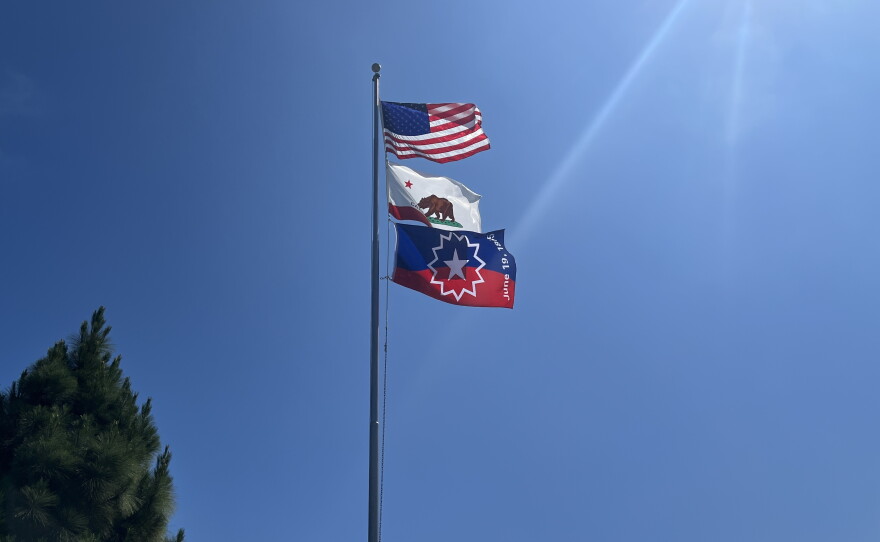 As the Juneteenth holiday approaches, we look at how San Diegans have commemorated emancipation, Black freedom and independence in years past.
 Mike Damron/KPBSJuneteenth began as a celebration of Black people’s liberation after the Civil War and now serves as a day for community reflection, education and celebration.
